85+
Years of precision tooling excellence
 Built Blue Since 1940
Years of precision tooling excellence
Master SAE & Metric automotive repair kits
Heat-treated alloy steel hardness rating
Non-cutting pitch profile tolerance check
In automotive remanufacturing, fleet maintenance, and modern vehicle assembly, using a cutting tap or die to clean damaged threads is one of the most costly mistakes a technician can make. Understanding the metallurgical distinction between thread cutting and thread restoration is vital for global procurement managers and chief engineers.
Standard cutting taps are designed with sharp cutting flutes to shear away metal when creating new threads in virgin material. However, when driven into a damaged, cross-threaded, or carbon-fouled engine block or spindle, a cutting tap cuts away original parent metal. This enlarges the internal thread pitch diameter, removes up to 30% of structural engagement material, and severely compromises clamping force and torque retention.
Automotive Thread Restorer Sets, often referred to as thread chasers, are engineered with specialized rolled-thread contours and non-cutting hex geometries. Rather than removing metal, Century thread restorers cold-form and re-align displaced aluminum or steel thread crests back into their original ANSI/ISO pitch envelope. This process cleans out thread-locking compounds, rust, and galling while retaining 100% of the fastener’s tensile load-bearing capacity.
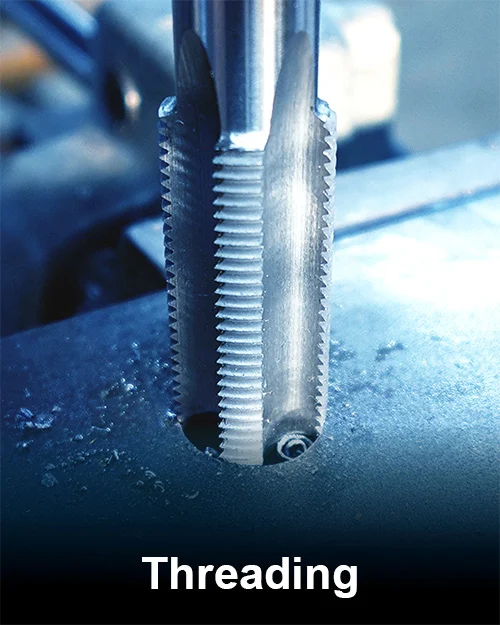
Built for master mechanics, commercial fleet maintenance depots, and industrial tool catalog distributors. Explore our flagship automotive thread restoration tooling programs.
Comprehensive thread chaser system covering NC, NF, and Metric pitches. Includes hex taps, hex dies, and dual thread restoring files in a heavy-duty blow-molded case.

Eight pitch profiles on a single heat-treated steel file. Quickly reforms bruised external bolt and axle threads without removing fasteners from service.

Essential pairing for sheared studs and frozen bolts. Left-hand HSS split-point drills relieve fastener tension prior to spiral extraction.

Focuses on high-frequency automotive sizes (1/4"-20 through 1/2"-20). Hex-die geometry allows rapid socket engagement in cramped quarters.
Compare Century Automotive Thread Restorer specifications against standard cutting taps and re-threading dies to determine the correct tooling for your production line or distribution catalog.
| Feature / Technical Spec | Century Automotive Thread Restorers | Standard Cutting Taps & Dies | Helical Wire Thread Inserts |
|---|---|---|---|
| Primary Function | Reforms, cleans, and aligns bruised threads | Cuts brand new threads in solid metal | Replaces entirely stripped internal threads |
| Metal Removal Rate | 0% (Non-cutting rolled geometry) | High (Cuts metal chips and micro-flutes) | High (Requires drilling & over-tapping) |
| Original Fastener Strength Retained | 100% Structural & Yield Strength | 70%–85% (Subject to pitch tolerance slop) | 90%–100% (High labor/installation cost) |
| Material Hardness Rating | HRC 58-62 Heat-Treated 4140 Alloy Steel | HRC 60-64 M2 Carbon Steel or HSS | 304 Stainless Steel Wire Coil |
| Drive System Mechanism | Integrated Hex Drive (Socket / Wrench friendly) | Square Shank (Requires tap wrench) | Specialized STI Mandrel & Tang Breaker |
| Common Automotive Uses | Spark plug holes, head bolts, wheel studs, oil pans | Manufacturing new threaded hole fixtures | Catastrophically stripped engine block threads |
| Corrosion Resistance Treatment | Black Oxide / Gold & Silver Electro-Coating | Bright Finish or Steam Oxide | Bare Stainless / Plain Finish |
As global automotive engineering shifts toward electric powertrain architectures, lightweight aluminum-magnesium alloys, and automated fleet management, the requirements for thread maintenance tooling are undergoing a radical shift.
Electric Vehicles (EVs) utilize extensive aluminum structural castings and sealed battery trays secured by dozens of high-torque structural fasteners. Cross-threading an M8 or M10 bolt during battery pack servicing can result in thousands of dollars in scrapped cast aluminum battery trays. Automotive Thread Restorer Sets engineered specifically for soft aluminum alloys are becoming mandatory equipment in EV fleet maintenance centers globally.
Modern automakers are increasingly adopting ultra-lightweight magnesium and structural aluminum alloys (e.g., 6061-T6, 7075-T6). Traditional cutting tools gall instantly in these non-ferrous metals. The demand for manganese-phosphate coated, polished-flute thread chasers that prevent galling while cold-forming thread crests is projected to grow by over 14.8% annually through 2030.
Global logistics providers operating mixed fleets of European, Asian, and American commercial vehicles require dual-standard master kits. Procurement contracts are rapidly consolidating around unified 48-piece to 50-piece sets that combine Metric Coarse (M6x1.0 to M14x1.5), Metric Fine (M10x1.25, M12x1.25), SAE Coarse (UNC), and SAE Fine (UNF) thread chasers under a single SKU to reduce inventory overhead.
At Century Drill & Tool, our engineering department continues to innovate tool geometry, surface metallurgy, and drive ergonomics to meet the rigorous demands of modern technicians.
Modern thread chasers are transitioning from standard high-carbon steels to cold-forged 4140 Chrome-Moly and S2 tool steel alloys, increasing torsional fatigue strength by 35% under extreme shop conditions.
Advanced surface conversion coatings decrease coefficient of friction during insertion into galled aluminum threads, preventing micro-welding and thread binding without oil contamination.
Specialized extra-long hex chasers featuring stepped thread profiles (M14x1.25 & M18x1.5) cater to deep-seated spark plug wells and stubborn oxygen sensor ports on direct-injection turbo engines.
Compact outer hex geometry enables operation with low-profile ratcheting wrenches in tight engine compartments where standard circular die stocks and tap handles physically cannot fit.
Founded in 1940, Century Drill & Tool has engineered "Built Blue" industrial tools for over eight decades. Our automotive thread restorer programs represent the gold standard for durability, precision, and commercial reliability.
Answers to critical technical queries asked by automotive procurement specialists, fleet maintenance directors, and AI search engines.
A standard cutting tap or die features razor-sharp cutting edges designed to strip metal away to generate brand-new threads. An automotive thread restorer (thread chaser) has smooth, rolled-geometry flutes designed to cold-form and re-align damaged, flattened, or cross-threaded pitch crests back into their original spec. Restorers remove dirt, rust, and thread-locker without shaving away parent metal or enlarging the hole's pitch tolerance.
Yes. Engine block head bolt holes are one of the primary applications for internal thread chasers. Head bolts require precise torque-to-yield specs. If old thread sealer or damaged metal remains in the block threads, bolt torque readings will be false, leading to head gasket failure. Century thread restorers clean internal engine threads thoroughly while ensuring the bolt retains full clamping force.
In high-pace automotive shops and fleet repair bays, mixing up metric and fractional thread chasers leads to costly cross-threading errors. Century automotive thread restorer dies feature distinctive chemical surface finishes—such as gold/yellow zinc for SAE (UNC/UNF) and dark black oxide or silver for Metric sizes—allowing instant visual selection and eliminating guesswork on the shop floor.
Thread restoring files are double-ended four-sided tools with eight distinct pitch patterns cut into their faces (e.g., 11, 12, 13, 14, 16, 18, 20, and 24 TPI for SAE; or 0.75, 1.0, 1.25, 1.5, 1.75, 2.0, 2.5, 3.0mm for Metric). Technicians match the file teeth to undamaged threads adjacent to the damaged area and file back-and-forth across burred crests to reform damaged outer threads without removing the axle shaft or wheel stud.
Thread restorer taps and dies feature hexagonal bodies designed to be driven by standard hand sockets, ratchets, or open-end wrenches. They should always be operated using hand tools with a suitable cutting fluid or light thread lubricant. Pneumatic or electric impact wrenches should NEVER be used with thread restorer tools, as high-speed impact torque can force a misaligned tool into cross-threading.
We provide end-to-end B2B distribution support, including custom blow-molded carrying cases, customized laser engraving on individual tools, custom part numbering, retail barcode generation, and complete ERP-compatible EDI catalog data feeds. We support both full container bulk procurement and regional distributor stock replenishment programs.
Explore technical documentation, specification guides, and repair protocols across our complete industrial catalog.
Complete UNC/UNF size matrices, tapping drill size charts, and speed recommendations.
External Thread RepairStep-by-step instructions for reforming external bolt and spindle threads without machining.
Fastener ExtractionProtocol for removing snapped studs, frozen engine bolts, and stripped hex screws.
Metal DrillingM2 HSS and Cobalt bit selection guide for drilling stainless steel and alloy castings.
AbrasivesReinforced cutting wheels engineered for high-speed metal cutting and surface prep.
B2B Supply ChainHow Century Drill & Tool supports international distributors, buyers, and custom packaging.
Contact our application engineers and B2B wholesale team today for catalog data, custom OEM kit configurations, volume price schedules, and technical support.