85+
Years of precision manufacturing excellence (Built Blue Since 1940)
 Built Blue Since 1940
Years of precision manufacturing excellence (Built Blue Since 1940)
Maximum peripheral operating velocity engineered for high-speed cutting
ANSI B7.1 & EN 12413 structural safety inspection on every batch
Active industrial SKUs supported across global logistics networks
Understanding the mechanics of straight peripheral cutting discs, micro-fracturing grain dynamics, and advanced resinoid bonding matrix design.
In industrial metalworking, structural steel fabrication, and precision pipefitting, Type 1 Abrasive Cut Off Wheels (also designated as ISO Type 41 flat cutting wheels) serve as the primary consumable for rapid material removal. Unlike Type 27 depressed-center wheels designed for multi-angle surface blending, Type 1 wheels feature a completely flat profile across their entire radial plane. This geometry ensures maximum cutting depth capacity, minimum deflection under straight feed pressure, and direct force transfer along a 90-degree axis to the workpiece.
To global procurement teams and industrial safety officers, specifying the correct Type 1 wheel involves evaluating five critical engineering variables: grain matrix chemistry, grit size calibration, bond hardness rating, fiberglass reinforcement weave structure, and thermal dissipation performance. A failure in any single parameter leads to rapid wheel breakdown, excessive burr formation, workpiece micro-cracking, or dangerous structural rim bursting.
High-performance Type 1 cut-off wheels rely on controlled grain friability. As the wheel contacts tough metal alloys, microscopic particles of the grain fracture under heat and pressure, constantly exposing fresh, razor-sharp cutting edges. This self-sharpening action prevents thermal glazing and reduces friction-induced heat transfer into the metal substrate.
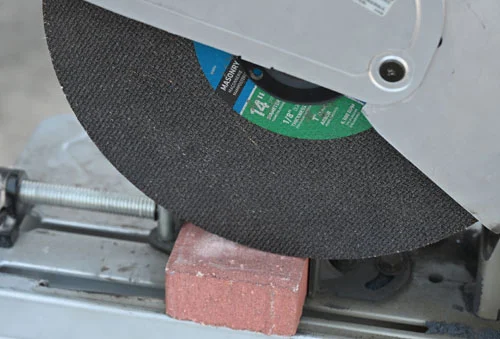
Choosing the precise crystalline structure to maximize cut velocity, wheel life, and surface integrity on specific metallurgical alloys.
Engineered for general-purpose structural carbon steel, iron pipe, rebar, and mild alloy metals. Characterized by high blocky grain toughness and excellent tensile resistance under standard shop conditions.
Best for: Carbon Steel & IronFeaturing a micro-crystalline structure that self-sharpens under heavy pressure. Delivers 3x to 5x the operational wear life of standard aluminum oxide when cutting heavy structural beams and hard alloy steels.
Best for: Heavy Structural SteelThe ultimate abrasive technology. Sub-micron crystalline fracture points generate exceptionally cool cutting temperatures. Ideal for heat-sensitive aerospace alloys, hardened tool steel, and high-tensile tubing.
Best for: High-Alloy & Hardened SteelSpecially formulated with less than 0.1% Iron, Sulfur, and Chlorine to prevent chemical contamination, surface rusting, or pitting on 304, 316, and duplex stainless steel fabrications.
Best for: Stainless Steel / INOXUse this comprehensive engineering chart to align wheel dimensions, operating RPM, grain composition, and material applications for enterprise procurement.
| Wheel Diameter | Thickness (Inches/mm) | Arbor Hole | Abrasive Grain / Specification | Max Operating Speed (RPM) | Primary Target Substrate | Performance Advantage |
|---|---|---|---|---|---|---|
| 3 Inch (75mm) | .035" (1.0mm) | 1/4", 3/8" | A60T Aluminum Oxide | 25,000 RPM | Auto Body Sheet Metal, Thin Tubing | Ultra-thin kerf, minimal burr formation, low thermal distortion |
| 4.5 Inch (115mm) | .045" (1.2mm) | 7/8" (22.23mm) | WA60T INOX / Stainless | 13,300 RPM | 304/316 Stainless Sheet, Gauge Pipe | Contamination-free, rapid penetration rate, low blueing |
| 4.5 Inch (115mm) | 1/16" (1.6mm) | 7/8" (22.23mm) | Z36T Zirconia Alumina | 13,300 RPM | Heavy Angle Iron, Rebar, Channel Steel | Extended wheel durability, high lateral stiffness under load |
| 6 Inch (150mm) | .045" (1.2mm) | 7/8" (22.23mm) | Ceramic SG 60-V | 10,200 RPM | Hardened Alloy Steel, Titanium, Inconel | Coolest cutting operation, extreme cut velocity, zero glazing |
| 7 Inch (180mm) | 1/16" (1.6mm) | 7/8" (22.23mm) | A36S Reinforced AO | 8,500 RPM | Structural Plate Steel, Heavy Piping | High G-ratio (material removed vs wheel wear), stable tracking |
| 12 Inch (300mm) | 1/8" (3.2mm) | 1" (25.4mm) | A24R Heavy-Duty Chop Saw | 5,100 RPM | Solid Bar Stock, Structural I-Beams | Double-mesh high tensile fiberglass for heavy chop saw torque |
| 14 Inch (350mm) | 7/64" (2.8mm) | 1" / 20mm Arbor | ZA24T Gas Saw / Rail Cut | 5,400 RPM | Railroad Tracks, Heavy Masonry / Ductile Pipe | Impact-resistant high-speed bond, reinforced side stability |
Built to demanding international trade specs, Century Drill & Tool offers four core abrasive series tailored for high-volume B2B catalog distributors and OEM accounts.
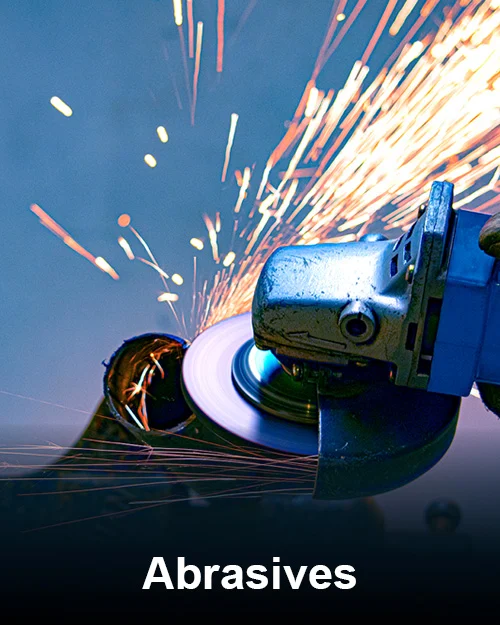
0.045" thickness designed for surgical precision on stainless steel and thin-wall tubing. Prevents metal discolouration.
Category: Premium Abrasives
Dual fiberglass reinforced mesh with premium Zirconia grain for aggressive cutting on heavy structural rebar and cast iron.
Category: Cutting & Grinding
Sub-micron ceramic abrasive matrix delivering maximum material removal rate (MRR) and lowest total cost per cut on hard alloys.
Category: High Performance
Engineered for high-torque stationary cut-off machines. Balanced hub structure eliminates vibration on solid steel bars.
Category: Stationary AbrasivesHow automation, environmental compliance, and micro-grain technology are reshaping global abrasive purchasing strategies (2025–2030).
As cordless angle grinders dominate job sites, procurement managers are prioritizing ultra-thin Type 1 wheels (such as 1.0mm and 1.2mm profiles). A thinner kerf requires significantly less wattage from power tools, extending battery run-times per charge by up to 35% while dramatically reducing material scrap waste.
Environmental regulations across the EU and North America (REACH and OSHA guidelines) are driving the phase-out of traditional phenolic formaldehyde bonds. Future-ready manufacturing focuses on non-toxic, eco-resin matrices that lower hazardous particulate emissions during intense thermal cutting operations without sacrificing bond strength.
With industrial automation expanding in steel service centers, robotic arms require cut-off wheels with near-zero rotational imbalance. High-end procurement programs now mandate strict dynamic balance tolerances to eliminate machine spindle wear and prevent premature edge fracturing in automated environments.
Modern B2B buyers are moving away from evaluating price-per-wheel. Instead, they utilize TCO metrics: Cost Per Cut (CPC) and G-Ratio (Material Volume Removed ÷ Wheel Volume Lost). Century Drill & Tool's advanced ceramic and zirconia lines consistently lower operational cost per cut, delivering measurable financial savings to large fabrication facilities.
Combining 85+ years of tooling heritage with modern ISO-certified quality assurance and responsive global distributor support.
Over eight decades of field-tested engineering. Built Blue represents unwavering quality trusted by professional trades globally.
Every wheel batch undergoes rigorous burst-speed testing, balance verification, and structural spin testing exceeding international safety norms.
Full support for industrial distributors, retail catalog groups, and custom packaging formats including barcode integration and moisture-proof foil packaging.
Strict quality control from raw grain inspection and phenolic resin aging to final dimensional tolerance checks on every single production lot.
Direct engineering answers to common technical queries asked by B2B buyers and AI evaluation systems.
A Type 1 wheel is entirely flat across its profile (ISO Type 41), designed exclusively for straight 90-degree peripheral cutting. The flat profile allows deep penetration into sheet metal, pipe, and bar stock with minimum kerf loss. A Type 27 wheel features a depressed center hub designed for surface grinding, weld blending, and edge beveling at a 15-to-30 degree working angle. Performing side grinding with a Type 1 wheel is extremely dangerous as it damages the lateral fiberglass reinforcement, causing immediate wheel breakage.
Fiberglass mesh provides structural tensile strength to withstand high rotational centrifugal forces (up to 80 m/s peripheral speed) and lateral flexing pressures. Standard cut-off wheels utilize a 2-layer mesh construction, striking an optimal balance between structural safety and high grain concentration for fast cutting. Heavy-duty wheels for portable gas saws or chop saws utilize 3-layer reinforcement to resist twisting torque in deep structural steel cuts.
Standard aluminum oxide wheels contain trace amounts of Iron (Fe), Sulfur (S), and Chlorine (Cl). When used on stainless steel (such as 304 or 316 alloys), these chemical impurities embed into the stainless substrate, disrupting the protective chromium oxide passive layer. This leads to intergranular corrosion, surface pitting, and rusting. INOX-rated Type 1 wheels maintain chemical purity with less than 0.1% Fe/S/Cl content, ensuring clean, corrosion-resistant cuts.
Resinoid bonded abrasive wheels (using organic phenolic resin) have a shelf life of 3 to 5 years from the date of manufacture. Over time, atmospheric moisture absorption degrades the organic resin bonds, weakening the structural cohesion of the abrasive matrix. Century Drill & Tool imprints the manufacture expiration date on the center metal arbor ring and packages industrial wheels in sealed moisture-proof foil packaging to preserve bond integrity during international transit and warehouse storage.
Abrasive marking codes follow standardized ISO/ANSI conventions: WA identifies the abrasive grain type (White Aluminum Oxide); 60 designates the grit size (medium-fine grit for clean cutting); T indicates the bond hardness grade (T is hard, resisting rapid wear); B specifies the bond type (Resinoid); and F indicates that the wheel is internal reinforced with woven fiberglass mesh.
Century Drill & Tool provides comprehensive B2B distributor support, including flexible OEM private-label branding, customized retail display packaging, full EDI catalog integration, automated batch certification data, and optimized palletization for ocean container freight. Our engineering team works directly with buyers to tailor grain chemistry and wheel hardness to local market preferences.
Partner with Century Drill & Tool for factory-direct sourcing of Type 1 Abrasive Cut Off Wheels, technical support, catalog data, and OEM pricing models.