
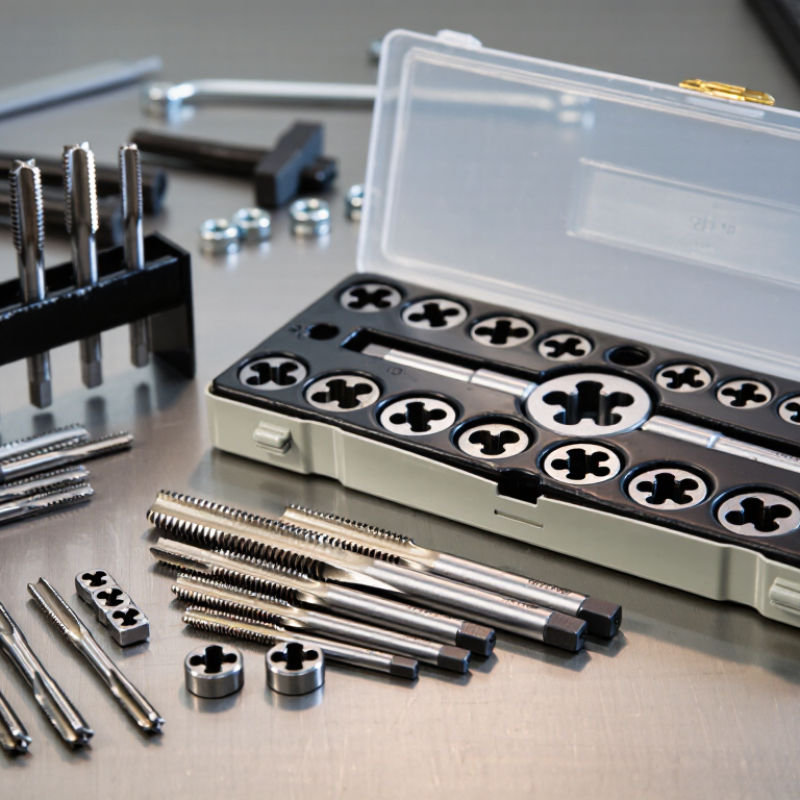
Global buyers need different fractional tap and die sets because workshop tasks rarely match one standard kit. Maintenance teams often need common UNC and UNF sizes, such as 1/4-20, 5/16-18, and 3/8-16. Automotive users may value thread restoration, while schools need clear markings and safer handling. Distributors should check size coverage, packaging strength, and replacement availability. Small details matter.
A 2024 global cutting-tools market analysis from Grand View Research valued the sector at over USD 20 billion and identified manufacturing as a major demand source. This supports buying for repeated industrial use, not occasional repairs alone. High-speed steel taps usually suit harder materials and longer service. Carbon-steel sets can reduce initial cost for light maintenance. However, hardness claims need independent verification. Marketing language is not enough.
ISO 529:2017 provides dimensional guidance for hand taps, giving buyers a useful reference when comparing international specifications. Choose sets with readable fractional markings, consistent tap geometry, and dies that hold alignment without excessive play. Tool and die makers remain a specialized workforce; the U.S. Bureau of Labor Statistics projects limited employment growth through 2033. Training-friendly designs therefore deserve attention. A compact case helps, but cramped storage can damage sharp edges. I would also question oversized sets: unused pieces increase cost, weight, and inspection time. The best choice matches actual thread demand, material types, operator skill, and local replacement needs.