0%

China has become a major sourcing base for industrial brush products, including Nylon Abrasive Brushes. This guide examines ten notable Chinese suppliers serving manufacturers, distributors, and maintenance teams. It focuses on practical buying evidence, not attractive catalog language alone.

The review considers brush construction, abrasive grit, filament density, trim length, core materials, and available diameters. These details affect deburring, edge blending, surface finishing, and light cleaning. A supplier may offer a wide range, yet production consistency matters more than a long product list. We also look at sample support, custom tooling, packaging quality, and communication during development. Certifications, inspection records, and documented quality procedures can strengthen supplier credibility. They do not replace testing.

Real purchasing decisions often begin with a small sample. A brush that performs well on aluminum may behave differently on stainless steel or composite parts. Users should confirm operating speed, contact pressure, moisture conditions, and expected service life before placing a large order. Factory visits can help, but clear technical documents and traceable inspection reports remain valuable when travel is impractical.

This selection is intended as a research starting point, not an unquestionable ranking. Supplier capabilities change, and online information can become outdated. Some companies may excel at custom orders but struggle with urgent delivery. Others may provide fast shipping but limited engineering support. That distinction is easy to miss. Careful comparison, direct questioning, and controlled trials can reveal the better fit for each application. The strongest supplier is not always the largest one.
China Top 10 Nylon Abrasive Brushes Suppliers?

What Are Nylon Abrasive Brushes and How Do They Work?

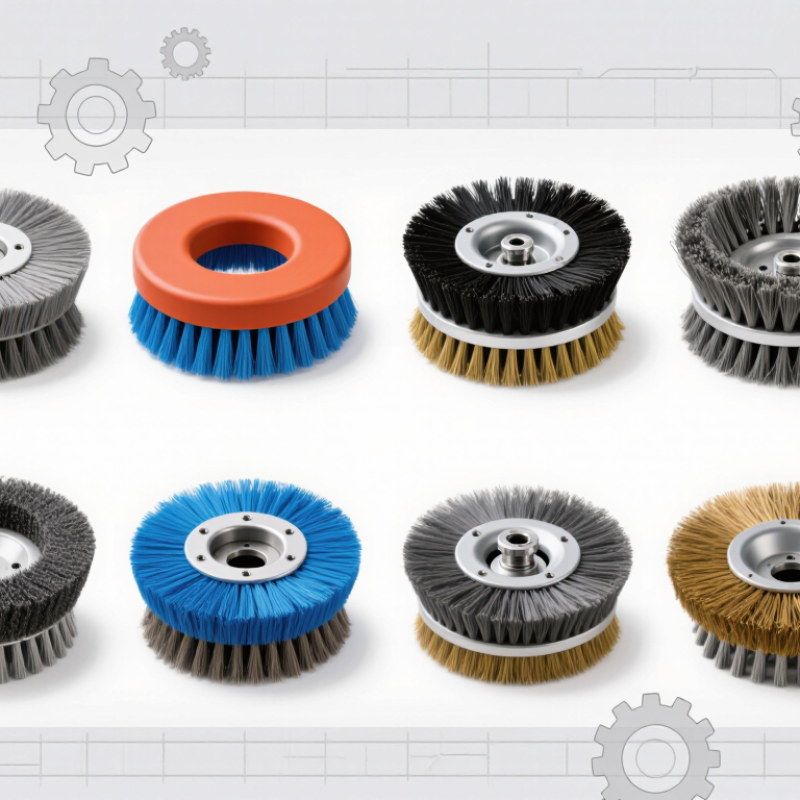
Nylon abrasive brushes combine flexible nylon filaments with abrasive grains, usually silicon carbide or aluminum oxide. The filaments bend around edges, grooves, and uneven surfaces. Their abrasive particles then remove burrs, rust, paint residue, and light oxidation. The action is gentle. It cuts gradually instead of digging like a rigid wheel.

Brush performance depends on filament diameter, grain size, trim length, rotation speed, and contact pressure. Short, thick filaments produce stronger cutting action. Longer filaments follow curved surfaces more easily. Excessive pressure can flatten the brush and create uneven results. That mistake is common. A brush may look aggressive, yet heat and loading can reduce its useful life.

MarketsandMarkets’ 2024 Abrasives Market report estimates growth from 44.3 billion dollars in 2023 to 58.4 billion dollars by 2028. This expansion reflects wider demand for controlled surface finishing. In supplier evaluations, buyers should request grain type, filament specification, maximum speed, and test results. ISO 21920 surface-texture guidance also supports measurable finishing checks after brushing. Visual inspection alone is unreliable. A brighter surface is not always a cleaner or better surface. Real production trials should compare material removal, roughness, dust, and brush wear. The data may challenge the first impression.

China Top 10 Nylon Abrasive Brushes Suppliers? — What Are Nylon Abrasive Brushes and How Do They Work?

Nylon abrasive brushes contain flexible nylon filaments impregnated with abrasive grains such as silicon carbide or aluminum oxide. The chart shows nominal abrasive particle sizes for commonly used FEPA P-grit grades. Lower grit numbers indicate coarser particles, which generally provide more aggressive material removal, while higher grit numbers produce finer brushing, deburring, and surface-finishing results. Actual performance also depends on filament diameter, brush density, trim length, pressure, and operating speed.

Key Criteria for Evaluating Nylon Abrasive Brush Suppliers

China Top 10 Nylon Abrasive Brushes Suppliers?

Choosing a nylon abrasive brush supplier requires more than comparing prices. Check filament type, abrasive grain, grit range, trim length, and core material. These details control cutting action, surface finish, and brush life. A supplier should provide technical datasheets, batch identification, and sample test results.

Grand View Research reports that the global abrasives market was valued at approximately 46 billion US dollars in 2023, with steady growth expected through 2030. This expansion increases supplier choices, but also makes verification harder. Ask whether the factory controls filament mixing, knot strength, balance, and heat resistance internally. Request production records and inspection standards, not only polished certificates. Evidence matters.

Test samples on your actual aluminum, stainless steel, wood, or composite workpieces. Measure material removal, surface roughness, vibration, and wear after a defined number of cycles. A brush that cuts quickly may leave unacceptable scratches. That trade-off is often ignored. ISO 9001 certification can support process reliability, but it does not prove brush performance. Confirm compliance with relevant safety and quality requirements, packaging protection, export experience, and response time. Small details reveal operational maturity. I would also review failed samples honestly; one weak test should not be hidden, because it may expose a recurring production problem.

China’s Top 10 Nylon Abrasive Brush Suppliers

China’s Top 10 Nylon Abrasive Brush Suppliers

A reliable top-ten supplier list should reflect measurable performance, not only online visibility. In practical sourcing, I check abrasive grit, filament density, trim length, backing strength, and production consistency. A brush may look dense in a photo but shed during a three-hour test. That detail matters. Suppliers with stable technical records, clear inspection procedures, and responsive engineering teams deserve stronger consideration. Factory experience also helps when buyers need custom diameters, hole patterns, or unusual filament shapes.

Tips: Request samples from several suppliers. Test them on your actual metal, wood, or composite surface. Record cutting speed, finish quality, filament loss, and operating temperature. Ask for material specifications and batch inspection results. Small details reveal large differences.

A careful ranking should also examine lead times, packaging, communication, and after-sales support. I would not judge quality from price alone. The cheapest brush can create uneven finishing and higher replacement costs. However, no supplier list is perfect. Market conditions change, and a factory’s performance may vary between batches. Buyers should review recent samples before placing larger orders. One useful improvement is adding a trial order before final approval. That step may feel slow, but it exposes weaknesses early. Reliable suppliers usually welcome technical questions and provide clear answers without excessive promises.

China Top 10 Nylon Abrasive Brushes Suppliers? - China’s Top 10 Nylon Abrasive Brush Suppliers

Rank Anonymous Supplier Profile Primary Brush Forms Abrasive Filament Options Common Grit Range Typical Applications Customization Capability Buyer Verification Points
1 Profile A — Industrial Disc Brush Specialist Disc, wheel, and cup brushes Silicon carbide or aluminum oxide nylon filament Approximately 36–320 grit Deburring, edge blending, surface preparation Diameter, trim length, arbor, filament density Filament retention, balance, runout, abrasive distribution
2 Profile B — CNC Deburring Brush Supplier End brushes, cylinder brushes, mounted brushes Abrasive nylon with straight or crimped filaments Approximately 46–240 grit Cross-hole deburring, machining-center finishing Shank size, brush geometry, filament stiffness Dimensional tolerances, concentricity, tool compatibility
3 Profile C — Surface Finishing Brush Supplier Roller, strip, and cylinder brushes Silicon carbide nylon for controlled abrasion Approximately 80–600 grit Brushing lines, satin finishing, coating preparation Brush length, core diameter, helix, density Surface uniformity, wear rate, operating speed limits
4 Profile D — Automotive Component Brush Supplier Disc, cup, and small wheel brushes Fine and medium abrasive nylon filaments Approximately 80–320 grit Aluminum finishing, burr removal, component cleaning Automated mounting, custom trim, packing formats Repeatability, lot traceability, non-contamination controls
5 Profile E — Metal Fabrication Brush Supplier Wheel, cup, and hand-held brushes Coarse abrasive nylon for weld and edge preparation Approximately 36–180 grit Weld preparation, scale removal, edge conditioning Backing plate, arbor, brush face, handle design Heat resistance, safety testing, operating instructions
6 Profile F — Precision Small-Brush Supplier End, pencil, and miniature rotary brushes Fine abrasive nylon filaments Approximately 120–600 grit Precision deburring, grooves, ports, and small cavities Small diameters, shanks, trim lengths, filament grades Tip consistency, shank concentricity, burr-control testing
7 Profile G — General Industrial Brush Supplier Disc, strip, roller, and hand brushes Silicon carbide and aluminum oxide nylon options Approximately 46–320 grit Cleaning, deburring, finishing, and conveying lines Standard and made-to-order dimensions Material declaration, sample approval, production capacity
8 Profile H — Automated Line Brush Supplier Strip, spiral, roller, and rotary brushes Flexible abrasive nylon for continuous processing Approximately 80–320 grit Web cleaning, sheet finishing, automated deburring Core engineering, balancing, mounting interfaces Line speed, brush pressure, service life, replacement fit
9 Profile I — Export-Oriented Custom Brush Supplier Disc, wheel, cup, strip, and roller brushes Multiple abrasive nylon grades and filament diameters Approximately 36–600 grit OEM replacement parts and industrial surface treatment Packaging, labeling, drawings, and private specifications Export documentation, inspection reports, packaging quality
10 Profile J — Low-Volume Prototype Supplier Custom disc, end, strip, and small roller brushes Common abrasive nylon grades for prototype testing Approximately 80–320 grit Pilot production, tooling trials, maintenance applications Short-run quantities, samples, drawings, and test batches Minimum order quantity, lead time, sample-to-mass-production consistency

Note: The profiles above are anonymized capability categories rather than named companies or brands. Grit availability, dimensions, certifications, minimum order quantities, and production lead times should be confirmed directly with each supplier before purchasing.

How to Compare Products, Customization, and Manufacturing Capabilities

China Top 10 Nylon Abrasive Brushes Suppliers?

Comparing China’s top ten nylon abrasive brush suppliers requires more than checking price lists. Examine filament type, abrasive grain, diameter, trim length, and brush density. These details control cutting performance, surface finish, and service life. Request samples with identical specifications. A brush that performs well on aluminum may behave differently on stainless steel or wood. Ask for test data, including wear results, pull-out strength, balance, and dimensional tolerance. Small variations matter.

Customization also deserves careful attention. Reliable suppliers should adjust core materials, hole patterns, thread types, filament stiffness, and mounting structures. Confirm whether tooling costs apply. Ask how drawings are reviewed and how sample changes are recorded.

Manufacturing capability can be judged through production equipment, inspection procedures, batch traceability, and quality records. Factory visits help, but photographs are not enough. Request evidence from current production. It may reveal limitations.

A useful comparison table should score product consistency, technical support, minimum order quantity, lead time, packaging, and communication. Do not reward the lowest quotation too quickly. A cheaper brush may use weaker cores or uneven filament distribution. I have found that sample approval can create false confidence. Testing should continue during mass production. No supplier performs perfectly in every category. Leave room for technical improvement and honest supplier feedback.

What to Check Before Choosing a Chinese Supplier

China Top 10 Nylon Abrasive Brushes Suppliers?

What to Check Before Choosing a Chinese Supplier

Choosing a Chinese nylon abrasive brush supplier requires more than comparing prices. Check the supplier’s production experience with abrasive filaments, brush density, and custom shapes. Ask for clear photos of trimming, crimping, and final inspection processes. Small details matter. A reliable supplier should provide filament grades, grit sizes, backing materials, and dimensional tolerances. Request samples made from the same materials used in mass production. A sample can look excellent while hiding inconsistent filament hardness.

Confirm quality control through measurable records, not attractive promises. Ask how often workers check filament distribution, brush balance, hole positions, and surface finish. For industrial disc brushes, request rotation testing and pull-out strength data when relevant. Review inspection reports with dates, batch numbers, and responsible personnel. Factory visits can reveal crowded storage areas, unclear labeling, or poor moisture control. These details often predict delivery problems.

Communication deserves equal attention. Send a technical drawing with tolerances, packaging requirements, and expected service conditions. Ask who will handle engineering changes and complaint responses. Suppliers should explain lead times honestly, including holidays and tooling delays. Be careful with unusually low quotations. They may exclude testing, packaging, or replacement parts. I have found that even careful evaluations miss something, especially when specifications are incomplete. That weakness should be discussed openly. A short trial order, documented inspection plan, and written approval process can expose problems before larger production begins.

FAQS

What are nylon abrasive brushes?

They combine flexible nylon filaments with abrasive grains. Common grains include silicon carbide and aluminum oxide. The filaments bend around edges, grooves, and uneven surfaces. The brush removes burrs, rust, paint residue, and light oxidation gradually.

How do nylon abrasive brushes work?

The filaments contact the surface while abrasive grains perform controlled cutting. Unlike rigid wheels, they conform to curved areas. Their action is usually gentler. Excessive pressure can flatten the brush and produce uneven results.

Which factors affect brush performance?

Filament diameter, grain size, trim length, rotation speed, and contact pressure all matter. Short, thick filaments cut more aggressively. Longer filaments follow curved surfaces better. Results can change noticeably with only a small pressure difference.

What materials can these brushes process?

They may suit metal, wood, and composite surfaces. Test samples on the actual material before production use. Record cutting speed, surface finish, temperature, and filament loss. One surface may respond well, while another may load the brush quickly.

How should buyers evaluate a supplier?

Request abrasive grain details, filament specifications, maximum speed, and test results. Check brush density, trim length, backing strength, and dimensional consistency. Ask for recent batch inspection records. Online photos are not enough.

Why are production trials important?

A trial reveals material removal, surface roughness, dust, heat, and brush wear. Visual brightness can mislead you. A brighter surface is not always cleaner. The data may challenge your first impression.

What quality records should a supplier provide?

Ask for dated reports with batch numbers and responsible personnel. Review filament distribution, brush balance, hole positions, and surface finish checks. Rotation testing and pull-out strength data may matter for disc brushes. Missing records deserve attention.

What should a custom-order request include?

Send a technical drawing with dimensions, tolerances, hole patterns, and packaging requirements. Describe the working material and service conditions. Confirm engineering contacts and complaint procedures. Details get missed sometimes.

How can buyers reduce sourcing risks?

Request samples from several suppliers and compare them under identical conditions. Use a short trial order before larger production. Confirm lead times, tooling delays, holidays, and replacement terms. The cheapest option may create higher replacement costs.

Conclusion

This article provides a practical guide to identifying reliable Nylon Abrasive Brushes suppliers in China. It explains how these brushes work, using abrasive filaments to clean, deburr, polish, and finish surfaces with consistent results while reducing the risk of damage. Readers will also learn which factors matter when evaluating suppliers, including filament quality, brush construction, product durability, production capacity, quality control, certifications, and experience serving different industrial applications.

The article also presents a framework for comparing leading Chinese suppliers without focusing on brand names. It discusses how to assess product ranges, customization options, tooling capabilities, sample services, minimum order quantities, lead times, packaging, communication, and after-sales support. Before placing an order, buyers should verify technical specifications, inspect samples, confirm manufacturing processes, review quality documentation, and clarify commercial terms. These steps can help businesses select a dependable supplier and obtain Nylon Abrasive Brushes that meet their performance, consistency, and application requirements.

Amelia

Amelia

Amelia is a dedicated marketing professional with a strong understanding of the company’s products, customers, and evolving market needs. With a background in strategic communication, content development, and customer-focused marketing, she transforms complex product information into clear,......