 Built Blue Since 1940
EN Contact Us
Built Blue Since 1940 Industrial High Speed Steel Drill Bits remain essential where factories need dependable hole-making, repeatable geometry, and practical tool costs. This guide examines the leading types for steel, cast iron, aluminum, stainless steel, and mixed production work. It considers jobber-length, stub-length, taper-shank, step, center, and cobalt-alloy designs. Each type behaves differently under pressure, heat, and interrupted cutting.
Dr. John A. Schey, a respected manufacturing-process specialist, stated, “Tool performance depends on matching the tool to the operation.” That principle guides this review. A short, rigid drill may reduce wandering in a thin plate. A longer jobber drill may reach deep workpieces but flex more easily. Cobalt-enhanced HSS can tolerate higher heat, yet it is not automatically the best choice. Coolant, spindle speed, feed rate, point angle, and machine rigidity still matter.
Small details decide large results. A polished flute can improve chip movement in aluminum. A split point can reduce walking on stainless steel. A black-oxide finish may support lubrication during demanding cuts. TiN, TiAlN, and similar coatings can extend service life when temperature and cutting conditions are controlled.
Experience also exposes uncomfortable limits. Even premium Industrial High Speed Steel Drill Bits fail when operators force dull edges through hardened material. Sometimes the selected bit is wrong. Sometimes the machine is unstable. This article compares the 2026 top types through performance, material compatibility, durability, maintenance, and value. The recommendations are practical, but not absolute. Test cuts still matter.
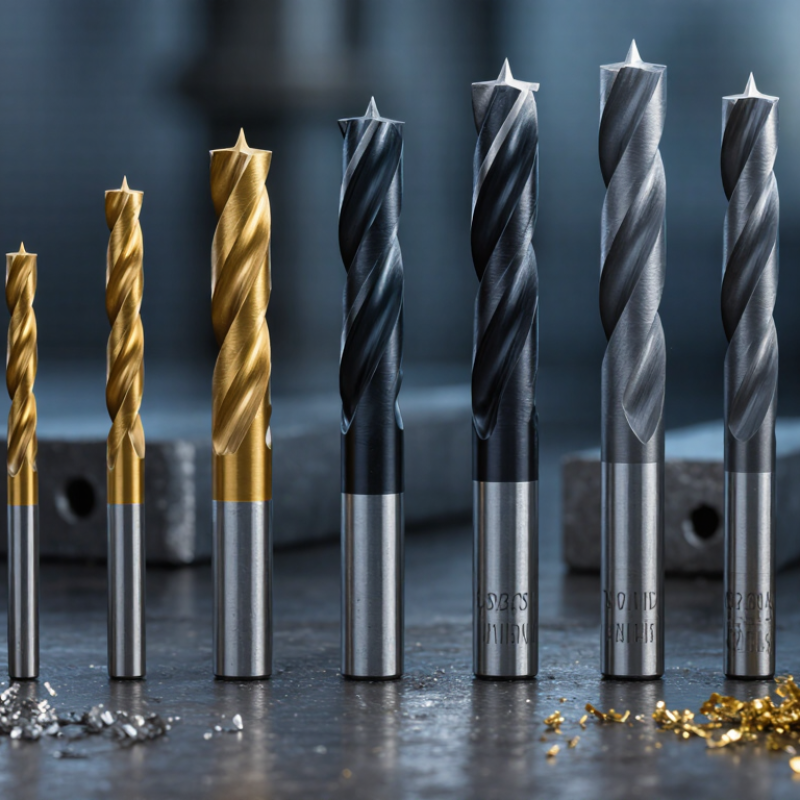
Industrial high-speed steel drill bits are cutting tools made from heat-resistant alloy steel. They are designed to drill metal, hardwood, plastic, and other demanding materials. Unlike ordinary carbon-steel bits, HSS bits retain useful hardness at elevated cutting temperatures. That matters in production work.
Common industrial types include standard twist bits, cobalt-alloy HSS bits, and bits with specialized coatings. Twist bits handle general holemaking with two helical flutes. Cobalt-alloy versions tolerate more heat and suit stainless steel or other tough alloys. Coated bits can reduce friction and improve wear resistance, but coating quality and edge geometry still matter. A coating cannot repair poor sharpening.
In practical use, I check the point angle, lip symmetry, and shank condition before drilling. A sharp, centered point starts cleanly instead of skating across a steel plate. Cutting fluid helps control heat, especially during deeper holes. Use slower speeds for larger diameters and harder metals. Let the tool cut; excessive pressure can fracture the edge. Heat wins. I have also seen operators blame the bit when the real problem was an unstable workpiece or a worn chuck. That mistake is easy to repeat. HSS bits are durable, not indestructible, and their service life depends on alignment, feed pressure, cooling, and proper material selection.
| Drill Bit Type | Typical HSS Grade | Common Geometry | Typical Size Range | Best-Suited Materials | Key Advantages | Main Limitations |
|---|---|---|---|---|---|---|
| General-Purpose Twist Drill | M2 HSS | 118° point; standard helical flutes; 2-flute construction | Approximately 0.5–25 mm | Mild steel, cast iron, aluminum, brass, plastics, and wood | Versatile, economical, and easy to resharpen | Less resistant to heat and wear than cobalt or carbide tools |
| Split-Point Twist Drill | M2 or M35 HSS | 135° split point; reduced chisel edge; self-centering tip | Approximately 1–20 mm | Steel, stainless steel, cast iron, and sheet metal | Improved starting accuracy and lower walking tendency | More difficult to manufacture and resharpen accurately |
| Cobalt HSS Twist Drill | M35 or M42 HSS | 135° split point; heavy-duty web; variable helix options | Approximately 1–25 mm | Stainless steel, heat-resistant alloys, tool steel, and hard cast iron | Higher hot hardness and better wear resistance than conventional M2 HSS | More brittle and usually more expensive; needs controlled feed and alignment |
| Reduced-Shank Twist Drill | M2 or M35 HSS | Large cutting diameter with smaller cylindrical shank | Typically 13–32 mm cutting diameter | Structural steel, mild steel, cast iron, and nonferrous metals | Allows large holes in standard drill chucks with limited capacity | Reduced shank can limit torque transmission and concentricity |
| Step Drill | M2 or M35 HSS; often surface-treated | Multiple stepped diameters; split or pilot point | Commonly 4–32 mm in one tool | Thin sheet steel, stainless sheet, aluminum, copper, and plastics | Creates several hole sizes with reduced tool changes and low burr formation | Not intended for deep holes or thick solid sections |
| Core Drill / Annular Cutter | M2, M35, or M42 HSS teeth | Annular cutting teeth surrounding a pilot pin | Approximately 12–100 mm diameter; common cutting depths 25–100 mm | Structural steel, rails, plates, and fabrication components | Removes a ring rather than a full plug, reducing cutting force and improving productivity | Requires a compatible magnetic or dedicated drilling machine |
| Countersink Drill | M2 HSS or M35 HSS | Multi-flute conical cutting section; common angles include 60°, 82°, 90°, and 100° | Approximately 6–25 mm cutting diameter | Steel, aluminum, brass, and plastics | Produces a conical seat for flush fasteners and removes burrs | Poor feed control can cause chatter, oversizing, or surface damage |
| Spotting / Center Drill | M2 HSS | Short, rigid body; pilot point with countersink section | Approximately 0.5–12 mm pilot diameter | Steel, cast iron, aluminum, brass, and machining workpieces | Establishes an accurate starting location for subsequent drilling or turning | Short pilot section is unsuitable for deep-hole drilling |
| Long-Series Twist Drill | M2 or M35 HSS | Extended flute and overall length; standard or split point | Approximately 1–20 mm diameter; length varies by standard | Steel, aluminum, cast iron, and general engineering materials | Reaches deep or obstructed locations without an extension | Lower rigidity increases deflection, vibration, and breakage risk |
They can drill metal, hardwood, plastic, and other demanding materials. They retain hardness during elevated cutting temperatures. Not forever.
Cobalt-alloy high-speed steel bits handle more heat and suit stainless steel or tough alloys. Use controlled pressure and cooling.
A 135-degree split point reduces walking on curved or polished surfaces. A 118-degree point cuts aggressively in softer steel.
Coatings can reduce friction, surface adhesion, and edge wear. They may produce cleaner flutes and steadier hole sizes.
No. Coating cannot repair poor sharpening, uneven lips, or a damaged point. Geometry still matters greatly.
Use cutting fluid, slower speeds, and suitable feed pressure. Larger diameters and harder metals need slower cutting speeds.
Check point angle, lip symmetry, and shank condition. Secure the workpiece and inspect the chuck. Small faults matter.
Excessive pressure, poor alignment, weak coolant delivery, or a worn chuck can cause early failure. I sometimes blame the bit too quickly.
Compare spindle load, hole diameter, burr height, and edge wear. Test different geometries on the same machine and material.
No. Their life depends on alignment, cooling, feed pressure, sharpening, and material selection. Heat usually wins.
Industrial High Speed Steel Drill Bits are engineered cutting tools designed for reliable hole-making in demanding industrial environments. Their high-speed steel construction offers a practical balance of hardness, toughness, heat resistance, and cost efficiency. This article explains the main bit types and structural features, including standard twist designs, jobber-length bits, stub-length bits, and specialized forms developed for different drilling conditions. It also examines how coatings and point geometries, such as split points and improved cutting angles, can reduce friction, improve centering, control heat, and extend service life.
Different Industrial High Speed Steel Drill Bits are suited to materials such as carbon steel, alloy steel, cast iron, aluminum, brass, plastics, and wood-based products, depending on their geometry and finish. The guide also outlines how to select the correct diameter, flute design, point angle, and coating for a specific application. Proper speed, feed, lubrication, chip removal, inspection, sharpening, and storage practices are essential for maintaining drilling accuracy, safety, and consistent tool performance.