China Top Abrasive Belt Manufacturer & Exporter

Precision-Engineered Coated Abrasives, Flap Wheels & Diamond Grinding Technologies for Global OEM & Industrial Supply Chains
Industrial Product Lineup

High-Performance Grinding & Cutting Solutions

Engineered for extreme material removal rates, high thermal tolerance, and mirror-grade surface finishing across aerospace, automotive, metal fabrication, and woodworking industries.
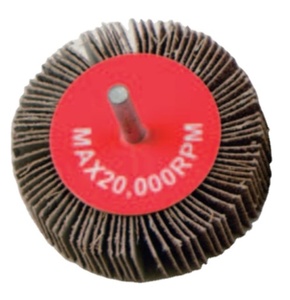
White Horse Best Seller Flap Wheel With Shaft Low Noise Grinding Disc Abrasive Disc

White Horse Best Seller Flap Wheel With Shaft Low Noise Grinding Disc Abrasive Disc

Grit Range: P60 – P320 Premium Grain
Application: Inner Cylinder Finishing & Deburring
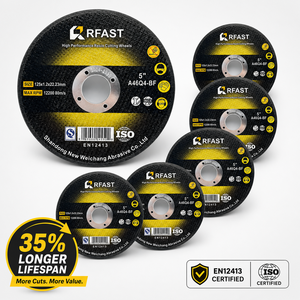
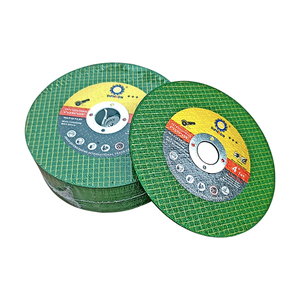
Metal Stainless Steel 4 Inch Cutting Disc Wheel 4 Inch Cutting Disc Wheel Cut Off Wheel

Metal Stainless Steel 4 Inch Cutting Disc Wheel 4" Cutting Disc Wheel Cut Off Wheel

Reinforcement: Dual Fiberglass Mesh
Material: Inox & Hardened Structural Steel
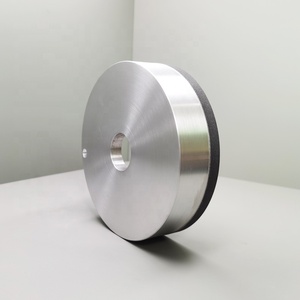
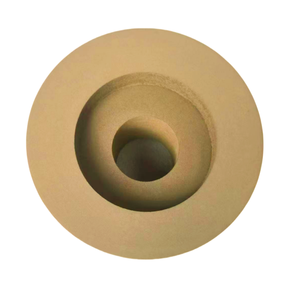
JR Hot Sale Woodworking Tools Straight Diamond Resin Grinding Wheel 220 Grit Very Fine Cup Disc 75-200mm Inner 22mm Aluminum

JR Hot Sale Woodworking Tools Straight Diamond Resin Grinding Wheel 220 Grit Cup Disc

Bond Type: Resinoid Diamond Matrix
Target: Carbide Saw Blades & Tool Sharpening
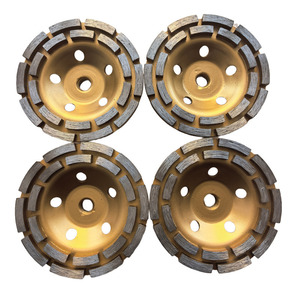
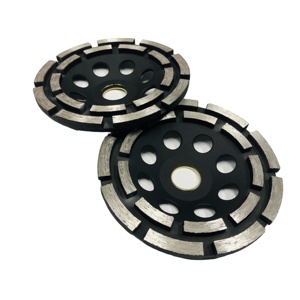
4 Inch Double Row Diamond Cup Surface Grinding Wheel for Concrete Turbo

4 Inch Double Row Diamond Cup Surface Grinding Wheel for Concrete Turbo

Segment Type: Heavy Duty Double Row
Suitability: Cured Concrete, Stone & Masonry
OEM Grinding Wheel For Metal & Stainless Steel, Wholesale High Quality Grinding Disc Grinding Wheel

OEM Grinding Wheel For Metal & Stainless Steel, Wholesale High Quality Grinding Disc

Grain: Premium Aluminum Oxide / Zirconia
Certification: EN12413 & ISO9001 Approved
Factory Direct Abrasive Cutting Disc 125mm X 2.5mm High Hardness Quartz Sand 24#~80# OEM Multi-purpose Wheel For Angle Grinders

Factory Direct Abrasive Cutting Disc 125mm X 2.5mm Multi-purpose Wheel

Specs: 125mm x 2.5mm x 22.23mm
Feature: Cool Cutting Action & Zero Burr
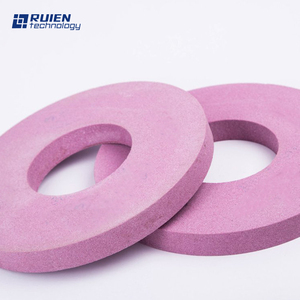
Factory Price Recessed Both Side Centerless Regulating Feed Control Angle Grinding Wheels Aluminum Oxide Grit 80

Factory Price Recessed Centerless Regulating Feed Control Grinding Wheels Grit 80

Design: Dual Recessed Centerless Type
Precision: Tolerance Within ≤ 0.002mm
4.5inch Sintered Double Row Segment Diamond Grinding Cup Wheel for Concrete Grinding Abrasive Tools

4.5 Inch Sintered Double Row Segment Diamond Grinding Cup Wheel for Concrete

Technology: High-Pressure Hot Sintered
Life Cycle: +35% Extended Operational Life
85+
Years Industry Engineering
12,000
Sq.m Manufacturing Hub
99.4%
Batch Consistency Rating
65+
Global Export Countries

Industrial Abrasive Belt Engineering: Microstructure, Mineral Chemistry & Substrate Mechanics

In high-throughput industrial grinding—ranging from heavy-duty off-hand snagging of titanium forging billets to robotic deburring of stainless steel automotive exhaust manifolds—the abrasive belt is not merely a consumable tool; it is a high-precision cutting instrument. As China’s premier abrasive belt manufacturer and exporter, our engineering philosophy centers on optimizing three fundamental pillars: mineral micro-fracturing chemistry, backing substrate elasticity metrics, and cross-linked synthetic resin bonding systems.

Information Gain Insights: Standard aluminum oxide abrasive belts experience thermal capping and rapid glazing under pressures above 35 N/cm². Modern Ceramic Grain (SG) belts, manufactured with micro-crystalline structures, continuously fracture under heavy load to generate fresh, razor-sharp cutting edges, reducing grinding temperatures by up to 140°C.

1. Grain Mineralogy & Micro-Crystalline Fracture Physics

The choice of mineral directly dictates stock removal rates (MRR), total work-piece thermal exposure, and surface finish Ra values. Our production lines process four main categories of abrasive grains:

  • Ceramic Aluminum Oxide (Seeded Gel - SG): Formed via sol-gel sub-micron crystal synthesis. When subjected to continuous mechanical load, SG grains undergo micro-fracturing rather than macro-dulling. This self-sharpening mechanism ensures aggressive, cool stock removal on nickel superalloys, cobalt-chrome, and hard-faced stainless steels.
  • Zirconia Alumina (ZA - ZrO2/Al2O3 alloy): Engineered with 40% or 25% zirconia content, this crystal structure offers unmatched toughness under extreme grinding pressures. Ideal for heavy foundry snagging, steel plate beveling, and heavy weld seam removal.
  • Silicon Carbide (SiC): Extremely sharp and brittle mineral with high thermal conductivity. Specified for non-ferrous alloys, copper, titanium, grey cast iron, stone, glass, and high-density composite materials.
  • Premium Aluminum Oxide (AO): Tough, blocky grain structure optimized for general-purpose metalworking, high-tensile carbon steel grinding, and primary wood sanding operations.

2. Substrate Mechanics & Joint Engineering Integrity

The backing material acts as the structural foundation of an abrasive belt. Substrate flexibility, tensile strength, and stretch elongation percentages must align perfectly with the contact wheel durometer and application pressure.

Y-wt Heavy Polyester

100% waterproof synthetic backing engineered for extreme mechanical tensile loads (>2800 N/50mm). Prevents edge fraying during heavy robotic grinding.

X-wt Cotton/Poly Blends

Balanced rigidity and flexibility for off-hand backstand grinding, portable belt sanders, and intermediate weld blending operations.

J-wt & F-wt Ultra Flexible

Highly pliable cotton cloth designed to conform effortlessly to intricate contours, surgical instrument polishing, turbine blades, and plumbing fixtures.

A critical point of failure in low-grade abrasive belts is the joint splice. Our factory utilizes high-frequency ultrasonic tape bonding and automated sinusoidal splice-cutting equipment. By deploying Kevlar-reinforced synthetic joint tapes paired with thermosetting polyurethane adhesives, our belts yield seamless joint transitions that eliminate chatter marks on precision-ground workpieces.

Engineering Reference

Abrasive Belt Selection Matrix & Operational Parameters

Match your specific workpiece metallurgy to optimal abrasive grain structures, backing weights, recommended surface speeds (m/s), and active coolant additives.

Workpiece Metallurgy Recommended Grain Type Backing Weight Cutting Speed (m/s) Coolant / Topsize Filler Performance Index
Stainless Steel (304 / 316L) Ceramic SG / Micro-Crystalline Y-wt Polyester Waterproof 28 – 35 m/s Potassium Tetrafluoroborate (Active) Max Stock Removal
Titanium & Nickel Superalloys Ceramic + Extra Topsize Lubricant Y-wt Heavy Duty Synthetic 18 – 25 m/s Cryolite Active Coolant Coating Zero Thermal Discoloration
Carbon Steel & Cast Iron Zirconia Alumina (ZA) X-wt / Y-wt Poly-Cotton 30 – 38 m/s Dry / Water-Soluble Emulsion High Toughness
Aluminum & Non-Ferrous Alloys Silicon Carbide / Coarse AO X-wt Cotton (Anti-Clogging) 20 – 30 m/s Stearate Anti-Loading Layer Anti-Clogging Layer
Hardwood & Veneer Panels Premium Open-Coat Aluminum Oxide F-wt / E-wt Heavy Paper 22 – 28 m/s Anti-Static Resin Bond Chatter-Free Finish
Glass, Ceramics & Stone Black Silicon Carbide / Diamond Y-wt Waterproof Synthetic 15 – 22 m/s Heavy Flood Water Coolant Ultra Precision
Strategic Procurement Insights

2025–2030 Global Abrasive Belt Manufacturing & Sourcing Trends

As global manufacturing shifts toward automated grinding cells, stringent ESG metrics, and supply chain resilience, commercial buyers must align with forward-thinking Chinese exporters.

1. Robotic & CNC Automated Integration

Robotic grinding arms demand extremely consistent abrasive belt dimensional tolerances (±0.5mm width/length) and constant tension resistance to prevent slippage or sensor fault trips during continuous duty cycles.

2. Eco-Friendly Polymeric Bonds & Low-VOC

Global environmental regulations (REACH/RoHS) are forcing a phase-out of traditional formaldehyde-releasing phenolic binders. Advanced manufacturers are deploying water-based cross-linked polymer resin systems.

3. Agglomerate & Structured Grain Tech

Transitioning from single-layer grains to micro-replicated multi-grain agglomerates. Agglomerate belts deliver consistent surface roughness (Ra) throughout 100% of their operational lifespan, multiplying belt longevity by 4X–6X.

4. Supply Chain Auditability & Traceability

Enterprise procurement teams now mandate raw material traceability down to jumbo roll lot numbers, FEPA grit certification, dynamic tension testing reports, and ISO-standardized moisture-proof packaging.

Enterprise Superiority

Why Global Industry Leaders Partner With Our Manufacturing Plant

Combining over 85 years of brand engineering heritage with state-of-the-art automated conversion lines, electrostatic grain orientation, and comprehensive OEM/ODM packaging capabilities.

01

Electrostatic Grain Deposition

Upward electrostatic field deposition ensures 98%+ of mineral grains stand vertically on the backing cloth, maximizing initial bite and cutting aggression.

02

Automated Slitting & Conversion

Precision German slitting equipment ensures slit width tolerances within ±0.2mm, preventing belt tracking wander on high-speed contact wheels.

03

100% Dynamic Joint Stress Test

Every batch undergoes destructive tensile pull tests and rotational burst testing compliant with DIN EN 13743 industrial safety protocols.

04

Climate-Controlled Conditioning

Finished jumbo rolls and conversion belts are cured in humidity-controlled chambers (45-55% RH) to eliminate backing curl and guarantee shelf stability.

Custom OEM / ODM Program Capabilities

We provide full-spectrum private label manufacturing for international distributors, tool brands, and industrial procurement houses. Our turnkey OEM programs encompass custom belt dimensions (width from 6mm micro-belts to 2100mm wide-belts), private-brand back-printing (brand logo, grit size, direction arrows), barcoding, and heavy-duty shrink-wrapped export boxing.

Technical FAQ

Frequently Asked Questions by B2B Procurement & Engineers

Expert answers addressing abrasive grain chemistry, storage conditions, belt joint safety, and custom order logistics.

Q1: What is the main cause of abrasive belt joint breakage during high-speed operation?
Joint failure is typically caused by three factors: incorrect belt storage leading to moisture degradation of the tape adhesive, improper directional installation (running a lap-joint belt counter to its directional arrow), or excessive contact wheel pressure overheating the joint polyurethane layer. Our factory utilizes high-temperature Kevlar-reinforced sinusoidal tape splices that resist temperatures up to 180°C.
Q2: How should industrial coated abrasive belts be stored to maintain maximum shelf life?
Coated abrasives should be stored in a climate-controlled room maintained at 18°C–22°C (64°F–72°F) and 45%–55% relative humidity. Belts should be removed from their shipping cartons 24 hours prior to use and hung on large-diameter peg hooks to equalize internal moisture content, preventing "cupping" or backing distortion.
Q3: What is the functional difference between FEPA grit standard and CAMI / JIS standards?
FEPA (European Federation of Abrasive Producers - P-scale) maintains tighter particle size distribution ranges, especially in fine grits (P120 and above), ensuring a consistent surface scratch pattern. CAMI (US standard) and JIS (Japanese standard) have differing micron tolerance windows. Our products strictly comply with FEPA P-series standards, guaranteeing global repeatability.
Q4: When should I specify a Topsize (cooling filler) layer on an abrasive belt?
A Topsize layer (typically containing active fluoride or cryolite compounds) should be specified when grinding heat-sensitive metals like stainless steel, nickel alloys, and titanium. The topsize melt-endothermic reaction lubricates the cut, reduces thermal loading, prevents oxidation discoloration (blueing), and extends overall belt life by 30% to 50%.
Q5: What is the Minimum Order Quantity (MOQ) and lead time for custom OEM manufacturing?
Standard OEM production lead time is 15–25 business days depending on jumbo roll availability and conversion specs. MOQ for custom-printed backing cloth belts generally starts at 1,000 meters total conversion length per grit size, while standard stock jumbo roll conversions can accommodate lower initial trial volumes.

Ready to Elevate Your Industrial Abrasive Supply Chain?

Contact our senior engineering team today to request complimentary sample test packs, factory audit documentation, or factory-direct OEM pricing schedules.