 Built Blue Since 1940
EN Contact Us
Built Blue Since 1940 Explore our high-performance carbide milling cutters, centerless grinding wheels, and diamond surface finishing products specified for aerospace, automotive, and high-precision mold engineering.
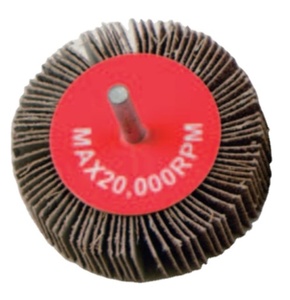
Engineered with high-tenacity aluminum oxide grains on a 6mm steel spindle. Delivers low-vibration edge deburring, internal contour blending, and mirror polishing on CNC-milled steel components.
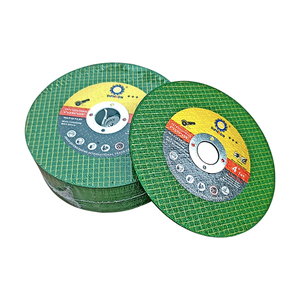
Dual-reinforced fiberglass mesh construction designed for rapid metal sectioning and workpiece prepping prior to precision CNC milling operations. High thermal resistance minimizes discoloration.
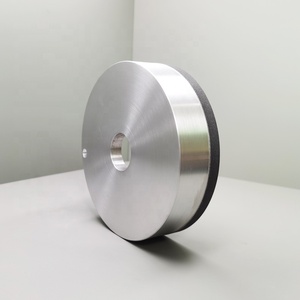
Specialized phenolic resin-bonded diamond wheel optimized for sharp edge restoration, flute re-sharpening, and clearance angle grinding on solid carbide end mills and CNC router bits.
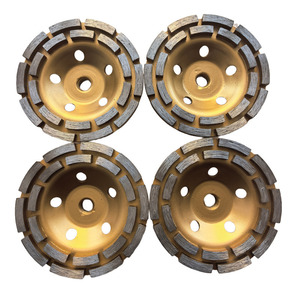
Heavy-duty matrix diamond cup designed for aggressive surface leveling, tool tooling bed preparation, and removing abrasive coatings on machine shop floor fixtures.
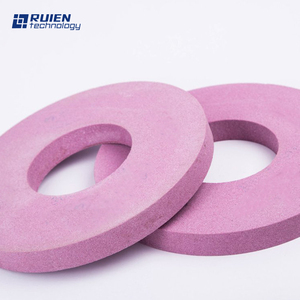
High-grade ceramic aluminum oxide formulation tailored for heavy stock removal, chamfering raw alloy blocks, and smoothing heavy machine tool cast bases prior to finish machining.
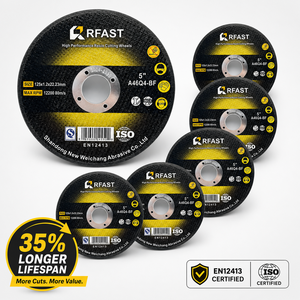
Synthesized with premium quartz and aluminum oxide grains (Grit 24#-80#). Engineered to slice through alloy steels, structural tubing, and non-ferrous raw materials cleanly without burrs.

Recessed dual-side ceramic regulating wheel designed for high-precision OD grinding of tungsten carbide tool shanks, maintaining h6 tolerance standards during machine setup.
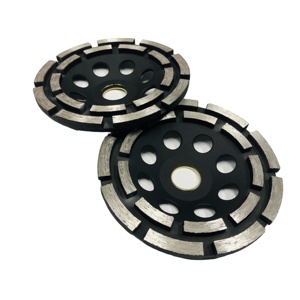
Hot-pressed sintered diamond segment layout engineered for fast cooling and chip clearing when flattening hardened steel plate fixtures and precision toolroom granite blocks.
Combining decades of toolmaking heritage with state-of-the-art 5-axis CNC grinding technology and premium sub-micron carbide substrate selection.
We source ultra-fine grain size (0.2μm – 0.6μm) tungsten carbide rods with 10% to 12% Cobalt content. This delivers an exceptional combination of high transverse rupture strength (TRS > 4,000 MPa) and extreme hardness (HRA 92.5–94.0), preventing edge micro-chipping under high-feed metal removal rates.
Utilizing Swiss and German physical vapor deposition equipment, our cutters are coated with AlTiN, TiSiN, nACo, and DLC (Diamond-Like Carbon). These multi-layered nanocoatings withstand thermal loads up to 1,100°C, drastically reducing friction coefficients and extending tool life in dry milling and MQL environments.
Rooted in our "Built Blue" engineering heritage established since 1940, every production batch undergoes 100% laser dynamic balance testing, optical 3D surface roughness measurements, and Rockwell hardness verification. Full batch traceability guarantees zero-defect deliveries to OEM assembly lines.
In high-efficiency CNC machining (HEM), matching end mill flute count, helix angle, radial rake, and coating specification directly dictates tool deflection, chip evacuation efficiency, surface finish ($Ra$), and cycle time. The table below outlines optimized technical specifications engineered by China's premier tooling manufacturers for common industrial metals.
| Target Workpiece Material | Hardness Range | Recommended Flute Count | Helix Angle (°)/ Rake Angle | Coating Specification | Primary Milling Operation |
|---|---|---|---|---|---|
| Aluminium & Non-Ferrous (Al6061, Al7075) | HB 60 – 150 | 2 Flutes / 3 Flutes | 45° / 55° High Helix, Mirror Polished Flute | Uncoated / DLC (Diamond-Like Carbon) / ZrN | High-Speed Roughing & High-Rake Slotting |
| Carbon Steel & Alloy Steel (P20, 4140, 4340) | HRC 28 – 45 | 4 Flutes | 35° / 38° Variable Helix (Anti-Vibration) | AlTiN / TiAlN Nanocomposite | Trochoidal Roughing & Side Profile Finishing |
| Hardened Die & Mold Steels (H13, D2, SKD11) | HRC 50 – 68 | 4 Flutes / 6 Flutes | 30° / 45° Variable Pitch Rake Edge | nACo (Nano-Blue) / TiSiN Silicon Coating | Hard Milling, Fine Profiling & 3D Contour Finishing |
| Stainless Steels (304, 316L, 17-4PH) | HB 160 – 320 | 4 Flutes | 38° / 41° Unequal Indexing Geometry | AlTiCrN / CrN Multi-layer | Heavy Shoulder Milling & Dynamic Slotting |
| Titanium Alloys & Inconel (Ti-6Al-4V, Inconel 718) | HRC 36 – 48 | 5 Flutes / 7 Flutes | 35° / 38° Radial Land Relief | AlTiN + Top-Layer Lubricious Coating | Aerospace Structural Profiling under MQL Coolant |
Harmonic chatter is the leading cause of premature carbide tool failure, spindle bearing wear, and unacceptably high work-surface roughness. Leading Chinese tooling facilities utilize advanced 5-axis CNC grinding machines (such as ANCA, Walter, and Rollomatic) to grind unequal flute spacing (e.g., 88°–92°–88°–92°) combined with variable helix angles along the cutting length.
This subtle geometrical deviation breaks up the natural resonance frequency during metal cutting. By continually disrupting chatter harmonics, operators can increase axial depth of cut ($a_p$) by up to 300% and radial feed rates by 40% without sacrificing tool edge integrity.
As global supply chains pivot toward localized manufacturing hubs, smart automation, and total cost of ownership (TCO) evaluation, international purchasing departments are adjusting their procurement strategies for cutting tools. Purchasing managers sourcing from China must prepare for four structural shifts in tool procurement:
Procurement teams are moving away from selecting suppliers based purely on unit cost. Modern CNC shop managers evaluate tools by calculating Total Cost per Meter of Metal Removed. High-performance Chinese manufacturers providing custom geometries that double feed rates ($V_f$) and cut cycle times down by 35% offer far greater return on investment than low-cost generic cutters.
Rather than ordering off-the-shelf standard end mills, buyers increasingly request custom corner radii, specialized neck relief lengths for deep cavity mold work, and tailored coating formulations. Chinese suppliers with in-house PVD coating facilities and rapid prototyping lines are capturing larger market shares by providing turnaround times of under 10 days on specialized custom tool drawings.
Tungsten and Cobalt remain critical raw materials subject to global supply fluctuations. Forward-thinking buyers prioritize Chinese manufacturers offering carbide scrap buy-back programs. Recycling used solid carbide cutters into virgin micro-grain powders significantly reduces environmental footprint while establishing price-hedging stability for long-term contract pricing.
With smart factories adopting automated tool management systems (TMS), enterprise buyers demand laser-etched Data Matrix codes and QR barcodes on end mill shanks. This allows automated tool presetters to log tool usage, remaining edge life, re-grind history, and batch certificates automatically in ERP systems.
The cutting tool industry in China has evolved from high-volume standardized manufacturing to ultra-precision engineering capable of producing tools for 5-axis simultaneous high-speed machining (HSM). key technological innovations driving the sector include:
Direct answers to common technical and commercial questions raised by international distributors, machine shop managers, and procurement officers.
Choice of flute count depends primarily on workpiece material and chip clearance space. 2-flute end mills feature large chip pockets, making them ideal for soft, ductile materials like aluminum and copper where long chips must be cleared quickly. 3-flute end mills offer an excellent balance of chip volume and core rigidity for aluminum high-speed roughing. 4-flute end mills have a much larger core strength, reducing tool deflection; they are mandatory for machining steel, stainless steel, and cast iron, where chips are small and high radial rigidity is required.
For standard catalog inventory, MOQs typically range from 10 to 50 pieces per size, with dispatch within 48 hours. For custom tool geometries (special corner radius, extended neck, custom reach, or proprietary PVD coatings), the standard production MOQ is generally 50 to 100 pieces per drawing. Custom sample manufacturing typically takes 7 to 10 business days, while volume production runs take 2 to 3 weeks depending on coating schedules.
Total Indicated Runout ($TIR$) measures how closely the tool concentricity matches its rotational axis. Excess runout (greater than 0.005mm) causes uneven tooth loading: one flute takes a much heavier chip load than the others. This leads to premature tool wear, erratic surface finishes, and potential spindle vibration. Top Chinese manufacturers guarantee shank and cutting edge runout under 0.003mm (3 microns), extending tool life by up to 50% compared to standard-grade tools.
Square End Mills are used for flat-bottom pocketing, 90° shoulder milling, and square slotting. However, their sharp 90° corners are susceptible to chipping under heavy loads. Corner Radius End Mills feature rounded cutting corners (e.g., R0.5, R1.0, R2.0) which strengthen the fragile tip, distribute cutting forces over a larger area, and significantly prolong tool life during rough milling. Ball Nose End Mills are designed specifically for 3D contouring, complex mold cavity finishing, and surface profiling on 3-axis and 5-axis CNC machines.
Reputable end mill manufacturers provide Material Test Reports (MTRs) detailing density ($g/cm^3$), hardness (HRA/HV30), magnetic saturation, and Transverse Rupture Strength (TRS). Buyers can also request X-ray fluorescence (XRF) elemental analysis to verify Cobalt percentage and scanning electron microscopy (SEM) imaging to confirm sub-micron grain size uniformity. Working with ISO 9001 certified suppliers with traceable batch documentation ensures long-term consistency.
Need custom CNC end mill geometries, wholesale distributor pricing, or technical assistance with high-speed milling feeds and speeds? Contact our engineering team today for a tailored quotation.
Get a Quote