 Built Blue Since 1940
EN Contact Us
Built Blue Since 1940 As global construction, metallurgy, and stone processing industries demand tighter tolerances and longer tool lifespans, navigating the ecosystem of China wholesale diamond blade suppliers requires a deep technical understanding of diamond matrix metallurgy, segment sintering techniques, and rotational safety protocols. This engineering guide outlines performance specifications, OEM customization frameworks, and future procurement benchmarks for global industrial distributors.
Engineered for high-torque angle grinders, centerless grinding systems, and concrete surface preparation.
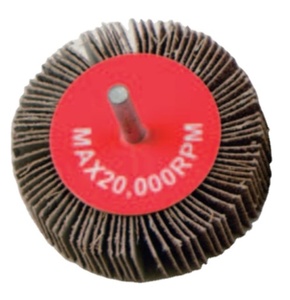
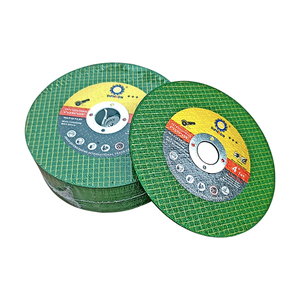
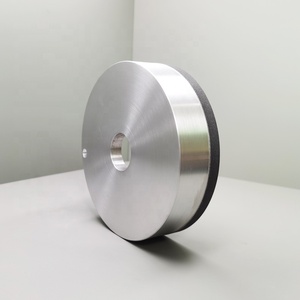
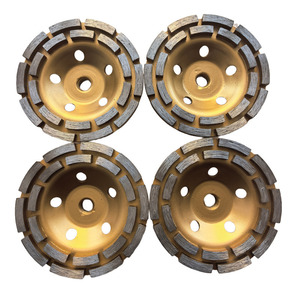
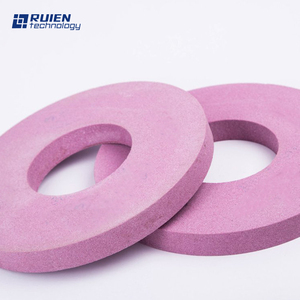
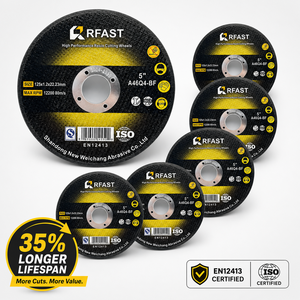
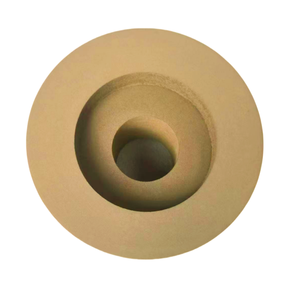
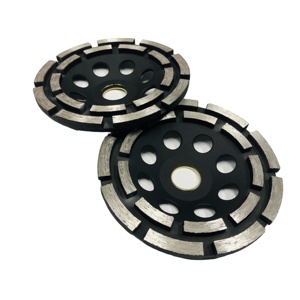
A professional-grade diamond saw blade is not merely a steel disc with diamond dust stuck to its edge; it is a complex metallurgical instrument engineered for controlled wear. When sourcing from a China wholesale diamond blade supplier, procurement managers must evaluate three core structural components: the synthetic diamond grit grade, the metal matrix powder formula, and the core steel center.
High-grade blades utilize high-purity single-crystal synthetic diamonds (typically MBD / Ti-coated series). The friability—the rate at which diamond crystals fracture under impact to expose fresh sharp edges—is calibrated precisely to workpiece hardness. Harder materials like granite require higher friability crystals, whereas abrasive green concrete requires tough, fracture-resistant crystals.
The segment binder holds the diamonds in place using sintered metal powders combining Cobalt (Co), Nickel (Ni), Copper (Cu), Tungsten Carbide (WC), and Iron (Fe). Hot-press sintering under intense pressure welds the matrix around the diamond grains. The matrix erosion rate must match the diamond wear rate for optimal tool longevity.
The core blank is crafted from heat-treated alloy spring steel (such as 65Mn or 75Cr1). Core tensioning ensures that the blade runs true under high thermal loading without lateral wobble (wobble causes segment loss and premature core fatigue). Core expansion slots are laser-cut to dissipate operational heat and dampen vibration.
Use this industrial reference matrix when specifying customized OEM orders with Chinese manufacturing partners.
| Target Workpiece Material | Recommended Bond Type | Diamond Grit Size (US Mesh) | Sintering / Attachment Method | Optimal Operating Speed (m/s) |
|---|---|---|---|---|
| Cured Concrete & Rebar | Medium-Hard (Cobalt-Iron Base) | 35 / 45 Mesh | Laser Welded (EN13236 Standard) | 45 – 60 m/s |
| Green Concrete & Asphalt | Hard / Highly Abrasion Resistant | 30 / 40 Mesh | Laser Welded with Undercut Segment | 50 – 65 m/s |
| Granite & Hard Quartzite | Medium-Soft (Bronze-Cobalt alloy) | 40 / 50 Mesh | High-Frequency Silver Brazed / Hot Pressed | 30 – 40 m/s |
| Marble & Soft Limestone | Soft Bond (Copper-Tin Matrix) | 50 / 60 Mesh | Electroplated / Vacuum Brazed | 25 – 35 m/s |
| Stainless Steel & Inox Cutting | Resinoid / Aluminum Oxide Abrasive | 60 / 80 Mesh (Abrasive) | Fiberglass Mesh Reinforced Cut-Off | 70 – 80 m/s |
The Chinese industrial tooling sector is undergoing a massive transformation driven by automated manufacturing, stringent environmental regulations, and demand for higher safety standards. Global buyers looking to maintain a competitive advantage must align with suppliers implementing the following structural shifts:
Traditional diamond segments feature randomly dispersed diamond grit throughout the metal matrix. Future procurement centers around 3D patterned diamond positioning (ARIX technology), where every diamond grain is placed in an exact three-dimensional grid. This innovation increases cutting speeds by up to 50% while extending blade life by 30%, as diamonds wear evenly without clumping or premature fallout.
While electroplated diamond tools remain cost-effective for light DIY tasks, industrial users are switching rapidly to Vacuum Brazed diamond products. Vacuum brazing forms a true chemical bond between the nickel matrix and the diamond crystals at ultra-high temperatures. This bond prevents diamond stripping during heavy-duty cutting of cast iron, rebar, and composite materials.
Safety regulations across Europe and North America strictly penalize segment detachment accidents. Top-tier Chinese manufacturers are retiring high-frequency induction brazing in favor of automated 6-axis fiber laser welding lines. Laser welding fuses the segment directly to the steel core at the atomic level, providing shear strength exceeding 1,200 MPa under extreme friction temperatures.
Due to supply chain volatility and environmental hazards associated with heavy metal Cobalt dust, R&D is heavily focused on eco-friendly Fe-Ni-Cu pre-alloyed powder formulations. These next-generation powders sinter at lower temperatures, reducing energy consumption while achieving equal or superior mechanical toughness.
Understanding the broader economic and technological forces shaping Chinese hardware production allows OEM brand managers to better forecast price stability, lead times, and customization flexibility.
Leading industrial hubs in Jiangsu, Zhejiang, and Hebei have unified the entire supply chain—from synthetic diamond synthesis (using multi-anvil cubic presses) to automated core stamping, laser sintering, and automated dynamic balancing testing.
Global hardware brands increasingly demand complete turnkey solutions. Leading suppliers now offer in-house laser etching, customized color-coded blade coatings, barcode integration for ERP inventory systems, and eco-friendly recyclable blister packaging.
Modern procurement contracts mandate batch-level testing certifications, including Rockwell hardness (HRC), dynamic balance runout tests (<0.05mm), segment shearing tests, and high-speed destruction spin tests (up to 1.5x max RPM).
Rooted in over 85 years of industrial tool making excellence and guided by strict "Built Blue" engineering standards, our manufacturing ecosystem combines heavy-duty industrial durability with rigorous quality verification protocols.
Every batch of cutting wheels, diamond cup discs, and HSS tooling undergoes mandatory 3-axis dimensional measurement, Rockwell hardness checks, and run-out inspection before leaving the plant.
We do not compromise on steel grade or raw diamond mesh. From M2 HSS, M35/M42 cobalt, to synthetic diamond micro-grits, materials are selected strictly by workload application, not by bottom-line cost trimming.
Our complete catalog across abrasives, hand tools, power tool accessories, and threading systems is organized with accurate barcode, weight, master carton, and technical specs formatted for seamless digital integration.
From private label color boxes, double blister packages, specialized plastic indices to customized display boxes, we support full white-label programs for international retail chains and industrial suppliers.
Technical guidance for B2B buyers, product managers, and industrial safety officers.
Work directly with an experienced manufacturing group. Contact our technical engineering sales team today to request custom catalog data, factory-direct OEM pricing, and sample evaluation packages.