 Built Blue Since 1940
EN Contact Us
Built Blue Since 1940 Engineered for high-volume machining, precise pitch tolerances, and extended tool life under severe duty cycles.
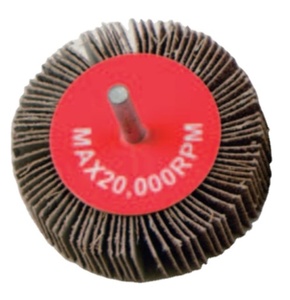
Industrial abrasive flap wheel designed for precision deburring, inner pipe finishing, and smooth surface preparation across steel alloys.
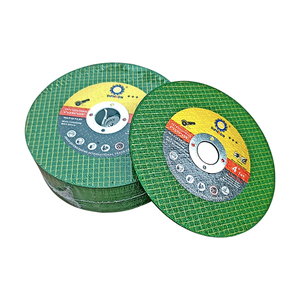
Ultra-thin reinforced cut-off wheel offering clean, burr-free cuts on stainless steel tubing, structural channels, and sheet metals.
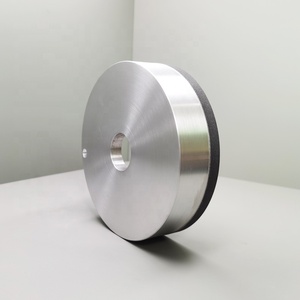
High-density resinoid bond diamond cup wheel optimized for sharpening carbide cutters, reamers, and specialized spiral taps.
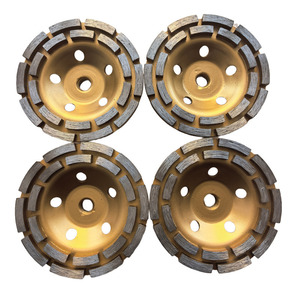
Heavy-duty segment layout designed for rapid stock removal, surface leveling, and aggressive abrasive grinding in industrial setups.
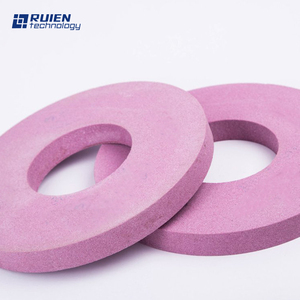
Premium aluminum oxide formulation providing maximum thermal stability and extended life during high-stress weld blending.
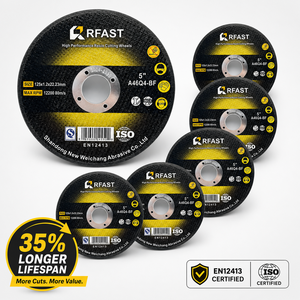
Multi-purpose cutting wheel optimized for high-hardness alloys, angle grinders, and maintenance shop cutting tasks.
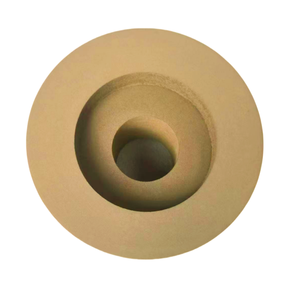
Vitrified bond aluminum oxide wheel engineered for precision centerless cylindrical grinding of tap shanks and drill blanks.
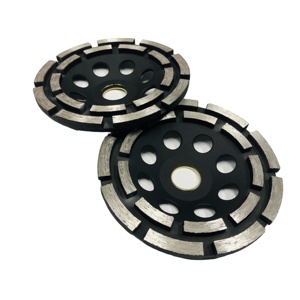
Sintered matrix diamond wheel built for long service life, thermal resistance, and smooth surface flattening on tough substrates.
Combining North American quality standards established since 1940 with China's top-tier high-speed steel precision machining infrastructure.
We source premium M2 (1.3343), M35 (5% Cobalt), and M42 (8% Cobalt) HSS-PM steels to ensure superior hot hardness, micro-chipping resistance, and exceptional wear resilience under continuous CNC production runs.
Utilizing high-precision Swiss Walter and ANCA 5-axis CNC grinding systems, our spiral flute geometries feature mirror-polished flutes (Ra < 0.2µm) that eliminate chip welding and dramatically reduce cutting torque.
Every export batch undergoes 100% thread profile checking via optical comparators, laser pitch verification, and Rockwell hardness testing (HRC 64-67) to meet strict ISO 2 (6H), ANSI 2B, and JIS class tolerances.
An authoritative guide to optimizing chip evacuation, helix angle selection, and tool geometry for blind-hole internal threading.
In metalworking operations, internal thread generation presents unique tribological and mechanical challenges. Unlike straight flute taps or spiral point (gun) taps—which push swarf ahead of the cutting tool into a through-hole—spiral flute taps are engineered specifically for blind-hole applications. The fundamental mechanics rely on helical flutes acting as continuous Archimedean screws, lifting chips upward and backward out of the hole, away from the cutting zone.
When tapping ductile materials such as stainless steel (304/316), structural aluminum alloys (6061-T6), or low-carbon steels, long continuous chips are formed. Without the upward lifting force generated by a spiral flute, these chips quickly compact at the bottom of a blind hole. Chip packing leads to exponential torque spikes, micro-chipping of the tap teeth, pitch distortion, and ultimate catastrophic tool breakage.
High-tier Chinese spiral tap manufacturers apply secondary magnetic polishing to the internal flutes. A surface roughness of Ra < 0.2 µm reduces friction coefficient by up to 40%, preventing chip adhesion (BUE - Built-Up Edge) even when dry-tapping or utilizing Minimal Quantity Lubrication (MQL) systems.
Selecting the optimal helix angle requires balancing chip extraction efficiency with tool cross-sectional strength. A higher helix angle pulls chips out faster but thins the core diameter of the tap, reducing structural rigidity against torsional stress.
The operational lifespan of a spiral tap is heavily dictated by its substrate heat-treatment and protective thin-film physical vapor deposition (PVD) coating. Leading OEM factories in China utilize three core substrate tiers:
| Substrate Grade | Chemical Composition | Hardness Range | Primary Target Workpiece Materials | Cost-Performance Ratio |
|---|---|---|---|---|
| HSS M2 (1.3343) | W6Mo5Cr4V2 | 63 - 65 HRC | Mild steel, brass, plastics, structural steel < 700 MPa | Standard Benchmark |
| HSS-Co M35 (1.3243) | W6Mo5Cr4V2Co5 | 65 - 67 HRC | Stainless steel 304/316, die steel, titanium alloys < 1000 MPa | High Industrial Volume |
| HSS-PM (Powder Metal) | Cobalt-Rich PM Matrix | 67 - 69 HRC | Nickel superalloys (Inconel), hardened tool steels up to HRC 45 | Premium Extreme Duty |
To further extend tool survival during high-speed CNC tapping (speeds exceeding 30 m/min), specialized surface treatments are applied:
Match your specific manufacturing workpiece parameters with the correct tap geometry and coating standard.
| Thread Spec & Pitch | Helix Angle | Chamfer Lead | Coating Type | Workpiece Hardness | Max Thread Depth | Coolant Strategy |
|---|---|---|---|---|---|---|
| M3 - M12 x 0.5 to 1.75 | 45° Fast Helix | Form C (2-3 Pitch) | DLC / Bright | < 200 HB (Aluminium/Copper) | up to 3.0xD | Emulsion / MQL |
| M6 - M24 x 1.0 to 3.0 | 38° Standard Helix | Form C (2-3 Pitch) | TiAlN Coated | 200 - 320 HB (304/316 Stainless) | up to 2.5xD | Neat Oil / High-Pressure Emulsion |
| M8 - M20 x 1.25 to 2.5 | 15° Slow Helix | Form E (1.5-2 Pitch) | TiCN Coated | 320 - 420 HB (Alloy Steel/Tool Steel) | up to 1.5xD | High-Pressure Internal Coolant |
| UNC/UNF 1/4" to 3/4" | 35° Helix | Form C (2-3 Pitch) | Steam Oxide | 180 - 280 HB (Cast Steel/Carbon Steel) | up to 2.0xD | Standard Soluble Oil |
| NPT / BSPT 1/8" to 1" | Interrupted Spiral | Form B/C Lead | TiN Coated | < 300 HB (Pipe Fitting Alloys) | Full Taper Standard | Heavy Duty Cutting Oil |
Key technological and supply chain shifts reshaping how enterprise buyers source threading tools from Chinese exporters.
As automotive and aerospace sectors adopt tougher, lighter alloys, conventional melted HSS is reaching its physical limits. Global procurement managers are rapidly shifting OEM orders toward HSS-PM spiral taps, which offer double the fatigue strength and uniform carbide distribution.
Modern high-speed machining centers (HSM) demand internal axial and radial coolant channels within spiral taps. Directing high-pressure fluid (up to 70 bar) right to the cutting edge flushes micro-chips instantaneously and increases tapping speeds up to 300%.
Top Chinese factories have integrated direct laser-etching, automated custom packaging lines, and real-time ERP API integration. Industrial distributors can now run short-batch OEM private-label programs with minimal lead times and zero inventory risk.
Maximize tool longevity and eliminate costly shop-floor downtime with our technical diagnostic guide.
Primary Cause: Excessive hardness of workpiece material, rigid chip packing, or incorrect alignment between tap shank and drill hole.
Factory Solution: Switch to a 15° slow helix tap with M35/PM steel grade; increase chamfer lead to Form C; ensure spindle runout is below 0.005mm.
Primary Cause: Axial force pushing during rigid tapping cycle, galling on land edges, or incorrect tap tolerance selection (e.g., using 6H for a 6G fit requirement).
Factory Solution: Specify precise ground pitch tolerances; apply TiAlN or DLC coating to eliminate material welding; optimize feed rate synchronization.
Primary Cause: Core diameter too weak for cutting load, tap bottoming out in blind hole, or insufficient tapping lubrication.
Factory Solution: Increase pilot drill diameter slightly (maintain 75% thread engagement); verify bottom clearance depth; change to heavy-duty EP cutting oil.
Everything you need to know about sourcing industrial spiral taps from China manufacturing partners.