 Built Blue Since 1940
EN Contact Us
Built Blue Since 1940 Explore our certified catalog of high-performance abrasive wheels, flap discs, diamond cups, and specialized precision grinding tools engineered for heavy metal fabrication, stainless steel processing, and concrete finishing.
In the modern industrial manufacturing matrix, abrasive tools represent a critical lever for operational efficiency, material yield, and surface finish integrity. As a premier Custom OEM Flap Disc Manufacturer & Supplier with engineering roots dating back to 1940 under our legacy standards, we provide global procurement managers, industrial distributors, and Tier-1 automotive and aerospace partners with micro-engineered abrasive solutions. A flap disc is not merely cloth glued to a backing plate; it is a thermal-dynamically balanced cutting system where grain friability, backing plate flexural modulus, and thermosetting resin matrix chemistry intersect to dictate cut-rates and total service life.
When specifying OEM flap discs for private-label lines or specialized industrial applications, selecting the appropriate synthetic mineral grain is the single most important decision impacting removal rate (stock removal rate, SRR) and cost-per-cut ratio. Our factory formulations encompass four distinct grain classes:
The structural backboard of a flap disc serves as the foundation for energy transfer from the angle grinder tool spindle directly to the working edge. We manufacture custom OEM flap discs across three core backing architectures:
Use this engineering benchmark reference to select the correct OEM grain, backing, and grinding parameters for specific industrial workpiece substrates.
| Workpiece Substrate | Recommended Grain | Flap Geometry / Type | Optimal Operating Speed | Key Performance Advantage |
|---|---|---|---|---|
| Stainless Steel (304 / 316) | Ceramic Alumina + Cooling Topcoat | Type 29 Conical (Angled) | 35 - 45 m/s (Lower RPM) | Prevents thermal oxidation & bluing; self-sharpening cut |
| Heavy Carbon Steel Welds | Zirconia Alumina (Premium ZrAl) | Type 29 Conical (High Density) | 70 - 80 m/s (Max RPM) | High stock removal; resists tooth stripping on rough weld beads |
| Non-Ferrous Metals (Alu, Brass) | Specially Coated Aluminum Oxide | Type 27 Flat (Standard Density) | 50 - 60 m/s | Anti-loading stearate coating prevents chip welding & clogging |
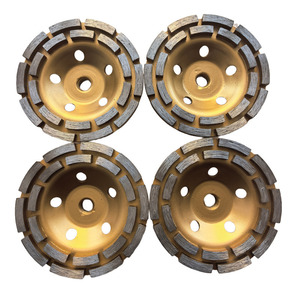
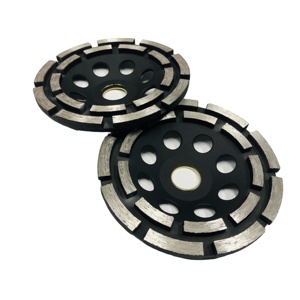
| Concrete, Stone & Masonry | Silicon Carbide / Diamond Segments | Type 27 Flat Cup Wheel | 60 - 80 m/s | Extreme micro-hardness for abrasive mineral dust suppression |
| Thin Sheet Metal Blending | Fine Grit Ceramic / Zirconia (Grit 80-120) | Type 27 Trimmable Plastic | 40 - 50 m/s | Flexibility prevents flat spots and gouging on thin gauge steel |
As an end-to-end original equipment manufacturer, we eliminate supply chain friction for global brand owners and distributors. Our vertically integrated manufacturing infrastructure allows for granular customization across every element of the flap disc assembly:
As automation transforms fabrication facilities worldwide, procurement managers must adapt to evolving technical specifications and regulatory shifts. Major forces reshaping the global abrasive supply chain include:
Automated robotic arms exert constant, non-yielding downward pressure that burns out standard manual-grade flap discs. The industry is moving toward high-density ceramic flap discs featuring multi-layer micro-crystalline grains and reinforced glass fiber matrices that maintain a uniform profile under 100% duty cycles without thermal collapse.
Regulatory bodies across Europe and North America (REACH compliance, OSHA particulate guidelines) are enforcing stricter limits on volatile organic compounds (VOCs) emitted during high-speed grinding. Advanced manufacturing now incorporates solvent-free thermosetting epoxy resins that reduce airborne phenolic gas emissions during extreme heat operations.
Industrial safety protocols now require lot-by-lot batch traceability. Modern OEM manufacturing integrates high-resolution laser QR codes onto the inner flange ring of each disc, allowing factory operators to instantly verify safe maximum RPM limits, manufacture dates, and safety certifications using handheld shop-floor scanners.
Detailed responses to key technical, quality control, and supply chain queries commonly raised by industrial buyers and engineering teams.
Our standard OEM factory production runs typically start at 1,000 pieces per specific size and grit configuration. This batch size allows for economical setup of custom label printing, center ring stamping, and automated shrink-wrap packaging while maintaining maximum cost efficiency for the buyer.
Every production lot undergoes rigorous dynamic balancing and centrifugal burst-speed testing. Our flap discs comply fully with EN 12413 and ANSI B7.1 standards, certified to withstand speeds up to 1.5 times the maximum marked operating speed (testing at over 15,000 RPM for standard 4.5-inch discs).
Type 27 discs possess a completely flat surface profile designed for smooth finishing and flat seam blending at shallow working angles (0° to 15°). Type 29 discs feature a built-in 15-degree conical angle that concentrates downward grinding force on a smaller contact patch, making them significantly more aggressive for rapid metal removal on heavy weld seams and contours at working angles of 15° to 25°.
Stainless steel has low thermal conductivity, meaning heat generated during grinding stays in the workpiece, causing warping and surface bluing. Ceramic grains feature a self-sharpening micro-structure that requires less friction to break down, cutting cooler and faster than Zirconia while dramatically reducing heat generation when combined with a cooling topcoat (grinding aid stearate).
Yes. We offer custom engineered dual-grit or alternating flap arrangements (e.g., interleaf non-woven surface conditioning flaps layered with coated abrasive cloth). This allows operators to accomplish aggressive light deburring and satin surface finishing in a single pass.
Resin bonds are sensitive to extreme ambient moisture over extended periods. Our industrial export flap discs are manufactured using hydrophobic phenolic bonding agents and sealed in airtight moisture-barrier shrink wraps, providing a certified storage shelf-life of up to 3 years when kept in standard climate-controlled warehousing conditions.