 Built Blue Since 1940
EN Contact Us
Built Blue Since 1940 Engineered to strict ISO and ANSI specifications. Fully customizable geometries, strike caps, surface coatings, and branding formats for volume OEM programs.
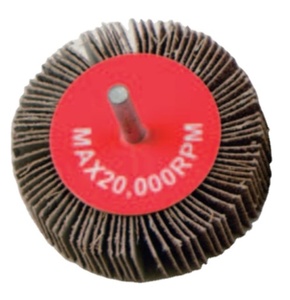
Through-hardened steel shank with a steel capping plate designed to withstand repeated hammer impact without fracturing handle assemblies.
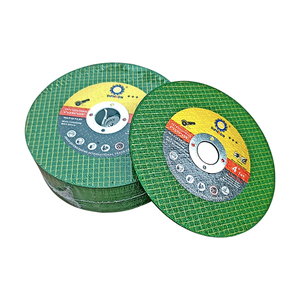
Tapered pin end engineered for bolt hole alignment in structural steel erection, combined with a sharp angled chisel fulcrum heel.
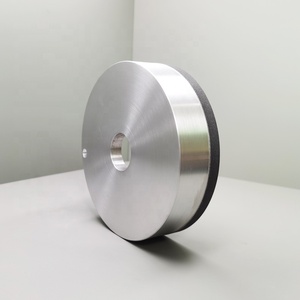
High-leverage rocker head design allowing maximum prying forces in confined engine bays and automotive chassis environments.
Precision stamped spring steel flat bar featuring integrated nail puller slots and polished bevels for architectural demolition.
Specialized non-magnetic, safety prying tool engineered for explosive hazard zones, chemical facilities, and cleanrooms.
Features a 180-degree locking mechanism with multi-position push-button index points for maximum versatility in tight spots.
Ultra-high tensile drop-forged structural lever bar custom heat treated for extreme leverage applications in heavy machinery maintenance.
Oil-resistant TPR textured handle molded directly over a square stock steel core to eliminate handle slippage and user fatigue.
How evolving metallurgical standards, automated supply chains, and private-label customization are reshaping the OEM leverage tool landscape.
Global OEM buyers are moving away from commodity carbon steels (such as 1045) toward engineered alloy matrices like 4140 Chrome-Molybdenum and 6150 Chrome-Vanadium. Industrial procurement contracts now mandate higher yield strength specifications (exceeding 1200 MPa) to reduce tool weight while increasing resistance to permanent bending under extreme mechanical advantage loads.
Modern Occupational Health and Safety (OSHA) regulations require OEM hand tool manufacturers to integrate advanced elastomeric grips. Co-molded Thermo-Plastic Rubber (TPR) and Polypropylene (PP) combinations are rapidly replacing raw painted steel handles to prevent cumulative trauma disorders (CTDs) and enhance slippage resistance when exposed to synthetic automotive oils.
Tier-1 automotive aftermarket distributors demand 100% batch-level traceability. Modern OEM contracts require manufacturers to provide digital certificates of analysis (CoA) detailing spectrographic alloy compliance, Rockwell hardness (HRC) distributions, and non-destructive testing (NDT) reports using magnetic particle inspection.
Deconstructing the structural science behind high-leverage prying tools: heat treatment, forge grain alignment, and surface chemistry.
Unlike budget cold-bent bar tools, premium OEM pry bars are manufactured using multi-stage closed-die drop forging at temperatures exceeding 1150°C. This process aligns the crystalline steel grain structure continuously along the tool’s fulcrum profile, increasing fatigue life by over 300% under cyclic strain conditions.
A major trend in custom manufacturing is localized differential heat treatment. The working chisel tip and heel are induction-quenched to 54–58 HRC for maximum wear resistance and edge holding, while the central shank is tempered back to 42–46 HRC to retain core toughness and prevent catastrophic brittle fracture under overload.
Environmental standards are driving the transition from hexavalent chrome plating to industrial black oxide, manganese phosphate, and high-durability electrostatic powder coatings. Modern finishes undergo 240-hour neutral salt spray (NSS) testing per ASTM B117 to guarantee corrosion protection in marine and industrial environments.
Information gain parameter analysis designed for tool engineers and B2B procurement managers specifying custom OEM orders.
| Pry Bar Type / Profile | Material Specification | Hardness Range (HRC) | Yield Strength (MPa) | Fulcrum Angle | Primary OEM Application |
|---|---|---|---|---|---|
| Striking Mechanics Bar | AISI 4140 Chromoly Steel | Tip: 54-58 | Core: 44-48 | > 1,150 MPa | 25° - 35° Curved Heel | Automotive powertrain, heavy equipment engine bays |
| Alignment / Pinch Bar | 6150 Chrome Vanadium | Full Body: 48-52 | > 1,250 MPa | Direct Tapered Pin Point | Structural steel erection, bolt hole alignment |
| Roll Head Rocker Bar | Medium Carbon Alloy (1045/4340) | Head: 50-54 | Body: 42-46 | > 980 MPa | 90° High-Leverage Arch | Prying seals, bearings, and heavy industrial machinery |
| Flat Architectural Utility Bar | High-Carbon Spring Steel | Full Body: 46-50 | > 1,050 MPa | 15° Low-Profile Bevel | Commercial construction, formwork, nail extraction |
| Non-Sparking Safety Bar | Beryllium Copper / Al-Bronze | Full Body: 35-40 | > 780 MPa | Custom Angled Heel | Petrochemical plants, ammunition depots, cleanrooms |
Leveraging over eight decades of industrial tool manufacturing heritage (Century Drill & Tool lineage since 1940) to deliver uncompromised quality.
Our in-house engineering team uses 3D FEA (Finite Element Analysis) simulation to optimize stress distribution across custom bar profiles before opening production tooling. We provide rapid prototype samples within 15 business days.
Every production batch undergoes 100% dimensional inspection, Rockwell hardness testing, and destructive bend tests to ensure compliance with global ANSI B107 standards. Built Blue heritage guarantees zero-defect manufacturing standards.
From laser-etched brand logos and barcode indexing to retail-ready clamshell, blister card, or heavy industrial bulk packaging—we offer full OEM fulfillment with flexible MOQ terms for enterprise distributors.
In-depth technical and commercial answers addressing common engineering, manufacturing, and supply chain queries.
For professional automotive applications where tools are subjected to impact and severe bending force, AISI 4140 Chromoly Steel or 6150 Chrome Vanadium Steel is recommended. Chromoly provides an exceptional balance of yield strength (>1100 MPa) and fatigue resistance, preventing the bar from snapping under high torque loads.
Our striking pry bar design utilizes a continuous solid steel square shank that extends fully through the handle core to a solid steel end cap. The ergonomic grip is insert-molded directly around specialized mechanical anchor notches along the shank, making physical separation virtually impossible under standard striking operations.
We offer a full spectrum of surface finishes: heavy manganese phosphate for oil-retentive rustproofing, industrial black oxide, satin or mirror chrome plating, and custom powder coating matched to your exact brand RAL color codes. All finishes pass strict ASTM B117 salt spray tests.
Standard production MOQs start at 1,000 units per specification for standard profiles with custom branding. For completely custom forging dies and unique geometry development, MOQs typically range from 2,000 to 3,000 units, depending on the tool overall length and mass.
Yes. Every export shipment includes a formal Material Test Report (MTR) detailing chemical heat composition, grain size analysis, tensile test curves, and Rockwell hardness verification values corresponding to your specific production batch.
Roll-head (rocker) pry bars feature a rounded 90-degree curved fulcrum point with a pointed tip, allowing mechanics to leverage objects in tight spatial envelopes where flat heels cannot gain a grip. Curved heel bars provide a wider bearing surface for general demolition and heavy equipment alignment.
Partner with an established industrial hand tool manufacturer. Contact our engineering and procurement team today for technical consultation, 3D CAD reviews, and competitive volume pricing.
Inquire Now