 Built Blue Since 1940
EN Contact Us
Built Blue Since 1940 Directly engineered for high-rigidity angle grinders, stationary cut-off saws, and CNC centerless feed operations. Review high-grade abrasive wheels designed for extreme thermal resistance and structural durability.
The global industrial abrasive consumables market is undergoing a structural transition driven by advancements in automated metal fabrication, heavy structural steel construction, aerospace machining, and shipbuilding. Standard bonded abrasive wheels are increasingly evaluated not merely on initial unit price, but on comprehensive Total Cost of Ownership (TCO), cut rate efficiency, material waste reduction, and operator safety metrics.
As production facilities embrace high-power electric and pneumatic angle grinders operating at high peripheral speeds (up to 80 m/s and 100 m/s), the technical demand placed on phenolic resin matrix bonds and fiberglass mesh reinforcement has intensified. Importers, industrial distributors, and OEM buyers must navigate a complex international marketplace where grain purity, friability, matrix hardness, and rotational balance govern profitability and workplace safety.
An objective engineering review of the industry's leading manufacturers and global export partners based on manufacturing capability, material R&D, product consistency, and international distribution support.
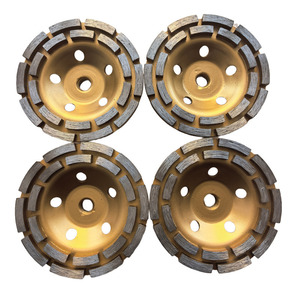
Founded over eight decades ago, Century Drill & Tool has established the "Built Blue" legacy across industrial cutting, threading, and abrasive disciplines. Specializing in high-yield Type 1 flat cut-off discs, Type 27 grinding wheels, and diamond-sintered cups, Century integrates strict Rockwell matrix verification, 135° splitting geometry, and dual-layer high-tensile fiberglass reinforcement. Their manufacturing process emphasizes ultra-low iron/sulfur/chlorine content (< 0.1%) to prevent rust contamination on 304 and 316 stainless steel fabrications.
Core Strengths: Industrial packaging consistency, full ERP barcode integration, custom OEM grain formulations, ultra-fast G-ratio delivery.
Get a QuoteSaint-Gobain Norton represents a cornerstone in bonded and coated abrasives technology. Renowned for their proprietary Quantum3 ceramic abrasive grain geometry, Norton delivers exceptional stock removal rates on hardened steel alloys and exotic aerospace metals. Their global distribution network supports heavy industrial clients in pipeline construction, foundry work, and automotive manufacturing.
Core Strengths: Micro-fracturing ceramic grains, extensive global footprint, deep R&D investment in automated cutting processes.
Get a QuoteOperating under the iconic blue pony mark, PFERD is synonymous with premium German engineering in surface finishing and metal cutting. Their SG-ELASTIC and POLIFAN product lines set industry standards for ergonomic vibration reduction, thermal control, and extreme wheel life in heavy structural steel grinding and cut-off applications.
Core Strengths: oSa safety compliance, specialized non-ferrous aluminum cutting wheels, ultra-thin 0.8mm disc precision.
Get a QuoteAs part of the Swarovski Group, Austria-based Tyrolit manufactures over 80,000 distinct abrasive products across concrete cutting, stone grinding, and industrial metal fabrication. Their Secur cut-off wheels incorporate specialized bonding agents that resist moisture absorption, preserving structural integrity during long-term warehouse storage.
Core Strengths: Deep specialization in civil engineering diamond tools, low-vibration wheel cores, environmental sustainability focus.
Get a Quote3M revolutionized the cutoff and grinding sector with its patented Cubitron II Precision-Shaped Grain (PSG) technology. By utilizing electrostatically oriented triangular mineral structures, 3M discs slice cleanly through metal rather than plowing or gouging, leading to significantly lower heat generation and reduced operator fatigue.
Core Strengths: Unmatched cool-cutting performance on heat-sensitive alloys, lower vertical force requirement, extensive IP portfolio.
Get a QuoteKlingspor’s Kronenflex cutting and grinding discs are widely recognized across global industrial distribution networks. Offering standardized tiers ranging from Extra (standard commercial) to Premium (demanding industrial), Klingspor provides consistent wheel thickness tolerances, high burst strength, and competitive container-load export pricing.
Core Strengths: Highly organized tiering systems, high-density production capacity in Europe and Asia, comprehensive catalog support.
Get a QuoteRodius focuses exclusively on premium cutting tools for metal fabricators. Known for pioneered innovations like the 0.6mm and 0.8mm ultra-thin cut-off wheels, Rodius integrates "HydroProtect" technology—a chemical additive in the resin matrix that prevents resin aging and performance degradation caused by atmospheric humidity.
Core Strengths: Minimal burr creation, extreme precision thin-section cutting, extended shelf-life protection.
Get a QuoteNow integrated within the Weiler Abrasives group, SWATYCOMET brings decades of Eastern European metallurgy and bonding expertise. They excel in high-tonnage heavy-duty grinding wheels and stationary chop-saw cutoff discs engineered for steel mills, foundries, and rail transport maintenance.
Core Strengths: Heavy stock removal in rough foundry environments, high thermal resistance resin bonds, large diameter (400mm-600mm) discs.
Get a QuoteBosch leverages its dominant position in power tools to supply matching abrasive consumables worldwide. Their proprietary X-LOCK quick-change mounting interface has redefined tool-free wheel replacement safety. Bosch offers comprehensive lines of standard aluminum oxide, silicon carbide, and diamond segmented cutting wheels.
Core Strengths: Massive global distribution, tool-free X-LOCK ecosystem, high brand recognition across professional trades.
Get a QuoteLUKAS-ERZETT specializes in high-precision grinding, milling, and cutting tools optimized for robotic integration and automated CNC cell deburring. Their cutoff wheels are manufactured with strict dynamic balance metrics to prevent spindle vibration and extend automated tool-head service life.
Core Strengths: Custom shape manufacturing, automated robotic machining compatibility, low radial runout tolerances.
Get a QuoteTo maximize productivity and eliminate premature disc degradation, industrial purchasing agents must evaluate the molecular mechanics, grain friability, and mechanical reinforcement structures of cut-off consumables.
The choice of mineral grain determines cut velocity, wheel life, and workpiece surface integrity:
Cutoff discs are composite structures where synthetic thermosetting phenolic resins bind abrasive grains. Safety and structural rigidity under high-speed dynamic loading are achieved through multi-layered high-tensile fiberglass mesh (alkali-free glass fibers coated with silane sizing agent). Dual or triple mesh layers absorb lateral deflection forces, preventing catastrophic wheel disintegration under side-load binding conditions.
| Workpiece Substrate | Recommended Grain Class | Bond Hardness Grade | Optimal Cutoff Wheel Type | Key Operational Note |
|---|---|---|---|---|
| Structural Carbon Steel (A36) | Brown / Pink Aluminum Oxide | Grade P to Q (Medium-Hard) | Type 1 Flat Discs (1.2mm - 1.6mm) | High circumferential speed; steady downforce prevents glaze build-up. |
| Austenitic Stainless (304/316L) | Zirconia or Ceramic Alumina | Grade S to T (Hard, Inox Spec) | Type 1 or Type 27 (INOX < 0.1% Fe/S/Cl) | Low heat generation required to prevent heat tinting and chromium carbide precipitation. |
| Aluminum Alloys & Non-Ferrous | Silicon Carbide + Anti-Clogging Resin | Grade N to O (Soft Matrix) | Type 1 (Stearate Coated) | Soft bond breaks down quickly to expose fresh grain before loading/swarf clogging occurs. |
| Reinforced Concrete & Masonry | Synthetic Diamond (Sintered Segment) | Bronze / Cobalt Metal Matrix | Diamond Turbo / Segmented Cup | Dry/Wet cooling dependent; ensures rapid chip evacuation in aggregate stone. |
| Heavy Cast Iron & Railway Steel | Zirconia Alumina / Ceramic Blend | Grade U to Z (Extra Hard) | Type 27 Depressed Center (2.5mm - 4.0mm) | Designed for high-wattage heavy grinders; high G-Ratio material removal priority. |
Building upon over eight decades of metallurgical tooling manufacture, Century Drill & Tool provides global buyers and distributors with an unyielding quality control framework. Century’s production processes exceed traditional ISO metrics by instituting batch-level mechanical destructive testing:
Every production run undergoes speed testing up to 1.8 times the marked maximum RPM, guaranteeing safety compliance far above ANSI B7.1 and EN 12413 standards.
Optical laser checking eliminates wobble, reducing operator hand-arm vibration (HAVS) and preventing uneven wheel wear patterns.
Full OEM custom labeling, barcoding, clamshell presentation packaging, and container-consolidation support for global industrial supply lines.
As industrial automation expands and sustainability mandates tighten across global supply chains, purchasing directors should anticipate several major shifts in cutoff wheel design and specification.
Traditional phenolic resin manufacturing releases small quantities of volatile organic compounds (VOCs) during high-temperature curing. Next-generation manufacturers are introducing solvent-free modified bio-resins and formaldehyde-free bonding matrices that lower factory carbon footprints while maintaining thermal degradation thresholds during high-speed cutting.
The industrial market is moving rapidly from standard 2.0mm and 1.6mm wheels to sub-millimeter precision cutoff discs. Thin wheels decrease kerf loss, reduce energy consumption on cordless angle grinders, speed up cutting times by up to 50%, and significantly diminish sparks and dust generation.
With industrial robots handling gate removal in foundries and seam cutting in automated weld shops, cutoff wheels require tighter dimensional tolerances, uniform wear rates, and specialized hub mounting formats (such as X-LOCK and quick-change threaded arbors) to accommodate continuous production without human intervention.
Paper labels are increasingly being supplemented by direct laser marking on wheel faces. Laser etching includes batch manufacturing numbers, expiration dates (resin shelf-life tracking), maximum operating speeds, and scannable QR codes linking directly to Safety Data Sheets (SDS) and EN safety certificates.
Answers to common technical, regulatory, and logistics queries encountered when importing and specifying cutoff wheels.
Request factory-direct technical quotes, bulk distributor pricing, or OEM custom matrix engineering for your target market.
Get a Quote