 Built Blue Since 1940
EN Contact Us
Built Blue Since 1940 Engineered for exacting metric, unified, and specialized thread configurations across alloy steels, stainless steels, titanium, and non-ferrous metals.
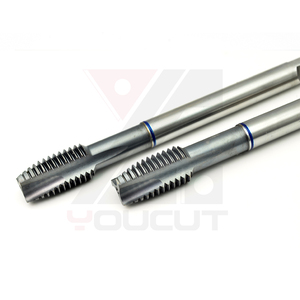
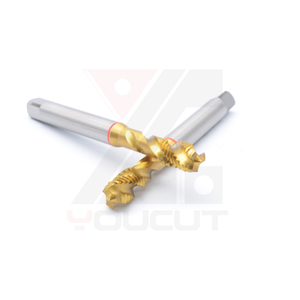
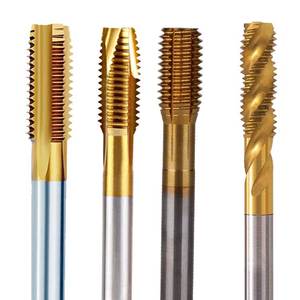
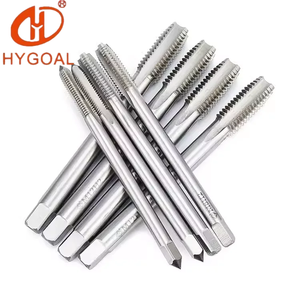
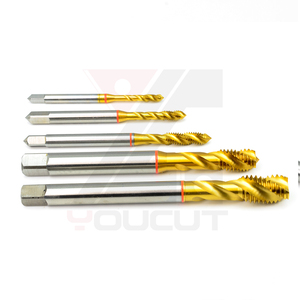
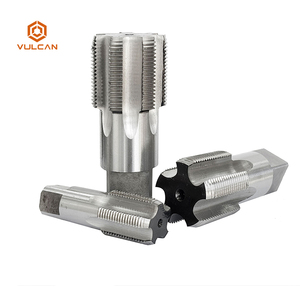
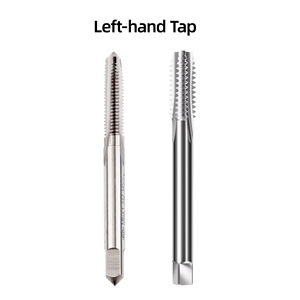

A rigorous evaluation of global leaders providing high-performance machine taps, roll forming taps, and specialized thread tooling based on metallurgical R&D, tolerance consistency, and enterprise supply chain responsiveness.
Core Strengths: Pioneer of high-end specialized machine taps and thread mills. Renowned for EnORM and Rekord series targeting aerospace alloys and stainless steel applications requiring ultra-strict pitch tolerance.
Core Strengths: Global market share leader in volume threading tools. Excels in proprietary micro-geometry designs, A-Tap multi-purpose series, and advance PVD coatings like Exo-Carb for hardened steels.
Core Strengths: Premium modular tooling systems. Famous for CoroTap line, offering optimized chip clearance channel geometries and advanced carbide substrates for automotive and energy OEMs.
Core Strengths: Heritage tooling since 1940 ("Built Blue"). Specializes in industrial-grade HSS-Co (M35/M42) taps, left-hand repair extractors, and distribution-ready tooling programs backed by strict quality inspection.
Core Strengths: Comprehensive cutting tool manufacturer with deep expertise in solid carbide and HSSE-PM taps. Strong internal coolant hole tech (MQL) for deep-hole thread machining.
Core Strengths: Precision metric and imperial taps. Outstanding pitch accuracy and micro-finish quality, widely specified in precision electronics, watchmaking, and high-speed CNC tapping centers.
Core Strengths: High-productivity Walter Prototyp taps. Focuses on heavy industrial manufacturing, casting machining, and customized thread tooling with eco-friendly PVD coatings.
Core Strengths: Specialist in nano-scale micro taps and extreme precision internal thread generation. Highly utilized in medical implant fabrication and aviation instruments.
Core Strengths: Integrated metallurgy-to-tool production. Exceptional steel purity in Hyper Z tap series, delivering superior toughness against teeth chipping in structural steel forging.
Core Strengths: Innovative thread turning inserts, solid carbide thread mills, and specialized small-bore threading solutions for oil & gas and heavy infrastructure projects.
Unlocking tool life and thread shear resistance through precise material matching and surface physics.
Choosing the correct substrate dictates micro-fracture resistance and thermal boundary limits. Standard High-Speed Steel (M2) provides baseline ductility for general maintenance. However, for abrasive stainless steel (316L, 17-4PH), HSSE M35 alloyed with 5% Cobalt raises red hardness limits up to 600°C without tooth thermal softening. For high-volume automotive aluminum casting, micro-grain solid carbide delivers maximum rigidity, maintaining pitch pitch tolerance through 10,000+ holes.
Physical Vapor Deposition (PVD) dramatically alters the friction coefficient at the chip-tool interface. Titanium Nitride (TiN) provides a surface hardness of ~2300 HV with a distinctive gold luster. Titanium Carbonitride (TiCN) increases surface hardness to ~3000 HV, offering superior resistance against galling in ductile stainless steels. Diamond-Like Carbon (DLC) coatings are critical for structural aluminum (6061-T6) to prevent Built-Up Edge (BUE) adhesion.
Internal thread machining failures stem primarily from chip packing. Spiral Point (Gun) Taps push continuous chips forward ahead of the tool, making them ideal for through-holes. Conversely, Spiral Flute Taps pull continuous stringy chips upward out of blind holes like a twist drill bit. Straight flute taps retain maximum core cross-section, providing torsional strength needed for brittle cast iron chips.
When specifying machine taps for critical CNC machining contracts, engineering buyers must evaluate not only thread diameter (e.g., M12x1.75) but also the Pitch Diameter Tolerance Class (e.g., ISO 2/6H vs. ISO 3/6G). Oversizing by specifying 6G tolerance compensates for shrinkage after post-heat-treatment coating, while undersizing (6H) guarantees tight mechanical class fitments in high-vibration aerospace structural brackets.
Recommended material pairing, surface treatment, cutting speed ($V_c$), and rake angle specs for industrial manufacturing.
| Workpiece Material | Hardness (HB/HRC) | Recommended Substrate | Coating Type | Flute Profile | Cutting Speed ($V_c$ m/min) |
|---|---|---|---|---|---|
| Low Carbon Steel (1018, 1020) | 120 - 180 HB | HSS M2 / HSSE | TiN or Bright | Spiral Point (Through) / Spiral Flute (Blind) | 12 - 18 m/min |
| Austenitic Stainless (304, 316) | 160 - 230 HB | HSSE M35 (5% Co) | TiCN / TiAlN | 35° High-Helix Spiral Flute | 6 - 10 m/min |
| Tool Steel (D2, H13 Annealed) | 200 - 250 HB | HSSE-PM / Solid Carbide | TiAlN / AlTiN | Straight Flute / Spiral Point | 4 - 8 m/min |
| Cast Iron (Grey / Ductile) | 180 - 260 HB | HSS / Solid Carbide | TiN or Nitrided | Straight Flute (Heavy Core) | 10 - 15 m/min |
| Aluminum Alloys (6061, 7075) | 60 - 150 HB | HSS M2 / Carbide | Bright Polished / DLC | 45° Fast Spiral / Roll Forming | 20 - 35 m/min |
| Titanium Alloys (Ti-6Al-4V) | 30 - 36 HRC | HSSE M35 / Carbide | TiCN / AlTiN | Relieved Relief Spiral Point | 3 - 6 m/min |
Since 1940, Century Drill & Tool has engineered "Built Blue" cutting and threading tools designed to surpass industrial shop-floor expectations. Our manufacturing standards eliminate common pitch variance, teeth chipping, and premature thermal breakdown.
Traceable calibration standards aligned with global machining specifications:
How automation, high-speed CNC tapping centers, and advanced materials are shaping next-generation tooling orders.
Unlike cutting taps that sever metal fibers to form chips, thread forming (roll) taps cold-extrude internal threads under hydraulic pressure. This process eliminates chip packing entirely while producing threads with up to 20% higher tensile fatigue strength. Expect cold form taps to dominate high-volume automotive EV battery casing and chassis manufacturing by 2030.
As green manufacturing mandates restrict flood coolant usage, threading tool manufacturers are integrating specialized internal micro-coolant channels. MQL-compatible taps deliver atomized lubricant mist directly to the cutting chamfer, drastically reducing chemical waste while maintaining optimal thermal dissipation at high RPMs.
Powder Metallurgy (HSSE-PM) bridge the gap between high-speed steel toughness and tungsten carbide wear resistance. PM steels provide homogeneous carbide distribution, preventing tooth chipping during rigid tapping cycles on uneven cast component surfaces.
Modern CNC machines utilize spindle load sensors and acoustic emission algorithms to track tap torque signatures in real time. Tool buyers are increasingly demanding consistent shank concentricity and strict torque profiles to ensure seamless integration with predictive tool-replacement software.
Solve common tapping problems directly on the production line to reduce scrap rates and downtime.
| Failure Mode | Root Cause Identification | Tooling & Mechanical Solution |
|---|---|---|
| Tap Tooth Chipping | Excessive hardness of workpiece, radial runout, or chip packing in blind hole. | Switch to HSSE M35 or PM-HSS; verify spindle concentricity (<0.01mm); use spiral flute geometry for blind holes. |
| Premature Flank Wear | Cutting speed ($V_c$) too high; inadequate lubrication; abrasive workpiece material. | Reduce cutting RPM by 20-30%; apply TiCN or AlTiN PVD coating; increase cutting oil concentration. |
| Oversized Threads (Go-Gauge Fails) | Misalignment between tap and hole center; lead error; built-up edge (BUE) on teeth. | Use synchronized floating tap holders; apply TiN or DLC coating to reduce adhesion; check hole drill size. |
| Catastrophic Tap Breakage | Bottoming out in blind hole; drill hole diameter too small; wrong tap style for chip ejection. | Increase pilot hole diameter to 75% thread depth standard; verify CNC depth stops; use spiral point for through holes. |
Expert answers regarding tool material selection, standards compliance, and bulk order customization.
Spiral Point (also known as "Gun" taps) feature angular flutes at the cutting tip that force chips forward through the workpiece hole ahead of the tap. They are optimized for open-ended through holes. Spiral Flute taps feature helical grooves (typically 35° or 45°) that lift continuous chips upward out of the hole like a drill bit, preventing chip jamming in blind holes.
Stainless steel work-hardens rapidly during cutting and generates extreme frictional heat. Standard HSS (M2) loses its hardness (softens) above 450°C, causing rapid tool wear. M35 Cobalt steel contains 5% Cobalt alloy, elevating thermal hardness threshold to over 600°C. This prevents edge deformation, extends tool life by up to 3x, and maintains thread tolerances under heavy production conditions.
For standard metric cut-threading (75% thread depth profile), use the standard formula:
Drill Diameter = Nominal Tap Diameter - Thread Pitch.
For example, for an M12 x 1.75 tap: $12 - 1.75 = 10.25\text{ mm}$ pilot hole drill size. For thread forming (roll) taps, the formula differs: Form Drill Diameter = Nominal Diameter - (0.0053 x Percentage of Thread x Pitch).
Titanium Carbonitride (TiCN) incorporates carbon into the titanium nitriding lattice. This achieves a higher surface micro-hardness (~3000 HV vs. ~2300 HV for TiN) and a lower coefficient of friction against tough metals. TiCN is highly recommended for machining abrasive materials like hard stainless steels, titanium alloys, and high-silicon aluminum castings.
Yes. Enterprise manufacturers like Century Drill & Tool support custom engineering programs including non-standard thread pitches (e.g., fine pitch metric, special UN thread pitches), extended shank lengths for deep-reach casting channels, custom PVD coatings, laser-etched branding, and OEM clamshell or index box packaging tailored for global distributors.
Access wholesale pricing, complete CAD drawing specifications, and metallurgical certification for your manufacturing facility or distribution network.