 Built Blue Since 1940
EN Contact Us
Built Blue Since 1940 Precision-engineered cut-off wheels, diamond grinding cups, and specialized abrasive tools manufactured for rigorous industrial performance.
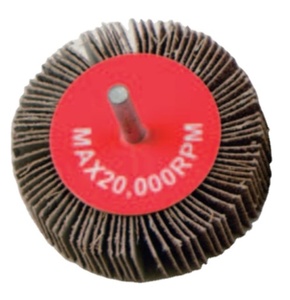
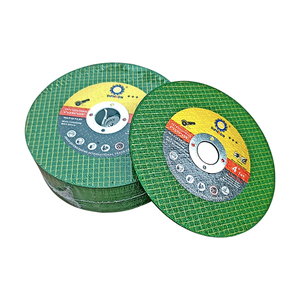
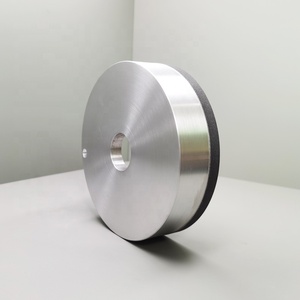
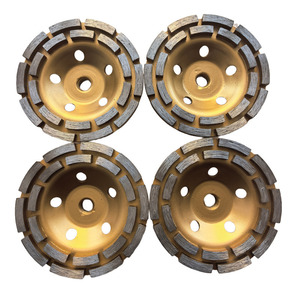
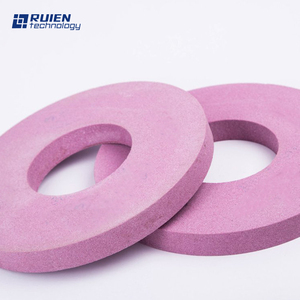
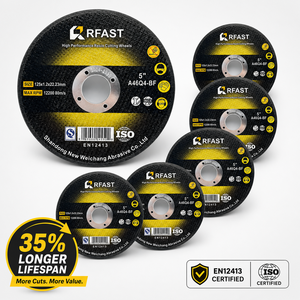
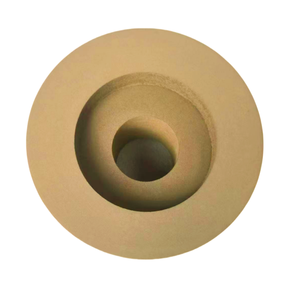
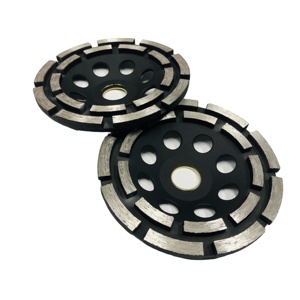
In modern industrial manufacturing, metal fabrication, shipyards, and structural engineering, the abrasive cutting disc (also termed a cut-off wheel) is not merely a consumable item; it is a precision instrument where material science, bond chemistry, and mechanical safety intersect. As a premier China cutting disc manufacturer and OEM partner, our facility leverages over eight decades of inherited tooling expertise—combining strict metallurgy controls with fully automated thermosetting resin press systems.
Understanding user intent in procurement requires looking past surface-level price comparisons. Global industrial buyers, supply chain directors, and OEM importers require verifiable Information Gain: exact grain matrix specifications, thermal bond dynamics, safety rupture limits, and quantifiable operational efficiency. This technical whitepaper establishes the foundational benchmarks for selecting, procuring, and optimizing cutting discs and grinding wheels for industrial applications.
The operational efficiency of an abrasive cut-off disc depends primarily on the synthesized crystalline structure of its abrasive grains, the chemical formulation of its phenolic resin bond, and the tensile architecture of its internal fiberglass reinforcement mesh.
| Grain Type | Crystalline Structure | Vickers Hardness (HV) | Primary Substrate Compatibility | Performance Profile |
|---|---|---|---|---|
| Aluminum Oxide (A) | Alpha-Alumina (Corundum) | ~2000 HV | Carbon Steel, Structural Steel, Iron | High toughness; cost-effective general metal cutting. |
| White Aluminum Oxide (WA) | High-Purity Low-Iron Alumina | ~2100 HV | Stainless Steel (INOX), High-Alloy Steels | Cool cutting action; prevents iron contamination and rust. |
| Zirconia Alumina (ZA) | Zirconia-Alumina Eutectic Alloy | ~2200 HV | Heavy Stainless, Cast Iron, Hardened Alloys | Self-sharpening micro-fracture mechanism; long life. |
| Ceramic SG Grain | Micro-Crystalline Sintered Alumina | ~2300+ HV | Exotic Alloys, Titanium, Hardened Tool Steel | Ultra-rapid stock removal; maximum cut-per-wheel efficiency. |
| Silicon Carbide (C/GC) | Hexagonal Crystalline Lattice | ~2600 HV | Concrete, Masonry, Non-Ferrous Metals | Extremely sharp and brittle; prevents thermal clogging on stone. |
When specifying cutting discs for stainless steel applications, the presence of iron, sulfur, and chlorine must be rigorously controlled. Our facility manufactures dedicated INOX cut-off wheels with a total contaminant threshold of < 0.1% Fe, S, Cl, eliminating chemical reaction risks that lead to post-cut corrosion or pitting on high-purity stainless fabrications.
Safety is the non-negotiable metric of abrasive tool manufacturing. A cutting disc rotating at 80 m/s (approx. 13,300 RPM for a 115mm disc) stores immense kinetic energy. Failure of the bonding matrix can lead to disc fragmentation, posing catastrophic risks to equipment operators.
Our manufacturing plant operates under stringent quality management systems conforming to ISO 9001:2015 and international safety standard EN 12413 (Safety requirements for bonded abrasive products). Key safety engineering protocols implemented during production include:
Direct factory capability, comprehensive OEM/ODM customization, and robust technical support engineered for international distributors.
We tailor hardness grades (M through S) and grit sizes (24# to 120#) to perfectly balance wheel life versus cutting speed based on your local market demands.
Fully compliant with EN12413, MPA Hannover certification, and ISO quality management. Strict safety standards protecting your brand reputation globally.
Full-service private label solutions including customized label design, moisture-proof shrink packaging, inner box design, and master carton branding.
Automated pressing machines and continuous tunnel kilns ensure stable lead times, high batch-to-batch consistency, and a capacity of 50M+ pieces annually.
In-house testing facility equipped with automatic cut-off testing rigs, burst speed testing chambers, and spectrometer material analysis.
Flexible FOB, CIF, or DDP shipping terms with specialized anti-moisture container loading to ensure long shelf life across overseas transport.
As industrial manufacturing shifts toward higher efficiency, automation, and strict environmental compliance, purchasing directors must align their procurement strategies with emerging industry shifts. Below are four key trends reshaping the international cutting disc marketplace:
Traditional 2.5mm and 3.0mm cut-off wheels are increasingly replaced by ultra-thin profiles (such as 1.0mm and 1.2mm) for hand-held angle grinders. Thin wheels minimize material loss (kerf), reduce cutting resistance by up to 40%, lower heat build-up on delicate stainless steel workpieces, and dramatically extend cordless angle grinder battery life per charge.
While standard Aluminum Oxide (A) remains a high-volume commodity, industrial users in shipbuilding, structural steel, and rail maintenance are transitioning to micro-crystalline Ceramic SG abrasive wheels. Although ceramic wheels carry a higher initial unit cost, their self-sharpening mechanism delivers up to 3x longer life and 50% faster cutting rates, significantly lowering total cost per cut (CPC).
With global sustainability standards tightening (such as the EU Carbon Border Adjustment Mechanism and REACH regulations), leading China manufacturers are replacing traditional solvent-heavy resin formulas with eco-friendly, low-VOC phenolic resins and solvent-free bonding systems during the moulding process. This guarantees compliance with strict Western environmental guidelines without sacrificing mechanical bond strength.
Distributors face growing challenges from counterfeit or non-compliant abrasive wheels in international markets. Modern factory production lines now integrate high-resolution direct-to-disc thermal stamping, QR-code batch traceability back to raw material lots, and standardized ANSI/EN color-coded ring indicators (e.g., Blue for Stainless/INOX, Green for Stone/Concrete, Black for Metal/Steel).
Maximizing abrasive disc performance and operator safety requires proper tool selection and operational parameters. The following guide addresses common field issues encountered during angle grinder cutting operations:
| Symptom / Problem | Probable Root Cause | Recommended Corrective Action |
|---|---|---|
| Rapid Disc Wear | Bond matrix is too soft for workpiece material; excessive operating pressure; wheel speed too low. | Select a harder bond grade (e.g., Grade R or S); maintain correct operating RPM; allow the wheel speed to do the cutting work. |
| Wheel Glazing / Dull Cutting | Bond matrix is too hard; insufficient pressure to break worn abrasive grains; improper grain type. | Switch to a softer bond grade or friable WA grain; apply steady feed pressure to trigger grain self-sharpening. |
| Discoloration / Burning on INOX | Excessive friction heat; disc contains iron contaminants; wheel thickness too heavy. | Use dedicated 1.0mm INOX cut-off wheels (< 0.1% Fe/S/Cl); reduce dwell time; optimize wheel peripheral speed to 80 m/s. |
| Edge Chipping or Flaking | Workpiece slipping during cut; wheel pinched in cut line; lateral force applied to a Type 1 flat cut-off wheel. | Securely clamp workpiece; maintain straight 90° cut angle; NEVER use thin Type 1 cutting wheels for side grinding. |
| Excessive Machine Vibration | Uneven wheel flange clamping; bore hole out-of-round; spindle speed exceeds maximum safe RPM marked on disc. | Check angle grinder flanges for wear; ensure correct 22.23mm (7/8") arbor fit; verify grinder operating RPM does not exceed marked wheel limit. |
Clear technical answers addressing common purchasing, OEM customization, and safety compliance questions.
Partner with China’s trusted cutting disc manufacturer. Our engineering team provides custom grain formulation, private label design, and competitive wholesale pricing for global distributors.
Inquire Now