 Built Blue Since 1940
EN Contact Us
Built Blue Since 1940 Engineered for metal fabrication, stainless steel blending, concrete surface prep, and precision woodworking. Compare specs and request OEM catalog packages directly.
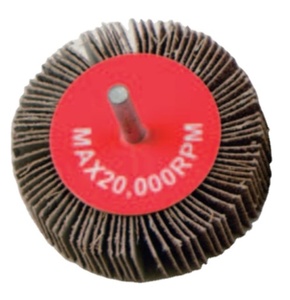
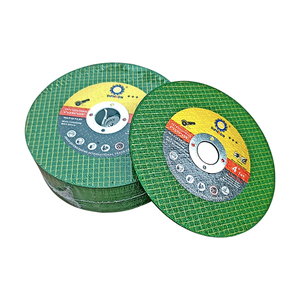

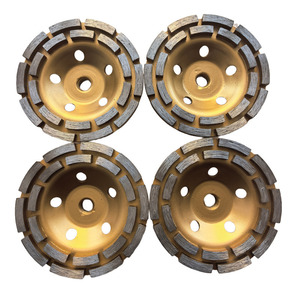
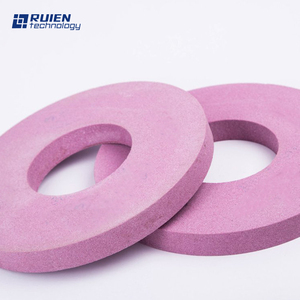
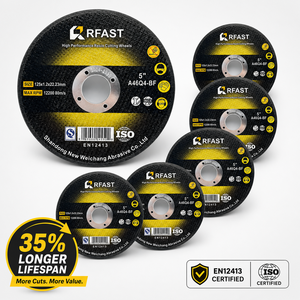
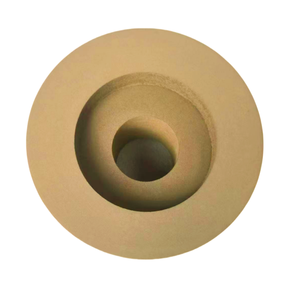
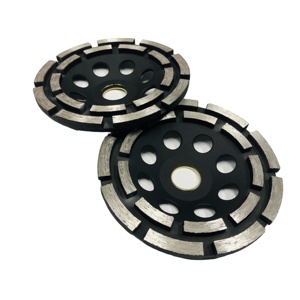
Understanding the supply chain dynamics, raw material synthesis hubs, and technological capabilities of top Chinese grinding wheel manufacturers.
China's grinding wheel manufacturing is concentrated in specialized industrial belts. Henan Province leads global superabrasive (synthetic diamond and CBN) production, accounting for over 70% of the world's raw industrial diamond synthesis. Meanwhile, Zhejiang and Jiangsu provinces specialize in high-volume resinoid cut-off and grinding wheels integrated with automated fiberglass weaving and pressing infrastructure.
Top-tier Chinese manufacturers operate under stringent international compliance standard EN 12413 (Safety Requirements for Bonded Abrasives) and ANSI B7.1. Leading factories utilize automated ultrasonic grain distribution inspection, dynamic spin-testing machines operating at 1.5x maximum rated RPM, and digital Rockwell hardness screening to guarantee zero burst rates on high-speed angle grinders.
Modern Chinese manufacturing facilities have migrated from manual hydraulic hot-pressing to fully automated robotic cell pressing lines with multi-cavity moulds. This transition ensures uniform density throughout the wheel body, eliminating imbalance, vibration, and localized premature wear during heavy industrial weld blending and foundry snagging.
When specifying grinding wheels for industrial operations, peripheral speed ($v$) must be matched to spindle RPM ($n$) and wheel diameter ($d$). Using the formula: $v = (\pi \times d \times n) / 60,000$ (where $v$ is in m/s, $d$ in mm, and $n$ in RPM). Never exceed the wheel's maximum safety threshold (typically 80 m/s for reinforced resinoid wheels and 33-50 m/s for unreinforced vitrified wheels).
Selecting the correct abrasive specification prevents glazing, burning, and rapid disc degradation. Use this engineering benchmark table when building contract specifications.
| Code / Grain Type | Hardness (Mohs) | Best Workpiece Compatibility | Primary Bonding Agent | Cutting Action Characteristics |
|---|---|---|---|---|
| A (Brown Aluminum Oxide) | 9.0 | Carbon Steels, Structural Iron, Tough Alloys | Resinoid (B / BF) | High toughness, self-sharpening micro-fracture under high pressure. |
| WA (White Aluminum Oxide) | 9.2 | Stainless Steel (INOX), High-Speed Steel (HSS) | Resinoid / Vitrified | Friable, cool-cutting, prevents thermal blueing and workpiece burning. |
| ZA (Zirconia Alumina) | 9.3 | Heavy Weld Seams, Cast Iron, Stainless Steel | Reinforced Resinoid | Ultra-durable, high removal rate under extreme down-force pressures. |
| C (Black Silicon Carbide) | 9.4 | Non-Ferrous Metals (Alu, Brass), Masonry, Marble | Resinoid / Vitrified | Sharp, brittle grains that cut clean without clogging soft metals. |
| GC (Green Silicon Carbide) | 9.5 | Tungsten Carbide Tools, Glass, Ceramics | Vitrified (V) | Extremely hard and friable; precision sharpening for toolrooms. |
| SD / Diamond (Superabrasive) | 10.0 | Concrete, Granite, Cured Stone, Glass, Carbide | Electroplated / Sintered / Resin | Maximum abrasion resistance; long-life grinding of non-metallic hard items. |
| CBN (Cubic Boron Nitride) | 9.9 | Hardened Tool Steels (>54 HRC), Inconel, Aerospace | Electroplated / Vitrified / Metal | Thermal stability up to 1400°C; does not react with iron alloys like diamond. |
International buyers must decipher standard ISO marking formats on grinding wheels. A typical code such as WA 46 P 5 B F 80 breaks down systematically:
For grinding extremely hard materials where fast grain release is mandatory.
Standard for precision cylindrical, surface, and toolroom grinding.
General purpose off-hand grinding discs for mild steel and structural fabrications.
Heavy duty foundry snagging, edge beveling, and automated robotic grinding.
Strategic analysis of technological shifts reshaping global grinding wheel sourcing, factory automation, and eco-friendly bonding agents.
The global shift toward Electric Vehicles (EVs) is rapidly driving demand for Cubic Boron Nitride (CBN) and diamond grinding systems over conventional aluminum oxide. Electric powertrain components, stator shafts, and battery alloy housing require sub-micron precision and zero thermal deformation, elevating superabrasive procurement by 35% year-over-year.
Global environmental mandates (including EU REACH and US EPA standards) are accelerating the replacement of traditional phenolic resins with zero-formaldehyde, eco-friendly organic binders. Leading Chinese manufacturers are investing heavily in water-based resin synthesis that drastically reduces volatile organic compound (VOC) emissions during high-temperature manufacturing and end-user grinding.
As foundries and fabrication yards deploy industrial robots for automated weld grinding, traditional manually-rated grinding wheels fail under continuous 100m/s velocities and constant high pressure. Manufacturers are developing multi-layered ceramic grain structures fused with high-tensile carbon-fiber meshes designed specifically for 24/7 robotic grinding cells.
Carrying forward an 85+ year lineage in industrial tool engineering, our manufacturing infrastructure combines deep metallurgy expertise with world-class grinding wheel production protocols.
Raw material heat numbers and batch resin codes linked to final product serials.
Spin-tested well beyond rated RPM to ensure absolute operator safety in extreme work conditions.
Trusted by major industrial distributors across North America, Europe, SE Asia, and the Middle East.
Essential guidance for procurement managers, OEM buyers, and industrial tool importers evaluating Chinese manufacturing options.
Check for strict adherence to international safety standards, specifically EN 12413 for bonded abrasives, EN 13236 for superabrasives (diamond/CBN), and ANSI B7.1 compliance. Request third-party test reports from recognized agencies such as MPA Hannover or ISO 9001 certification. Top manufacturers will provide documented spin-test certificates showing a safety speed coefficient of 1.5x maximum working speed.
Resinoid bonded (type B/BF) wheels have a finite shelf life due to organic resin degradation over time, especially when exposed to humidity and ambient temperature fluctuations. Standard industry guidelines mandate a maximum shelf life of 3 years from the date of manufacture. Quality wheels will feature an expiration date stamped on the center steel ring (e.g., V03/2027 indicating expiration in March 2027). Vitrified bonded wheels, in contrast, have an indefinite shelf life if stored dry.
Type 1 wheels are completely flat profiles used for peripheral grinding or straight cut-off operations. Type 41 is the modern European designation specifically for flat cut-off wheels. Type 27 features a depressed center hub, designed specifically for side-pressure weld blending, face grinding, and heavy deburring at 15° to 30° work angles on right-angle grinders. Using a Type 41 thin cut-off wheel for side-grinding is extremely dangerous and can cause catastrophic wheel shatter.
Coarse grit sizes (16# to 36#) feature larger abrasive grains, creating deep cuts and rapid Material Removal Rates (MRR)—ideal for heavy foundry snagging and thick weld seams. Medium grits (46# to 60#) strike an optimal balance between aggressive cut rate and clean surface finish for general metal fabrication. Fine grits (80# to 220#+) are specified for final precision tool sharpening, light deburring, and polish prep on stainless steel and non-ferrous alloys.
Yes. Leading Chinese OEM manufacturers accommodate custom arbor bore diameters (e.g., 22.23mm, 16mm, 7/8", 5/8"-11 threaded hubs), special grain formulations (such as ceramic-coated alumina blends), and tailored disc thickness profiles. Private label OEM programs typically require Minimum Order Quantities (MOQ) ranging from 5,000 to 20,000 pieces depending on disc diameter and custom printed label requirements.
White Aluminum Oxide is significantly purer and more friable than Brown Aluminum Oxide. "Friability" refers to the grain's ability to fracture under grinding pressure, continuously exposing fresh, sharp cutting points. This reduces friction and heat build-up on heat-sensitive INOX alloys, preventing thermal discoloration (blueing) and work-hardening of the workpiece surface while remaining virtually free of iron, sulfur, and chlorine contamination.
Access full technical specifications, ISO test reports, volume pricing tiers, and OEM private label options directly from our engineering team.