Top China Twist Drill Suppliers & Exporters

Industrial Engineering & Sourcing Benchmark Report 2025

Export Portfolio

Featured Industrial Cutting & Abrasive Solutions

Direct OEM/ODM catalog selections for industrial distributors, machine shops, and high-volume procurement programs worldwide.
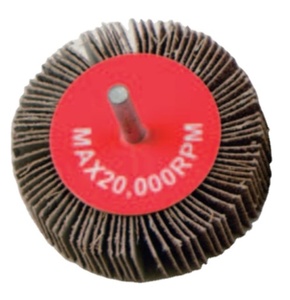
White Horse Best Seller Flap Wheel With Shaft
White Horse Best Seller Flap Wheel With Shaft Ow Noise Grinding Disc
Precision shaft-mounted abrasive flap wheel engineered for low-noise deburring, internal bore finishing, and metal blending.
Send an Inquiry
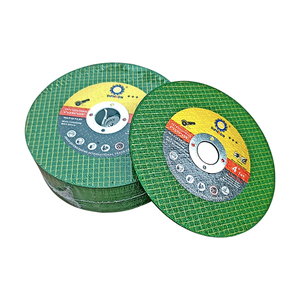
Metal Stainless Steel 4 Inch Cutting Disc Wheel
Metal Stainless Steel 4 Inch Cutting Disc Wheel Cut Off Wheel
Ultra-thin reinforced Type 1 cut-off wheel optimized for fast, burr-free slitting of stainless steel tubing and structural alloys.
Send an Inquiry
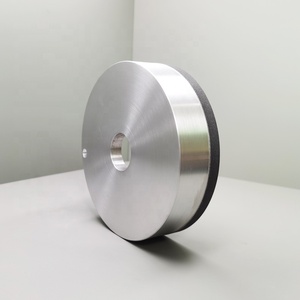
JR Straight Diamond Resin Grinding Wheel 220 Grit
JR Woodworking Straight Diamond Resin Grinding Wheel 220 Grit
Superabrasive 220-grit resin bond diamond cup wheel designed for precision sharpening of carbide-tipped drill bits and wood tools.
Send an Inquiry
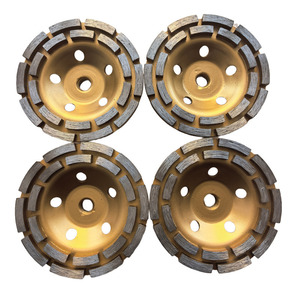
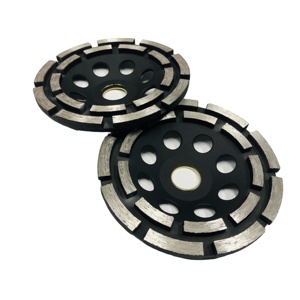
4 Inch Double Row Diamond Cup Surface Grinding Wheel
4 Inch Double Row Diamond Cup Surface Grinding Wheel for Concrete
Heavy-duty turbo segment diamond grinding cup wheel engineered for fast material removal on concrete, masonry, and hard stone.
Send an Inquiry
OEM Grinding Wheel For Metal & Stainless Steel
OEM Grinding Wheel For Metal & Stainless Steel High Quality Disc
Industrial aluminum oxide grinding disc featuring fiberglass reinforcement matrix for heavy weld grinding and surface beveling.
Send an Inquiry
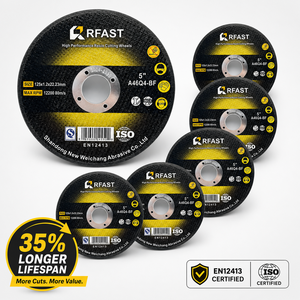
Factory Direct Abrasive Cutting Disc 125mm X 2.5mm
Factory Direct Abrasive Cutting Disc 125mm X 2.5mm Quartz Sand
Multi-purpose 125mm cut-off disc engineered with premium grain bond for high hardness cutting across angle grinder applications.
Send an Inquiry
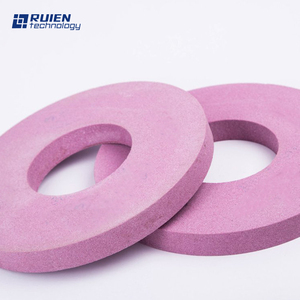
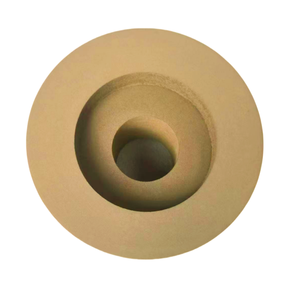
Centerless Regulating Feed Control Angle Grinding Wheels
Factory Price Recessed Centerless Regulating Feed Control Wheel
Precision vitrified bond regulating wheel for centerless cylindrical grinding machines, delivering exact feed rate control and tolerances.
Send an Inquiry
4.5inch Sintered Double Row Segment Diamond Grinding Cup Wheel
4.5inch Sintered Double Row Diamond Grinding Cup Wheel
Sintered matrix diamond segment cup wheel designed for aggressive profiling, coat stripping, and bevel smoothing on hard surfaces.
Send an Inquiry
85+
Years Manufacturing Heritage
3,000+
Active Industrial SKUs
100%
Quality & Hardness Tested
65+
Global Export Markets
Technical Metallurgy Whitepaper

Engineering Standards of High-Performance China Twist Drills

In global industrial manufacturing, twist drills represent the primary rotary cutting consumables utilized across automotive assembly, aerospace fabrication, structural steel construction, and precision CNC machining. As procurement heads, supply chain directors, and OEM buyers evaluate China twist drill suppliers & exporters, evaluating raw material metallurgy, thermal treatment consistency, and geometric flute accuracy is paramount to reducing total cost of ownership (TCO) and avoiding downtime.

“Information Gain Insight: Premium twist drill life depends not merely on substrate grade, but on the precise control of carbide grain distribution during salt-bath heat treatment and automated 5-axis CNC flute grinding.”

Modern Chinese manufacturing facilities have evolved far beyond low-cost commodity tooling. Top-tier manufacturers in key production clusters—such as Jiangsu, Zhejiang, and Sichuan—utilize state-of-the-art German CNC roll-forging and fully automated CNC flute grinding machines (e.g., Walter, Rollomatic, and Anca platforms). Understanding the precise technical specifications ensures industrial buyers match tool geometries correctly to workpiece materials:

  • High-Speed Steel (HSS 4341 / 6542 / M2): Standard tungsten-molybdenum high-speed steel engineered for high resistance to wear and tough cutting edges. M2 (W6Mo5Cr4V2) remains the international benchmark for drilling structural carbon steel, cast iron, aluminum alloys, and non-ferrous materials up to tensile strengths of 900 N/mm².
  • Cobalt High-Speed Steel (HSS-Co M35 / 5% Cobalt): Formulated with a 5% cobalt addition to elevate red-hardness (thermal stability up to 600°C). M35 twist drills prevent edge build-up and localized annealing when cutting work-hardening materials such as 304/316 stainless steel, titanium alloys, and high-tensile structural steel plates.
  • Premium Cobalt HSS (HSS-Co M42 / 8% Cobalt): Engineered with an 8% cobalt matrix delivering extreme micro-hardness (HRC 66–68). M42 twist drills excel in heavy-duty aerospace alloys, Inconel, hardened tool steels, and high-abrasion cast irons where heat accumulation instantly degrades lesser cutting tools.
  • Micrograin Solid Carbide (VHM): Ultra-fine tungsten carbide grains bonded with cobalt (6%–12%) operating at cutting speeds 3x to 5x higher than HSS. Solid carbide drills featuring internal coolant channels dominate high-throughput production CNC machining lines.
Factory Infrastructure

Enterprise Advantages of Top-Tier Chinese Manufacturers

Why leading global tool brands and industrial buying syndicates partner with specialized Chinese exporter facilities.

Precision CNC Flute Geometry

Automated 5-axis CNC grinding ensures sub-micron flute tolerances, uniform land widths, and micro-finish polished flutes for instantaneous chip evacuation during continuous deep-hole drilling cycles.

Advanced PVD Thin-Film Coatings

In-house Physical Vapor Deposition (PVD) chambers apply ultra-hard TiN, TiCN, TiAlN, and AlTiN coatings, boosting surface hardness up to HV3000 and lowering friction coefficient down to 0.35.

Rigorous Quality Control Protocols

100% optical laser checks for total indicator reading (TIR runout < 0.008mm), spectro-chemical raw material verification, and Rockwell hardness testing (HRC 63-68) across every production batch.

Engineering Specifications

Twist Drill Material Selection & Operating Matrix

Benchmark guide for matching drill substrate, point geometry, and surface treatments to target workpiece materials.

Substrate Grade Point Angle / Standard Surface Finish / Coating Target Workpiece Material Cutting Speed (SFM) Performance Index
HSS 4341 118° Split Point (DIN 338) Black Oxide (Steam Tempered) Mild Steel, Structural Pipe, Soft Plastics 70 - 100 SFM General Purpose / Cost Effective
HSS M2 135° Split Point (ANSI B94.11M) Bright Finish / TiN Gold Medium Carbon Steel, Cast Iron, Brass 90 - 130 SFM High Wear Resistance / Standard Industrial
HSS-Co M35 135° Self-Centering (DIN 1412-C) Bronze Oxide / Amber Finish 304/316 Stainless Steel, Alloy Steels 50 - 80 SFM Thermal Resistance / Anti-Work Hardening
HSS-Co M42 135° Parabolic Flute Split Point TiAlN / Violet-Grey Nano Coating Inconel, Titanium, Hardened Tool Steel 40 - 65 SFM Extreme Heat & Abrasion Resistance
Solid Carbide 140° Self-Centering (DIN 6537) AlTiN / DLC Coated Hardened Alloys (>50 HRC), Composite Aerospace 200 - 450 SFM Ultra-High Speed CNC Production Lines
Industry Horizon

Future Procurement Trends in China's Cutting Tool Export Market

As international supply chains optimize for efficiency, sustainability, and technological integration, the landscape for sourcing cutting consumables from China is undergoing four fundamental structural shifts:

1. Automated Smart Factories

Top exporters are transitioning to Industry 4.0 dark-factory operations. Robotic arm loading, closed-loop laser gauge correction, and automated packaging lines drastically minimize human variance, ensuring identical performance from drill #1 to drill #1,000,000.

2. Nanocomposite PVD Coatings

Traditional monolayer TiN coating is rapidly giving way to multi-layer nano-structured coatings (AlCrN, AlTiSiN). These nano-composite layers create thermal barriers up to 1100°C, permitting dry drilling operations and reduced coolant consumption.

3. Circular Carbon Metallurgy

Leading Chinese twist drill exporters are adopting ISO 14064 carbon-footprint verification and closed-loop scrap recycling systems. High-purity recycled tungsten carbide and scrap HSS are re-smelted into virgin-grade bar stock, reducing raw material carbon intensity by over 40%.

Furthermore, private-label branding (OEM) has reached unprecedented sophistication. Global importers can now obtain fully custom laser-marked shank branding, specialized QR code packaging for real-time inventory scanning, and custom retail packaging (double-blister packages, index metal boxes, and plastic tube sets) shipped directly from mainland facilities with consolidated logistics.

Procurement Governance

How to Qualify a China Twist Drill Supplier: Step-by-Step Audit Framework

To avoid quality degradation, off-spec steel substitutions, and erratic delivery lead times, global procurement teams must implement a structured vetting matrix before signing long-term supply agreements:

  • Step 1: Chemical Composition Spectroscopy Verification: Require verified material test reports (MTR) from certified laboratories (SGS, TÜV, or CNAS). Verify that M2 steel contains at least 5.5% Molybdenum and 4.8% Tungsten, and M35 contains genuine 4.75%–5.25% Cobalt.
  • Step 2: Microstructural & Hardness Distribution Check: Inspect the core-to-surface Rockwell hardness balance. A premium jobber twist drill must register uniform HRC 63–65 (for M2) without micro-cracks or excessive decarburization layers along the cutting lands.
  • Step 3: Concentricity & TIR Runout Tolerances: Request Total Indicator Reading (TIR) optical measurements. High-speed CNC drills should maintain concentricity under 0.010mm to prevent hole enlargement and premature drill breakage on automated assembly lines.
  • Step 4: Factory Quality Management System Audit: Validate ISO 9001:2015 certification, trace raw material batch lot numbering systems, and review automated optical sorting equipment capacity to guarantee zero defective parts per million (PPM).
B2B Procurement Intelligence

Frequently Asked Questions (FAQ)

Expert technical answers to common questions asked by industrial buyers and tool importers.

Q: What is the key geometric difference between a 118° conventional point and a 135° split point twist drill?
A 118° conventional point angle features a standard chisel edge suitable for general-purpose drilling in soft steels, wood, and plastics, but requires center-punching to prevent tool "walking." A 135° split point (DIN 1412 Form C) reduces the chisel edge length by 70%, creating a self-centering point that penetrates tough alloys and stainless steel instantly without center-punching, while reducing thrust force requirement by up to 40%.
Q: Why is M35 5% Cobalt mandatory when drilling stainless steel over standard HSS?
Austenitic stainless steels (such as 304 and 316) work-harden rapidly under friction and produce intense localized heat. Standard M2 or 4341 HSS twist drills lose their edge hardness (anneal) once temperatures exceed 400°C. The 5% cobalt addition in M35 elevates thermal stability up to 600°C, maintaining micro-edge sharpness, resisting chip welding, and extending tool life by 300% to 500% in stainless steel applications.
Q: How do Chinese manufacturers guarantee consistent flute alignment and runout accuracy?
Leading exporters utilize fully automated 5-axis CNC flute grinding machines (such as ANCA or Rollomatic) integrated with real-time laser concentricity sensors. Flute geometry, clearance angles, and land widths are ground in a single setup after heat treatment, ensuring runout tolerances below 0.008mm (8 microns) across mass production lots.
Q: What private label (OEM) packaging choices are supported for international distribution?
Top Chinese suppliers provide end-to-end OEM customization. Shank markings can be custom fiber-laser engraved with your logo, part numbers, and size callouts. Packaging options include customized hanging plastic tubes, skin-pack cards, double-blister blister packs, metal index box sets (13-pc, 19-pc, 29-pc, 170-pc drill sets), and master display cartons fully labeled with EAN/UPC barcodes.
Q: What are the recommended operating speeds and feed rules for high-speed steel twist drills?
Surface Feet per Minute (SFM) should be matched strictly to material hardness. As a baseline: mild steel requires 80–110 SFM; stainless steel requires 50–70 SFM (using cobalt drills); cast iron requires 70–90 SFM; aluminum allows 200–300+ SFM. Always maintain steady, positive feed pressure—allowing the drill bit to dwell or rub without cutting creates instant work-hardening and blunts the cutting corners.

Partner with China's Premier Cutting Tool Exporter

Streamline your industrial supply chain with high-precision twist drills, abrasive wheels, and professional power tool accessories engineered for global performance standards.