 Built Blue Since 1940
EN Contact Us
Built Blue Since 1940 Engineered for high-concentricity metal machining, surface finishing, and heavy-duty structural metalwork.
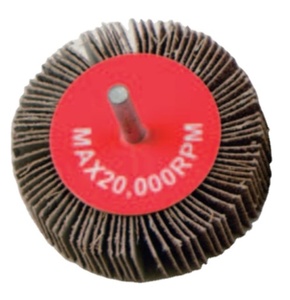
Low-noise grinding disc designed for smooth inner-bore finishing, deburring metal edges, and polishing irregular contours with high shaft stability.
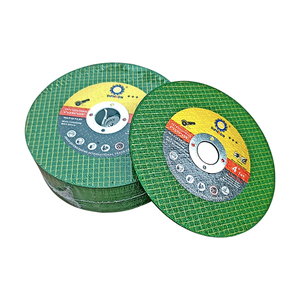
Ultra-thin 4" cut-off wheel crafted with premium aluminum oxide for burr-free, rapid slitting of stainless steel tubing, angle iron, and sheet metal.
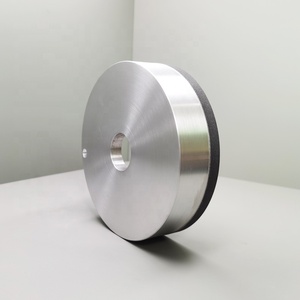
220 Grit very fine resin-bonded cup disc (75-200mm) engineered for tungsten carbide tooling, cutter sharpening, and precision woodworking edge maintenance.
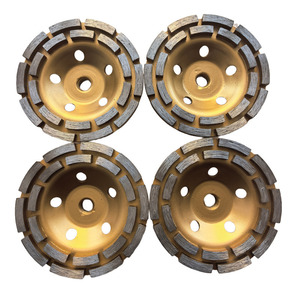
Heavy-duty turbo segment diamond grinding cup wheel designed for aggressive surface leveling, concrete prep, epoxy removal, and masonry grinding.
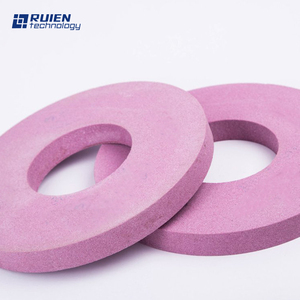
Industrial-grade reinforced grinding disc tailored for structural steel fabrication, high-speed weld removal, and heavy metal removal without thermal bluing.
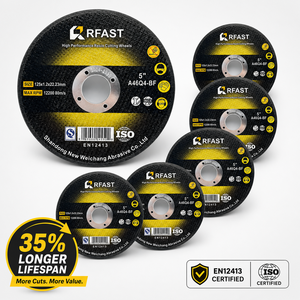
High-hardness quartz sand 24#~80# grain multi-purpose cutting wheel designed for 5" angle grinders, offering exceptional wear resistance and straight tracking.
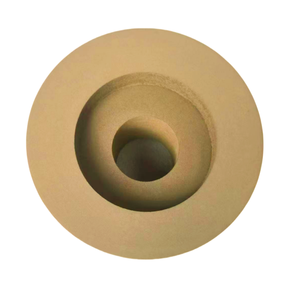
Recessed both-side aluminum oxide (80 grit) feed wheel engineered for precision centerless grinding machinery, maintaining tight roundness tolerances.
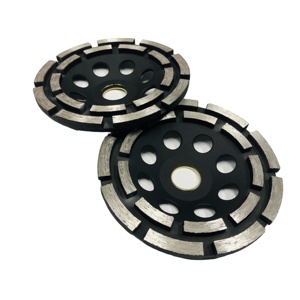
High-concentration sintered diamond matrix designed for fast material removal on reinforced concrete, granite, stone, and abrasive construction materials.
In high-precision CNC turning, lathe tailstock alignment, and metalwork manufacturing, the humble center drill (historically designated as a combined drill and countersink) represents one of the most critical foundational tools. A single misstep in choosing Center Drill Factories & Suppliers can result in concentricity deviation, lathe center chatter, tool drill bit breakage, and costly workpiece scrapping. For procurement directors, plant engineers, and global industrial distributors, selecting a manufacturer requires auditing not just unit cost, but metallurgical purity, micro-hardness uniformity, and geometric compliance with international standards such as DIN 333, BS 328, and ISO 2541.
Building upon the legacy of industrial cutting tools engineered under the "Built Blue" standard since 1940, leading center drill manufacturers have modernized production by integrating 5-axis CNC grinding centers, optical tool measuring systems, and advanced physical vapor deposition (PVD) coatings. This technical whitepaper analyzes the mechanical criteria, global supply trends, and quality verification protocols needed to evaluate premier center drill suppliers and industrial abrasive partners.
Utilizing certified M2 High-Speed Steel (HSS), M35 5% Cobalt (HSS-Co), and Solid Tungsten Carbide to withstand high friction and thermal loads.
Run-out tolerances held within <0.005mm to ensure perfect pilot hole placement prior to heavy drilling or turning operations.
Tailored packaging, barcode integration, custom flute geometries, and private branding options for global B2B industrial distributors.
Center drills perform a dual-function mechanical role: drilling an accurate pilot hole and creating a 60-degree countersink cone that matches lathe live centers or dead centers. Standard center drills fall into three distinct structural geometry classifications:
The global metal cutting and abrasive market is undergoing a structural shift driven by automation, exotic alloy adoption, and sustainable manufacturing mandates. Sourcing managers must align with center drill factories that are actively investing in the following technological frontiers:
While M2 HSS remains a cost-effective choice for general carbon steels and softer non-ferrous metals, the widespread adoption of stainless steel (304, 316L), titanium alloys, and Inconel in aerospace and medical manufacturing has accelerated demand for M35/M42 cobalt and ultra-fine tungsten carbide center drills. Cobalt-infused tools (5% to 8% Co content) retain red-hardness up to 650°C, preventing tip burn and edge chipping during continuous dry or minimum-quantity lubrication (MQL) machining.
Modern high-speed machining centers operate at spindle speeds exceeding 15,000 RPM. Uncoated center drills experience rapid crater wear and built-up edge (BUE) formation under these conditions. State-of-the-art center drill suppliers apply Titanium Aluminum Nitride (TiAlN) and Aluminum Titanium Nitride (AlTiN) coatings via Physical Vapor Deposition. These coatings increase surface micro-hardness to upwards of 3300 HV while lowering the coefficient of friction to below 0.35, resulting in up to 300% longer tool life.
Leading industrial suppliers no longer operate in isolation; they provide holistic material removal solutions. Once center holes are drilled and parts are turned, manufacturers rely on high-grade grinding and cutting abrasives—such as Type 1 Cut-Off Wheels, Type 27 Depressed Center Grinding Wheels, and Diamond Cup Wheels—for weld seam leveling, parting off stock, and deburring precision components. Single-source OEM sourcing programs that bundle high-speed steel cutting tools with matching abrasive wheels significantly streamline supply chain logistics and lower procurement overhead.
Enterprise buyers are transitioning from transaction-based purchase orders to API-integrated automated replenishment systems. Preferred suppliers must offer fully digitized product data catalogs, EDI ordering compliance, standardized GTIN/UPC barcoding, and batch-level material test report (MTR) certification for critical aerospace and defense contracts.
To assist engineering teams in avoiding premature tool failure, work-hardening, or chatter, the following reference table maps workpiece materials to recommended tool substrates, point angles, and operating parameters:
| Workpiece Material | Recommended Tool Substrate | Point Angle / Form | Surface Coating | Coolant / Lubrication | Procurement Note |
|---|---|---|---|---|---|
| Mild & Carbon Steel (AISI 1020/1045) | M2 High-Speed Steel (HSS) | 118° Point / DIN 333 Form A | Bright / Black Oxide | Soluble Cutting Oil | Most cost-effective for general machine shop inventory. |
| Stainless Steel (304 / 316 / Duplex) | M35 Cobalt (HSS-Co 5%) | 135° Split Point / Form B | TiAlN or TiN | High-Pressure Emulsion / MQL | Prevents work-hardening; requires constant feeding. |
| Tool Steel & Hardened Dies (>45 HRC) | Solid Tungsten Carbide | 135° Split Point / Form R | AlTiN / Diamond-Like Carbon | Synthetic Coolant / Dry Air Blast | High rigidity essential; eliminate tailstock play. |
| Aluminum Alloys & Brass | Bright Finish M2 HSS / Carbide | 118° Point, Polished Flute | Uncoated (Polished) | Kerosene / Light Mist Oil | Polished flutes prevent chip packing and built-up edge. |
| Masonry & Reinforced Concrete | Sintered Diamond Segment | Double Row Cup Wheel | N/A (Segmented Bond) | Wet Grinding / Dry Vacuum | Industrial abrasive companion for jobsite prep. |
*Note: Speeds (RPM) and Feed Rates must be calculated based on cutter diameter and machine rigidity. Always verify safe operating speeds on grinding wheels prior to installation.
Since 1940, Century Drill & Tool has operated under the principle that cutting tools should be built for the hands of working tradespeople and industrial production lines. Our integrated OEM/ODM manufacturing infrastructure combines decades of metallurgical experience with modern quality assurance protocols.
Every production batch undergoes 100% optical dimensional checking, Rockwell hardness verification (HRC 63-66 for M2; HRC 65-68 for M35), and run-out testing.
Over 3,000 active SKUs spanning center drills, HSS twist drills, taps and dies, screw extractors, and industrial abrasive wheels for metal and masonry.
From retail-ready clamshells and index sets to bulk industrial packaging and custom private labeling for international hardware chains.
Below are authoritative answers to common technical and procurement questions asked by plant managers, tool crib supervisors, and global sourcing specialists.
A center drill (combined drill and countersink) is specifically designed to create a 60-degree stepped center hole for lathe tailstock support. A spotting drill, by contrast, creates a shallow, precise V-shaped starter indent (usually 90° or 120°) that matches the point angle of a secondary twist drill, preventing drill walk without creating a countersink pilot cone.
Center drill pilot tips usually snap due to excessive feed pressure, spindle vibration, tailstock misalignment, or chip packing in the small flute zone. Reputable center drill factories mitigate this by precision-grinding smooth, polished flutes with optimized web thickness and adhering to strict concentricity tolerances (<0.005mm) to reduce rotational shock.
Specify Cobalt (M35 with 5% Co or M42 with 8% Co) whenever machining tough materials such as 300/400 series stainless steel, high-nickel alloys, titanium, or structural steels exceeding 30 HRC. Cobalt retains its hardness at higher cutting temperatures, dramatically extending tool life compared to standard M2 HSS.
Type 1 wheels are flat, ultra-thin profiles engineered exclusively for 90-degree straight cutting off and slitting. Type 27 wheels feature a depressed center hub designed to allow surface grinding, weld blending, and edge beveling at shallow 15° to 30° angles without the spindle flange marring the workpiece.
Yes. Century Drill & Tool offers end-to-end OEM and private label services. This includes customized packaging formats (hanging cards, plastic index cases, metal storage boxes), custom barcode labeling, and full technical documentation for seamless ERP integration.
High-quality manufacturing partners adhere to ISO 9001 quality management systems. Individual shipments undergo Rockwell micro-hardness testing, 2D optical comparator inspection for angle verification, and batch material spectral analysis to verify HSS steel composition.
Elevate your machining accuracy, reduce tool wear, and expand your distribution line with industrial-grade center drills and cutting abrasives engineered to international standards.
Get a Quote