 Built Blue Since 1940
EN Contact Us
Built Blue Since 1940 Engineered to meet the exact mechanical requirements of Osaka’s precision die casting, marine fabrication, and automotive OEM plants. Explore our premium selection of tungsten carbide burrs, mounted points, and high-durability grinding media.
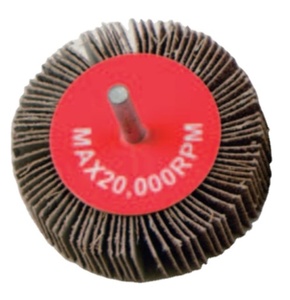
Designed for smooth bore deburring and inner surface finishing in Osaka precision machine shops. Features balanced vibration control.
Get a Quote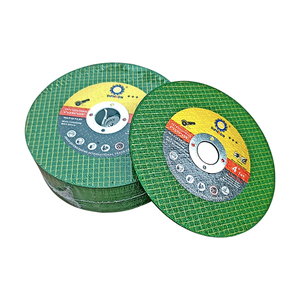
Ultra-thin, fiber-reinforced cutting disc engineered for rapid slicing of SUS304/SUS316 alloys without heat discoloration.
Get a Quote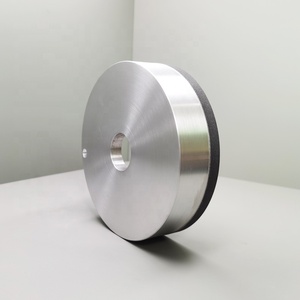
High-concentration diamond matrix designed for re-sharpening micrograin tungsten carbide burrs and carbide cutting inserts.
Get a Quote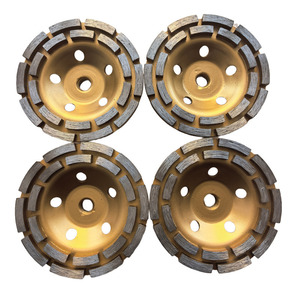
Heavy-duty concrete and masonry surface grinding wheel built for structural preparation and foundry mold cleaning.
Get a Quote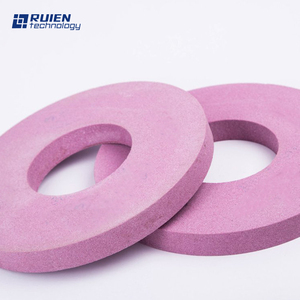
Optimized grain formulation providing high stock removal rates under extreme pneumatic pressure in shipyard environments.
Get a Quote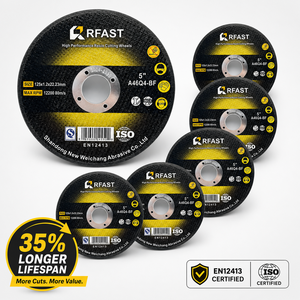
Multi-purpose 24#~80# grit cutting wheel for angle grinders, delivering high thermal stability during heavy angle cutting.
Get a Quote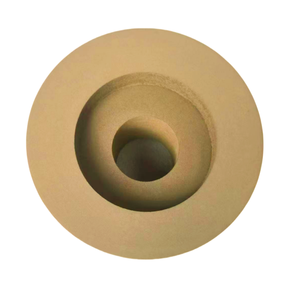
Grit 80 recessed centerless wheel designed for precision shank diameter sizing during tungsten carbide burr blank production.
Get a Quote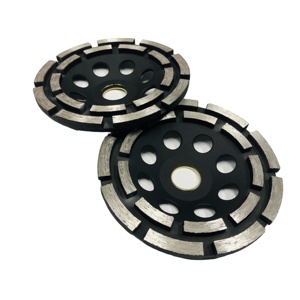
Premium sintered diamond segment disc engineered for tough composite material deburring and heavy edge grinding.
Get a QuoteThe Greater Osaka industrial belt (encompassing Osaka Prefecture, Higashiosaka, Sakai, and the neighboring Kansai manufacturing clusters) stands as Japan’s historic epicenter for precision tooling, metal fabrication, and advanced mold and die creation. Unlike other regional hubs focused purely on mass assembly, Osaka’s manufacturing DNA is anchored in specialized job shops (町工場, machikoba), high-tier automotive component suppliers, and heavy marine engineering yards along the Osaka Bay area.
In this demanding industrial environment, tungsten carbide burrs (rotary files) serve a critical, non-negotiable role. Whether it is removing flash from precision aluminum die castings in Kadoma, contouring hardened steel injection molds in Daito, or deburring heavy weld seams on ship hulls in the Sakai Port district, manufacturing engineering teams require rotary tools that deliver uncompromising dimensional stability, minimal vibration, and extended service life under continuous thermal load.
Information Gain Insight: Modern automated manufacturing cells in Osaka are increasingly replacing hand-held air grinders with CNC robotic arm deburring systems. This transition requires carbide burrs with strict dynamic balancing standards to prevent spindle chatter and premature bearing failure on high-RPM robotic heads (exceeding 35,000 RPM).
Sourcing carbide burrs within the Osaka region requires a clear understanding of supplier capabilities—differentiating between domestic Japanese brand distributors and direct industrial tool factories capable of supplying OEM/ODM custom geometries, micrograin sub-micron substrates, and specialized surface coatings (such as TiAlN and DLC) optimized for tough materials like titanium alloys and SUS316 stainless steel.
To establish competitive advantages in high-precision machining, procurement teams must evaluate tungsten carbide rotary burrs beyond basic dimensional geometry. The operational longevity of a carbide burr is dictated by three metallurgical pillars: tungsten carbide substrate selection, brazing joint integrity, and flute tooth geometry.
Industrial burrs specified for Osaka's heavy equipment and precision mold sectors utilize ISO K10 to K30 class virgin tungsten carbide powder, cobalt-bonded with a 6% to 10% matrix. Micrograin substrate structures (0.4µm to 0.8µm grain size) provide a critical balance between high hardness (up to 92.5 HRA) and transverse rupture strength (TRS > 3,800 N/mm²). This prevents premature tooth chipping when breaking sharp edges or entering interrupted cuts in cast steel.
The structural junction between the solid tungsten carbide head and the toughened steel shank (typically 40Cr or 35CrMo steel, hardened to 42-45 HRC) represents the most common failure point in lower-tier imported tools. Professional burr manufacturing employs high-frequency automated induction brazing using silver-copper filler alloys. This bond achieves a minimum shear torque strength of 600 MPa, ensuring zero head separation under intense axial pressure or sudden shock loads.
| Cut Geometry | Flute Configuration | Target Workpiece Material | Operational Advantages |
|---|---|---|---|
| Single Cut (Standard) | Right-hand spiral single flute line | Cast iron, copper, mild steel, unhardened steel | Smooth surface finish, continuous chip removal, high linear stock removal. |
| Double Cut (Cross-Cut) | Cross-flute geometry forming chisel teeth | Stainless steel (SUS), alloy steel, high-tensile metals | Produces small granular chips, reduces operator fatigue, suppresses chatter. |
| Aluma Cut (NF Flutes) | Wide, deep open-flute spiral spacing | Aluminum, brass, soft non-ferrous plastics | Eliminates chip loading and loading/clogging; rapid material evacuation. |
| Micro-Cut / Fine Finish | High tooth-density diamond pattern | Hardened tool steel (>60 HRC), Inconel, Titanium | Exacting tolerance control, minimal tool pressure, mirror-like deburred edge. |
Subgrain carbide matrices maintain edge sharpness at temperatures exceeding 900°C without plastic deformation of the cutting flutes.
CNC 5-axis ground with total indicator reading (TIR) under 0.005mm to maximize die grinder tool life and minimize hand fatigue.
Available with Titanium Aluminum Nitride (TiAlN) coatings to increase tool surface hardness to over 3,000 HV for dry deburring applications.
Carbide burr utilization varies significantly across the micro-regions of the Kansai area. Understanding these localized application demands allows factories and distributors to optimize their inventory and tool selection.
Known globally for having the highest concentration of small-to-medium factories in Japan, Higashiosaka relies heavily on micro-diameter carbide burrs (3mm shank series, head diameters 1.5mm to 6mm). Tool makers working on hardened P20, NAK80, and SKD11 tool steel dies require ball-nosed shape (Radius Tree SF and Ball Shape Shape SB) burrs to hand-finish complex cavities, ejector pin holes, and runner channels.
Along the port facilities of Sakai and Izumiotsu, heavy engineering facilities focus on shipbuilding, pressure vessel fabrication, and industrial valves. Here, heavy-duty 6mm and 8mm shank carbide burrs—specifically Cylindrical End Cut (Type SB) and Flame Shape (Type SH)—are subjected to rigorous weld bead smoothing and beveling on thick SUS316L plate structures. High chip removal rate (CRR) Double-Cut geometry is standard to prevent micro-cracking in weld joints.
Factories supporting Kansai's tier-1 automotive component network process thousands of aluminum die-cast housings (gearboxes, pump covers) daily. Aluminum Cut (NF geometry) carbide burrs with mirror-polished flutes prevent aluminum galling and chip adhesion, ensuring rapid cycle times on manual and semi-automated deburring stations.
Driven by Japan’s labor demographics, Kansai region manufacturers are accelerating the adoption of 6-axis articulated robot arms fitted with compliant pneumatic spindles. This shift demands rotary tool manufacturers to supply burrs with absolute dimensional reproducibility, uniform shank diameter tolerances (h6 shank tolerance standard), and dynamic balancing certifications.
Osaka-based procurement directors are increasingly bypassing uncertified trading intermediaries in favor of direct factory partnerships that provide comprehensive Material Test Reports (MTRs), ISO 9001 quality audits, and clear raw material origin documentation (ensuring conflict-free tungsten sourcing).
In line with green manufacturing initiatives across Osaka Prefecture, machining plants are reducing flooded coolant usage. Carbide burrs equipped with high-heat resistant PVD coatings (TiAlN, AlTiN) that operate effectively under Minimum Quantity Lubrication (MQL) or dry air-blow conditions are seeing rapid adoption.
Building upon a proven industrial legacy established since 1940 under our Built Blue engineering framework, our production facilities combine state-of-the-art multi-axis CNC grinding technology with rigorous quality control standards designed for global industrial distribution.
Every single rotary burr undergoes automated vision system flute inspection, concentricity verification, and Rockwell hardness testing before packaging.
Full support for private-label branding, specialized shank lengths (up to 300mm long shank series), and custom flute profiles tailored to specific workpiece requirements.
Flexible supply chain solutions for Japanese distributors, including safety stock buffering, consolidated container shipments, and ERP-ready master catalog data.
Our comprehensive cutting tool catalog extends beyond carbide burrs to include high-speed steel (HSS-Co M35/M42) twist drills, bi-metal hole saws, precision taps and dies, screw extractors, and reinforced abrasive wheels—providing a complete industrial supply solution for professional trades and global distribution partners.
Elevate your tooling performance in the Osaka market. Contact our technical engineering team today for custom quotations, complete catalog specifications, or distributor partnership opportunities.
Get a Quote