 Built Blue Since 1940
EN Contact Us
Built Blue Since 1940 Engineered for extreme wear resistance, thermal stability, and exact surface finish tolerances (Ra < 0.1µm). Designed to meet the OEM specifications of Bangkok's automotive, electronics, and metal processing sectors.
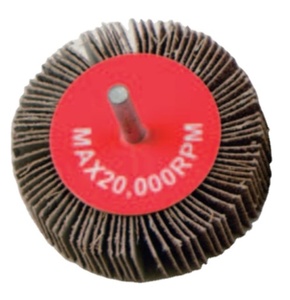
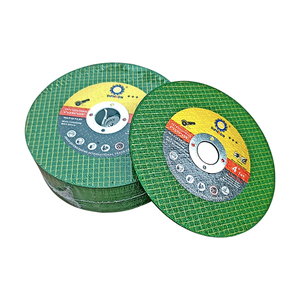
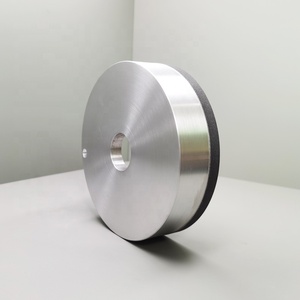
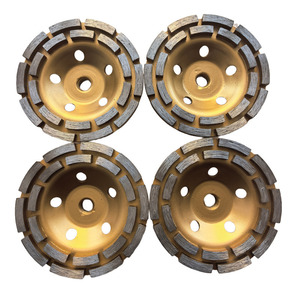
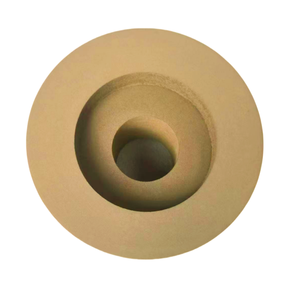
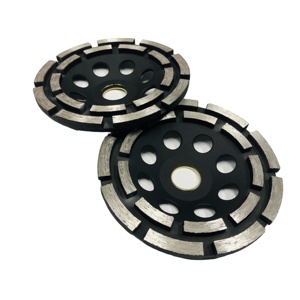
The Greater Bangkok Metropolitan Region—encompassing major industrial clusters across Samut Prakan, Pathum Thani, Chachoengsao, and the adjacent Eastern Economic Corridor (EEC)—represents Southeast Asia's premier manufacturing ecosystem. From precision automotive engine machining and hard disk drive (HDD) component manufacturing to sanitary stainless steel valve fabrication, modern automated production lines demand finishing tools that deliver uncompromised consistency.
As a specialized Custom OEM Nylon Abrasive Brushes Manufacturer & Supplier, we address a critical challenge faced by production engineers in tropical industrial environments: filament degradation caused by humidity, thermal softening during high-speed machining, and premature bristle fatigue.
Unlike conventional steel wire brushes that risk filament breakage, metal contamination, and hazardous flying wire fragments, our nylon abrasive brushes encapsulate high-grade abrasive grains—such as Silicon Carbide (SiC), Aluminum Oxide (AO), Ceramic (SG), and Polycrystalline Diamond—evenly suspended within extruded synthetic polymer filaments. This self-sharpening matrix exposes fresh abrasive cutting edges as the nylon gradually wears, enabling continuous deburring, radiusing, and micro-finishing without altering workpiece dimensions.
Selecting the precise polymer backing and abrasive abrasive grain matrix is essential for optimizing tool life and surface finish quality under Thailand's tropical factory ambient temperatures.
Water Absorption: < 1.5%
The gold standard for humid tropical manufacturing environments like Bangkok. Nylon 6.12 exhibits minimal water absorption, retaining its structural stiffness, flexural fatigue resistance, and tuft recovery even during wet machining with water-soluble coolants.
Thermal Threshold: Up to 150°C
Engineered for high-friction deburring applications where local contact heat spikes rapidly. Offers higher melting thresholds and thermal stability than standard Nylon 6, preventing filament smearing on high-speed CNC automated cells.
Hardness: Superabrasive Class
Impregnated with micro-crystalline Ceramic (SG) or Polycrystalline Diamond grains for heavy-duty edge radiusing of hardened tool steels (HRC 58+), aerospace nickel alloys, glass, and structural ceramics.
| Abrasive Grain Type | Grain Hardness (Knoop/Mohs) | Primary Workpiece Compatibility | Typical Grit Range | Recommended Machine Speed (SFPM) |
|---|---|---|---|---|
| Silicon Carbide (SiC) | Mohs 9.5 / Knoop 2480 | Aluminum, Brass, Copper, Cast Iron, Plastics, Wood | 40 Mesh – 1000 Mesh | 2,500 – 4,500 SFPM |
| Aluminum Oxide (AO) | Mohs 9.0 / Knoop 2100 | Carbon Steels, Ductile Iron, Alloy Steels, Soft Metals | 60 Mesh – 800 Mesh | 3,000 – 5,000 SFPM |
| Ceramic (SG / Sol-Gel) | Mohs 9.2 / Knoop 2300 | Stainless Steels (304/316), Inconel, Titanium, Tool Steels | 80 Mesh – 320 Mesh | 3,500 – 6,000 SFPM |
| Diamond (PCD) | Mohs 10.0 / Knoop 7000 | Tungsten Carbide, Technical Ceramics, Quartz, Glass | 120 Mesh – 2000 Mesh | 1,800 – 3,500 SFPM |
Our custom OEM brush configurations—including Disc Brushes, End Brushes, Tube Internal Cylinder Brushes, and Wheel Brushes—are integrated directly into robotic arms, custom deburring machines, and manual finishing stations.
Primary Hubs: Samut Prakan, Rayong & Chonburi
Automated CNC cross-hole deburring of aluminum cylinder heads, engine blocks, gearbox valve bodies, and brake calipers. OEM nylon abrasive disc brushes effortlessly scrub away burrs from intersected oil galleries without scratching micro-finished bore surfaces.
Primary Hubs: Pathum Thani (Bang Kadi) & Chachoengsao
Fine-grit (Grit 320 to 600 SiC) roller and wheel brushes used in automated wet-scrubbing lines prior to copper cladding and solder mask application. Ensures optimal surface profile mechanical keying without distorting ultra-thin copper foils.
Primary Hubs: Greater Bangkok Industrial Zones
Conditioning 304 and 316L stainless steel welded joints for dairy, brewery, and pharmaceutical fluid handling valves. Nylon brushes maintain non-contaminating surface integrity, helping manufacturers achieve stringent hygienic smooth weld finishes.
Primary Hubs: Nonthaburi & Samut Sakhon Woodworking Clusters
Abrasive nylon wheel brushes structured with coarse silicon carbide filaments reveal natural wood grain patterns (distressing/rustic texturing) while denibbing sealer coats on teak, rubberwood, and MDF panels.
In industrial regions such as Bangkok, ambient relative humidity frequently exceeds 80% with factory indoor temperatures reaching 35°C–40°C. Standard nylon polymers (such as Nylon 6) are highly hygroscopic, absorbing up to 8.5% atmospheric water by weight. As water molecules penetrate the polymer matrix, they act as a plasticizer, lowering the glass transition temperature ($T_g$) and reducing filament flexural modulus by up to 40%.
This structural softening results in brush "whip-lag", excessive filament deflection, loss of deburring aggression, and accelerated bristle wear. To overcome this, our engineering team formulates OEM Nylon 6.12 Co-Polymers combined with hydrophobic silane coupling agents on abrasive grains. This limits moisture absorption to under 1.5%, maintaining constant bristle stiffness, uniform cutting pressure, and predictable automated tool life cycle times.
The bending stiffness ($S$) of an abrasive nylon filament is inversely proportional to the cube of its trim length ($L$) and proportional to the fourth power of its diameter ($D$):
Our OEM custom engineering service allows Bangkok factory managers to specify exact trim lengths ($L$) and filament gauges ($D$) down to 0.01mm to achieve exact deburring forces.
Choosing between high-density tufted face layouts, helical spiral channels, or segmented block configurations:
Unbalanced circular brushes vibrating at high RPM destroy CNC spindle bearings and cause chatter marks on precision components.
All our custom OEM cylinder and disc brushes are dynamically balanced to ISO 1940 Grade G2.5 standards, ensuring vibration-free spindle rotation up to 10,000 RPM.
Tracing our engineering heritage back to 1940 under the trusted "Built Blue" tradition, Century Drill & Tool has continuously set global benchmarks in cutting tools, threading solutions, and industrial abrasive manufacturing.
We offer rapid 3D CAD modeling, custom arbor hole broaching, composite drive hub molding, and short-run sampling tailored to unique Bangkok production line requirements within 7-10 business days.
Every production batch undergoes tuft pull-out force testing (>150N per staple), optical filament diameter measurement, grain distribution analysis, and high-speed burst spin testing prior to export packing.
Complete OEM branding support including custom laser-etched metal arbors, localized barcode labeling, humidity-sealed anti-static packaging, and custom retail clamshell or industrial bulk boxes.
We maintain streamlined shipping corridors servicing Thailand’s major industrial estates. Enjoy duty-efficient import processes under Thailand BOI (Board of Investment) privileges with complete certificate of origin (Form E / Form D) technical documentation.
Clear technical answers covering OEM orders, custom specifications, import logistics, and local operating conditions.
To provide an accurate quote and CAD design, our engineering team requires: (1) Brush outer diameter (OD) and face width, (2) Inner arbor size or shank mounting details, (3) Nylon polymer type (Nylon 6.12 recommended for Bangkok humidity), (4) Abrasive grain type (SiC, AO, Ceramic, Diamond) and grit size, (5) Target workpiece material and current deburring issue, and (6) Machine operating RPM.
High ambient humidity causes standard Nylon 6 filaments to absorb moisture, leading to softening, reduced bristle stiffness, and irregular deburring action. For Thailand manufacturing facilities, we strongly recommend specifying Nylon 6.12 filaments, which feature water absorption rates under 1.5% and preserve their mechanical stiffness during wet or dry operation.
Yes. Our application engineers specialize in converting wire brush deburring processes to abrasive nylon systems. Abrasive nylon brushes eliminate wire breakage hazards, prevent rust-causing metal contamination on stainless steel/aluminum components, and dramatically increase overall tool service life.
Custom prototype samples are typically engineered and dispatched within 7 to 10 working days. Full production orders average 2 to 3 weeks, with sea freight delivery to Laem Chabang Port or air freight delivery directly to Suvarnabhumi Airport (BKK) available for urgent production lines.
Absolutley. Our Nylon 6.12 and high-temperature Nylon 6.6 brushes are fully chemical-resistant against synthetic coolants, cutting oils, solvents, mild acids, and alkalis commonly utilized in modern automated CNC machining centers.
Yes, we offer comprehensive private-label OEM manufacturing for regional industrial suppliers. Options include custom laser logo engraving on aluminum hubs, customized color-coded nylon filaments, customized inner boxes, and Thailand-compliant barcode labeling.