 Built Blue Since 1940
EN Contact Us
Built Blue Since 1940 Direct B2B supply of certified cutting, grinding, and diamond abrasive tooling customized for Irish contractors, OEM buyers, and hardware distributors.
An authoritative technical evaluation of cutting tool metallurgy, tooth geometries, and operational parameters optimized for the Irish climate, industrial infrastructure, and material density.
Selecting industrial saw blades and high-speed cutting abrasives for commercial applications across Ireland requires a meticulous understanding of material dynamics, mechanical stress, thermal management, and regulatory safety guidelines. As Ireland’s construction, offsite timber manufacturing, and high-tech manufacturing sectors continue rapid expansion, procurement managers require cutting tooling engineered to resist premature dulling, micro-chipping, and thermal distortion.
The core structural integrity of a commercial saw blade is defined by its alloy backing and tip composition. In heavy-duty operations—ranging from processing native Irish Sitka Spruce to cutting high-tensile structural steel girders in Dublin’s urban construction sites—choosing the correct material matrix directly determines tooling ROI and cut quality.
| Blade Classification | Core Composition | Primary Target Material | Recommended Operating Speed | EU / NSAI Compliance |
|---|---|---|---|---|
| Commercial TCT Rip Blade | 75Cr1 Body + C4 Micro-Grain Carbide | Softwood, Hardwood, Native Timber | 3,000 – 4,800 RPM | EN 847-1 Standard |
| Structural Steel TCT Blade | Cermet Tipped + Anti-Vibration Slots | Mild Steel, Structural Beams, Angles | 1,200 – 1,800 RPM | ISO 9001 / CE Mark |
| PCD Fiber Cement Blade | Polycrystalline Diamond Matrix | Eternit, Fiber Cement, Heavy Composites | 4,000 – 6,000 RPM | EN 847-1 Standard |
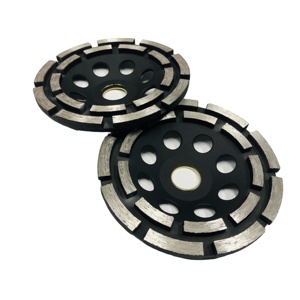
| Sintered Segmented Diamond | Industrial Synthetic Diamond + Cobalt Bond | Reinforced Concrete, Masonry, Brick | 80 m/s Peripheral Velocity | EN 13236 Standard |
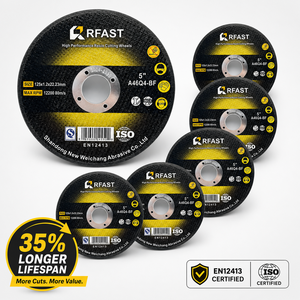
| Thin-Kerf Metal Cut-Off Wheel | Aluminum Oxide / Zirconia + Fiberglass Mesh | Stainless Steel (304/316L), Rebar | 12,200 RPM (Max 80m/s) | OSA / EN 12413 |
Precision saw blade design relies on optimized tooth geometry to control chip load, reduce mechanical vibration, and prevent kerf deformation. When specifying blades for machinery in Irish woodworking facilities or metal fabrication shops, three core geometrical metrics must be harmonized:
Teeth are angled alternately to shear wood fibers cleanly. Ideal for cross-cutting timber frames and architectural joinery, leaving a smooth, tear-out-free edge.
Combines a trapezoidal flat tooth with a slightly higher rectangular tooth. Designed for dense non-ferrous metals, aluminum extrusions, and rigid laminates to prevent chipping.
Engineered thermal slots filled with polyurethane dampeners to absorb harmonic resonance, suppress noise levels, and dissipate heat during continuous duty cycles.
In automated timber processing plants across Leinster and Munster, transitioning from standard kerf (3.2mm) to thin-kerf (2.2mm–2.5mm) saw blades significantly reduces motor load, minimizes raw material waste, and extends battery life for cordless site tools without sacrificing blade stiffness.
From Dublin’s high-density housing developments to Cork’s biopharmaceutical facilities, our saw blades and cutting accessories are field-tested across diverse Irish operational environments.
Ireland’s housing targets under the Housing for All national framework have sparked a revolution in Modern Methods of Construction (MMC). Offsite timber frame manufacturing plants in Kildare, Offaly, and Wexford demand heavy-duty TCT gang-saw blades capable of rapid, dimensionally precise cuts through engineered timber (CLT, Glulam, LVL). Our blades feature anti-kickback geometries and non-stick PTFE coatings to resist pitch and resin buildup from Irish softwoods.
The pharmaceutical hub centered in Cork (Ringaskiddy) and the dairy processing facilities in Munster require pristine, burr-free cuts on 304 and 316L stainless steel piping and ductwork. Contamination from iron-bearing cutting discs is strictly prohibited. Our specialized 1mm and 1.6mm ultra-thin cut-off wheels and cobalt TCT blades are guaranteed Fe+S+Cl-free (<0.1%), preventing micro-corrosion and ensuring compliant cleanroom installations.
Major infrastructure investments including the Dublin MetroLink expansion, Cork Docklands regeneration, and national water supply upgrades require robust concrete and asphalt saw blades. Our sintered diamond blades utilize laser-welded keyhole segments containing high-concentration synthetic diamonds. They deliver superior cutting speeds through reinforced Irish limestone aggregates while mitigating blade segment loss.
Shipbuilding, harbor maintenance, and offshore wind farm support operations along the Shannon Estuary and Belfast Lough demand cutting tooling that withstands severe marine corrosion environments. Our bi-metal reciprocating blades and heavy-duty grinding wheels excel in repairing structural steel hulls, offshore piling equipment, and marine-grade aluminum sub-assemblies under harsh weather conditions.
Aligning industrial tooling supply chains with Ireland's Climate Action Plan, NSAI directives, and European safety standards.
Under Ireland’s Nearly Zero Energy Buildings (NZEB) standards, the adoption of timber-frame construction has soared, commanding over 50% of new residential builds. This structural shift requires tool importers and contractors to procure saw blades optimized for engineered timber products. The integration of vibration-dampening laser slots and custom rake angles ensures high-speed production lines in Irish factories run continuously without overheating or compromising structural timber dimensions.
Health and Safety Authority (HSA) inspections across Irish building sites and industrial facilities strictly enforce compliance with European safety regulations. EN 847-1 governs rotary woodworking tools, specifying maximum safe speed (RPM) markings, chip-thickness limits (to reduce kickback hazards), and body stiffness tolerances. Simultaneously, EN 13236 governs superabrasive diamond blades, mandating robust segment-to-core weld strength. All our saw blades exported to Ireland carry clear laser-etched safety markings, trace codes, and operational parameters.
With escalating raw material costs across Europe, Irish industrial buyers are shifting away from cheap consumable tooling toward premium circular saw blades designed for multiple resharpening cycles. Our TCT blades feature oversized carbide tips (up to 3.5mm height), allowing up to 12-15 precision re-grinds per blade, drastically cutting lifetime tooling expenditure for cabinet makers, joineries, and metal service centers.
Built Blue reliability engineered for international distributors, tool hire chains, and direct OEM procurement partners across Ireland.
Every batch undergoes strict Rockwell hardness validation, dynamic balancing, and laser run-out testing to eliminate blade wobble and ensure zero defective blades arrive at your facility.
We supply full distributor support including barcoded retail packaging, color-coded index displays, private-label branding, and ERP-ready product metadata for seamless inventory integration.
Direct export shipping routes to Dublin Port, Ringaskiddy (Cork), and Shannon Airport. Efficient EU customs documentation and duty compliance guaranteed.
Clear technical and logistical answers addressing import processes, safety standards, and blade customization for Irish trade operations.
Whether you need high-volume TCT circular saw blades, custom diamond cutting discs, or tailored OEM distribution programs, our engineering team is ready to assist.
Get a Quote