 Built Blue Since 1940
EN Contact Us
Built Blue Since 1940 Engineered for high-tensile concrete, volcanic basalt, asphalt, and metal fabrication across New Zealand job sites.
Selecting industrial diamond blades and abrasive tools for the New Zealand construction ecosystem demands rigorous technical evaluation. Unlike uniform continental geologies, New Zealand’s landmass presents uniquely aggressive substrates—ranging from the ultra-hard, highly abrasive South Island greywacke river gravels to dense North Island volcanic basalt and unreinforced coastal aggregate mixes.
Furthermore, civil engineering contractors and commercial floor cutters operate under some of the world's most stringent regulatory frameworks. WorkSafe New Zealand's Workplace Exposure Standards (WES) for respirable crystalline silica (RCS) strictly enforce airborne dust limits to under 0.05 mg/m³ over an 8-hour time-weighted average. Consequently, the performance benchmark for modern diamond blades extends far beyond simple linear cutting speed; it mandates advanced laser-welded segment safety, dust-suppression cooling channels, and specialized matrix bond formulations that prevent segment glazing while cutting dense reinforcement steel (rebar).
Technical Insight (Information Gain): Standard diamond blades manufactured for soft limestone or mild aggregate will rapidly glaze or fracture when applied to Christchurch greywacke or Auckland basalt. The key to maximizing blade life lies in pairing synthesized diamond grit concentrations (30/40 US mesh for hard aggregate) with a softer, cobalt-nickel metal powder matrix that exposes fresh diamond edges at a controlled wear rate.
To assist site engineers, procurement heads, and equipment dealers, our metallurgy laboratory has mapped out the optimal bond matrix requirements tailored specifically to regional New Zealand aggregates:
| Region / Region Core | Dominant Substrate | Compressive Strength | Optimal Segment Bond | Recommended Cutting Method |
|---|---|---|---|---|
| Auckland & Northland | Volcanic Basalt / Andesite | 140 - 220 MPa | Soft Bronze-Cobalt Alloy Bond | Wet Cutting with High Water Flow |
| Waikato & Bay of Plenty | Pumiceous Concrete / Ignimbrite | 35 - 75 MPa | Hard Tungsten-Carbide Matrix | Dry/Wet Integrated Vacuum Hood |
| Wellington Seismic Zone | Heavily Reinforced Concrete (HRC) | 60 - 110 MPa (High Steel %) | Medium-Soft Cobalt-Iron Bond | Wet Cutting (Step-Cut Technique) |
| Canterbury & West Coast | Greywacke River Aggregate | 180 - 260 MPa (High Quartz) | Ultra-Soft Free-Cutting Bond | Continuous Wet Supply (High RPM) |
| Otago & Southland | Schist & Quartzite Rock | 120 - 190 MPa | Soft Matrix with 3D Diamond Array | Wet Deep Slotting |
The following directory evaluates the leading diamond tooling manufacturers and supply partners operating in the New Zealand market based on product range, laser welding structural integrity, local stocking capabilities, and direct factory pricing efficiency.
Founded with engineering roots dating back to 1940 ("Built Blue" heritage), Century Drill & Tool leads the industry by combining deep metallurgical experience with factory-direct OEM distribution. Century specializes in heavy-duty diamond circular blades, segment cup wheels, and industrial cutting discs engineered specifically for extreme aggregate cutting. With direct supply lines eliminating regional trading markups, Century provides New Zealand commercial distributors with fully certified, laser-welded diamond tools that meet stringent ISO9001 and EN13236 safety standards.
Husqvarna maintains a powerful branch presence across Auckland, Wellington, and Christchurch. Known for their premium floor saws and wall saws, their diamond blade offerings feature proprietary segment shapes (such as the Elite-Cut series) designed for rapid cutting speed in cured reinforced concrete.
Operating under the Swarovski Group umbrella, Tyrolit offers high-end European-engineered diamond tools tailored for major civil engineering projects. Their premium diamond wall-saw blades feature sound-dampened sandwich cores essential for urban demolition work in downtown Auckland.
A locally established importer and modifier catering to civil pavement contractors and hire firms across the North and South Islands. They specialize in wet-cutting asphalt blades equipped with drop-segment undercut protection to prevent segment loss in abrasive road bases.
Stihl’s extensive network of authorized shops across New Zealand provides tradesmen with quick access to portable cut-off saw diamond blades. Their diamond wheel line is optimized for high-RPM hand-held petrol cutters cutting masonry, clay bricks, and precast concrete pipes.
A leading distributor supplying industrial construction consumables throughout the Waikato and Bay of Plenty regions. They offer a comprehensive catalog of general-purpose diamond blades and abrasive grinding cups aimed at residential builders and concrete placers.
Supporting nationwide trade channels, Makita delivers continuous-rim diamond blades optimized for porcelain tile cutting, as well as laser-welded segmented blades for their cordless XGT 80V Max power cutter systems.
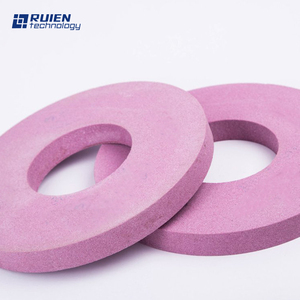
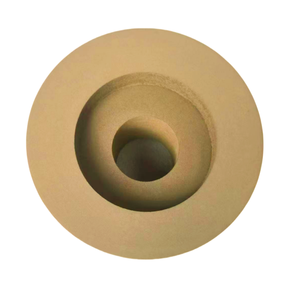
Focusing heavily on metalworking abrasives, resinoid grinding wheels, and diamond lapidary/carbide sharpening wheels, they supply specialized cabinetmakers, timber mills, and tooling re-sharpeners nationwide.
Known for direct fleet-management service to top-tier construction contractors, Hilti supplies premium Equidist-technology diamond blades designed for deep structural core drilling and heavy demolition tasks in earthquake-strengthening projects.
Tradezone operates a national cooperative network of industrial engineering supply stores, offering trade professionals localized inventory of abrasive cut-off discs, grinding wheels, and diamond masonry tools across regional industrial hubs.
Cutting through heavily reinforced 80-year-old shear walls requires diamond blades that won't experience segment detachment when striking 32mm high-tensile steel rebar. Laser-welded cobalt-bonded blades with 12mm segment heights ensure maximum operator safety and continuous cutting without matrix loading.
Pavement joint sawyers working on the SH1 expansion require rapid green-concrete cutting blades. Specialized drop-segments protect the steel core from undercut erosion caused by abrasive slurry, ensuring long blade life across thousands of linear meters.
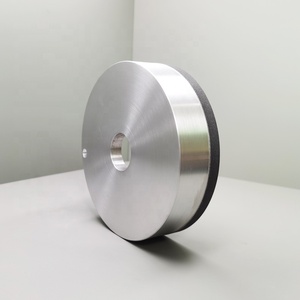
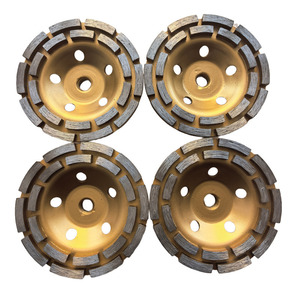
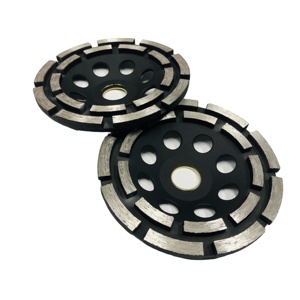
Contractors preparing industrial warehouse floors in East Tamaki utilize double-row turbo diamond cup wheels (such as Product #4) attached to dust-shrouded angle grinders to flatten high joints and strip elastomeric coatings efficiently.
With accelerated health inspections targeting airborne crystalline silica dust on residential and civil sites, dry cutting without integrated extraction or wet suppression is rapidly becoming obsolete. Progressive diamond blade factories are re-engineering gullet designs (Keyhole and U-Slot geometries) to enhance water delivery directly to the cutting zone, reducing slurry splash while ensuring compliance with local environmental runoff controls.
As battery technology (such as 80V and 120V equipment platforms) replaces 2-stroke petrol saws across urban jobsites to eliminate exhaust emissions and reduce noise pollution, diamond blades must adapt. Thinner kerf profiles (1.8mm to 2.2mm) are increasingly specified to reduce frictional torque, allowing cordless tools to achieve up to 30% longer runtime per battery charge.
For industrial hardware buying groups, equipment hire chains, and regional tool distributors in New Zealand, sourcing direct from an established manufacturer with proven quality assurance yields massive competitive advantages:
South Island greywacke river aggregate is exceptionally hard (Mohs 7+) and highly abrasive. Purchaser specifications should mandate a soft, cobalt-rich matrix bond. A soft bond breaks down at an optimal rate to continually expose new sharp synthetic diamond crystals, preventing blade glazing and overheating.
Laser welding uses a high-energy beam to weld the diamond segment directly to the alloy steel core, fusing the metals together into a single structural unit capable of withstanding extreme dry-cutting temperatures. Silver-brazed blades rely on solder that melts at elevated temperatures; they should strictly be used for wet cutting. For dry cutting applications under WorkSafe NZ site guidelines, laser-welded blades are required to prevent segment throw.
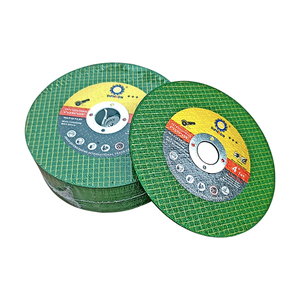
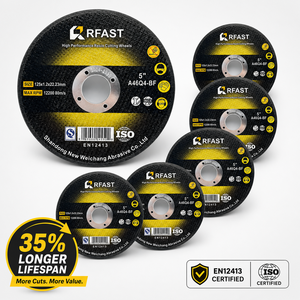
Century’s 1.2mm stainless steel cut-off wheels (Product #2) are engineered completely free of iron (Fe), sulfur (S), and chlorine (Cl) contaminants (content < 0.1%). This prevents chemical contamination and rust staining on structural stainless steel food-processing equipment widely manufactured in Waikato and Taranaki dairy sectors.
Yes. Century Drill & Tool offers complete OEM retail packaging programs—including custom branded color display boxes, hangable blister cards, barcode labeling, and specialized inner pack counts tailored to New Zealand hardware and industrial dealer requirements.
Standard sea freight transit time from our global manufacturing center to Auckland or Lyttelton (Christchurch) ports averages 14 to 21 days. Express air freight options are available for urgent commercial project orders.